
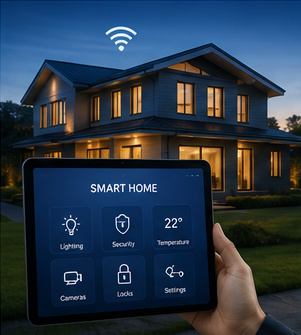
IoT, or Internet of Things, is a technology that connects physical devices to the internet so they can collect data, communicate, and work automatically. These devices can include smart watches, smart lights, security cameras, home appliances, vehicles, industrial machines, medical devices, and sensors.
The main idea of IoT is simple: devices become smarter when they can connect, share information, and respond automatically. For example, a smart watch can track your heart rate, a smart thermostat can adjust room temperature, and a smart camera can send alerts when motion is detected.
IoT is useful in homes, businesses, agriculture, healthcare, transport, and manufacturing. In smart homes, IoT helps users control lights, fans, locks, cameras, and appliances through mobile apps or voice commands. In industries, IoT sensors can monitor machines, detect faults, reduce downtime, and improve production efficiency.
Healthcare also benefits from IoT. Wearable devices can track health data, remind patients to take medicine, and help doctors monitor conditions remotely. In agriculture, IoT sensors can track soil moisture, weather conditions, and crop health.
Security is a major concern in IoT. Since devices are connected to the internet, they must be protected with strong passwords, updates, encryption, and secure networks.
IoT is creating a future where devices are not only connected but also intelligent, automated, and more useful in daily life.





Comments