
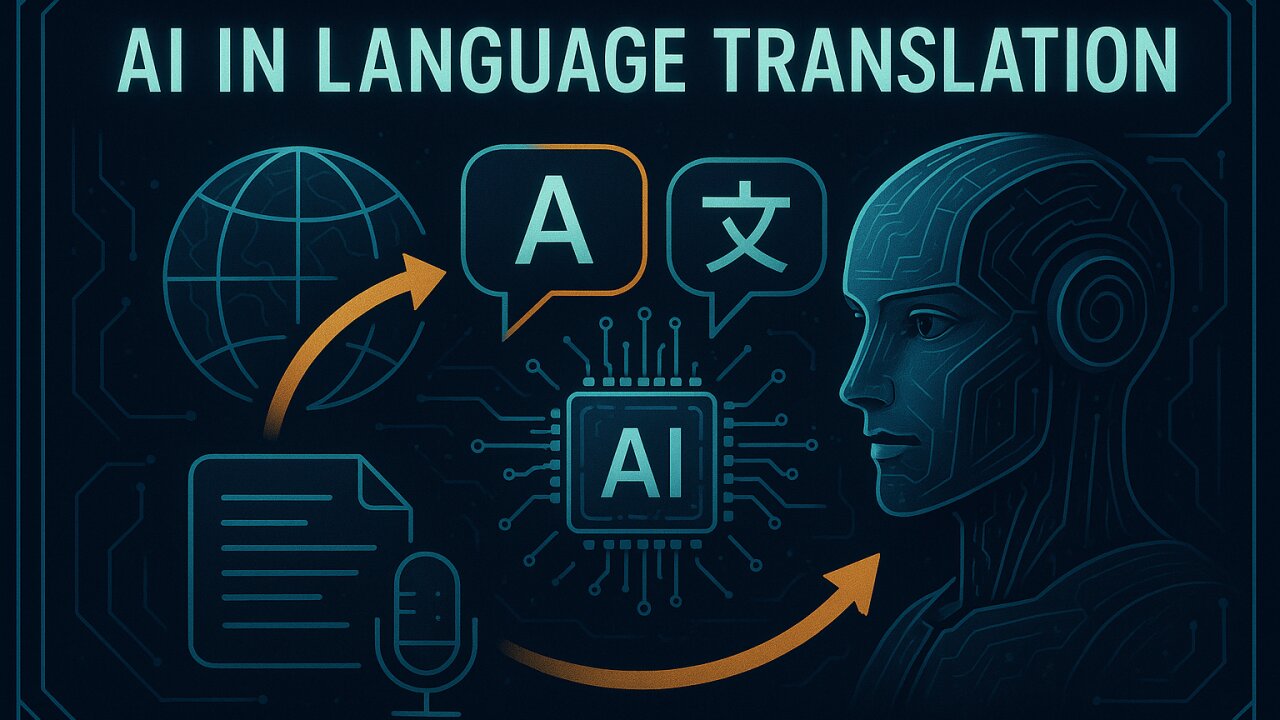
Artificial intelligence is revolutionizing the way people communicate across languages, with AI-powered translation tools becoming increasingly accurate, accessible, and widely adopted. As businesses expand globally and digital communication continues to connect people from different cultures, AI-driven translation technologies are helping eliminate language barriers and create a more connected world.
Recent advancements in machine learning, natural language processing (NLP), and large language models have significantly improved the quality of automated translation systems. Modern AI translation tools can understand context, recognize linguistic nuances, and generate more natural translations compared to earlier rule-based systems. This progress is enabling smoother communication between individuals, businesses, and organizations operating across multiple languages.
One of the biggest advantages of AI-powered translation is real-time communication. Video conferencing platforms, messaging applications, and customer support systems are increasingly integrating AI translation capabilities that allow users to communicate instantly without requiring human translators. These tools are helping international teams collaborate more effectively and improving communication in global workplaces.
Businesses are among the largest beneficiaries of this technology. Companies expanding into international markets use AI-powered translation tools to localize websites, marketing campaigns, product documentation, and customer support content. This allows organizations to engage customers in their native languages while reducing the time and cost associated with traditional translation processes.
The education sector is also experiencing the benefits of AI translation technologies. Students and researchers can access educational materials, academic papers, and learning resources written in different languages. By making information more accessible, AI-powered translation is helping support global learning and knowledge sharing.
Healthcare organizations are exploring AI translation solutions to improve communication between medical professionals and patients who speak different languages. Real-time translation tools can assist in consultations, medical documentation, and patient support services, helping healthcare providers deliver more inclusive care.
Travel and tourism industries are embracing AI-powered language tools as well. Travelers can use translation apps to navigate foreign countries, understand local information, communicate with residents, and access services more easily. These innovations are enhancing travel experiences while reducing communication challenges.
Technology companies continue investing heavily in multilingual AI models capable of supporting hundreds of languages. Researchers are focusing on improving translation accuracy for low-resource languages that historically received limited technological support. These efforts aim to make AI-powered communication more inclusive and globally accessible.
Despite significant progress, challenges remain. Translating cultural expressions, regional dialects, humor, and industry-specific terminology can still be difficult for AI systems. Developers are working to improve contextual understanding and reduce translation errors through more advanced machine learning techniques.
Privacy and security considerations are also important as translation tools process large amounts of communication data. Organizations deploying AI-powered translation solutions are implementing stronger safeguards to protect sensitive information and comply with data protection regulations.
Industry analysts predict that AI translation technologies will become even more integrated into everyday digital experiences. Future advancements may enable seamless multilingual communication across video calls, virtual reality environments, wearable devices, and AI assistants, further reducing language-related barriers.
The rise of AI-powered translation tools represents a major step forward in global communication. By enabling people to understand and collaborate with one another regardless of language differences, artificial intelligence is helping create new opportunities for education, business, innovation, and cultural exchange.
As AI models continue to evolve, language translation is expected to become faster, more accurate, and more accessible than ever before. The technology is not only transforming communication but also contributing to a more connected and inclusive digital world.





Comments