
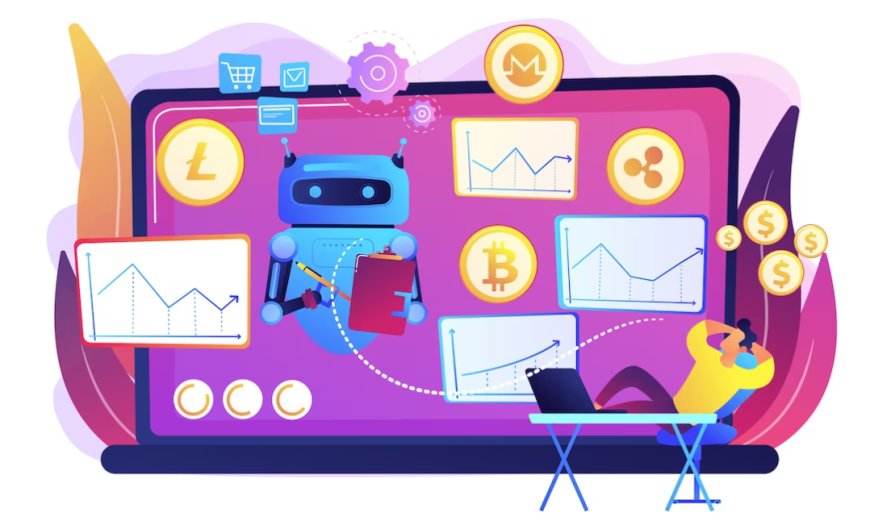
Machine learning is increasingly becoming a powerful tool for predicting market trends, helping businesses, investors, and financial institutions make more informed decisions in a rapidly changing economic environment. By analyzing massive amounts of historical and real-time data, machine learning algorithms can identify patterns, forecast market movements, and uncover valuable insights that would be difficult for traditional analytical methods to detect.
As global markets become more complex and data-driven, organizations are turning to artificial intelligence and predictive analytics to gain a competitive advantage. Machine learning systems can process vast datasets from financial markets, consumer behavior, economic indicators, social media activity, and industry reports to generate forecasts that support strategic planning and investment decisions.
One of the key advantages of machine learning is its ability to continuously learn and improve. Unlike traditional forecasting models that rely on fixed rules, machine learning algorithms adapt to changing market conditions by analyzing new information and adjusting predictions accordingly. This flexibility allows organizations to respond more effectively to market shifts and emerging trends.
Financial institutions are among the largest adopters of predictive machine learning technologies. Banks, hedge funds, asset management firms, and investment companies use AI-powered analytics to evaluate market conditions, assess risks, optimize portfolios, and identify investment opportunities. These systems can analyze thousands of variables simultaneously, enabling faster and more accurate decision-making.
Retail businesses are also leveraging machine learning to predict consumer demand and purchasing behavior. By examining customer preferences, seasonal trends, and economic conditions, retailers can forecast product demand, optimize inventory levels, and improve supply chain efficiency. This helps organizations reduce costs while enhancing customer satisfaction.
The e-commerce sector has experienced significant benefits from predictive analytics. Online platforms use machine learning algorithms to recommend products, anticipate customer needs, and personalize shopping experiences. These insights help businesses improve engagement, increase sales, and strengthen customer loyalty.
Marketing teams are using machine learning to analyze consumer trends and optimize campaign performance. AI-powered systems can identify emerging market opportunities, measure customer sentiment, and predict which marketing strategies are most likely to succeed. This data-driven approach enables organizations to allocate resources more effectively and achieve better results.
Machine learning is also transforming market research by enabling faster analysis of large datasets. Companies can monitor industry developments, track competitor activities, and identify emerging trends in real time. These capabilities help organizations make proactive decisions and stay ahead of market changes.
In the stock market, machine learning models are being used to analyze trading patterns, economic reports, and news events. While market predictions remain inherently uncertain, AI systems can provide valuable insights that support investment strategies and risk management efforts. Many financial firms are integrating machine learning into their trading and research operations to improve efficiency and performance.
The rise of alternative data sources has further enhanced predictive capabilities. Machine learning systems can now analyze information from social media platforms, online searches, satellite imagery, consumer transactions, and other non-traditional datasets to generate deeper market insights. These data sources often reveal trends before they become visible through conventional analysis methods.
Despite its growing adoption, experts caution that machine learning predictions are not guaranteed outcomes. Market conditions can be influenced by unexpected events, regulatory changes, geopolitical developments, and economic disruptions. As a result, organizations typically combine AI-generated insights with human expertise and strategic judgment.
Industry analysts expect the use of machine learning in market forecasting to continue expanding over the coming years. Advances in artificial intelligence, cloud computing, and big data technologies are making predictive analytics more accessible and powerful for organizations of all sizes.
As businesses seek to navigate increasingly dynamic markets, machine learning is emerging as a critical tool for understanding trends, anticipating changes, and making smarter decisions. By transforming raw data into actionable intelligence, AI-powered predictive analytics is helping organizations unlock new opportunities and drive long-term growth.





Comments