
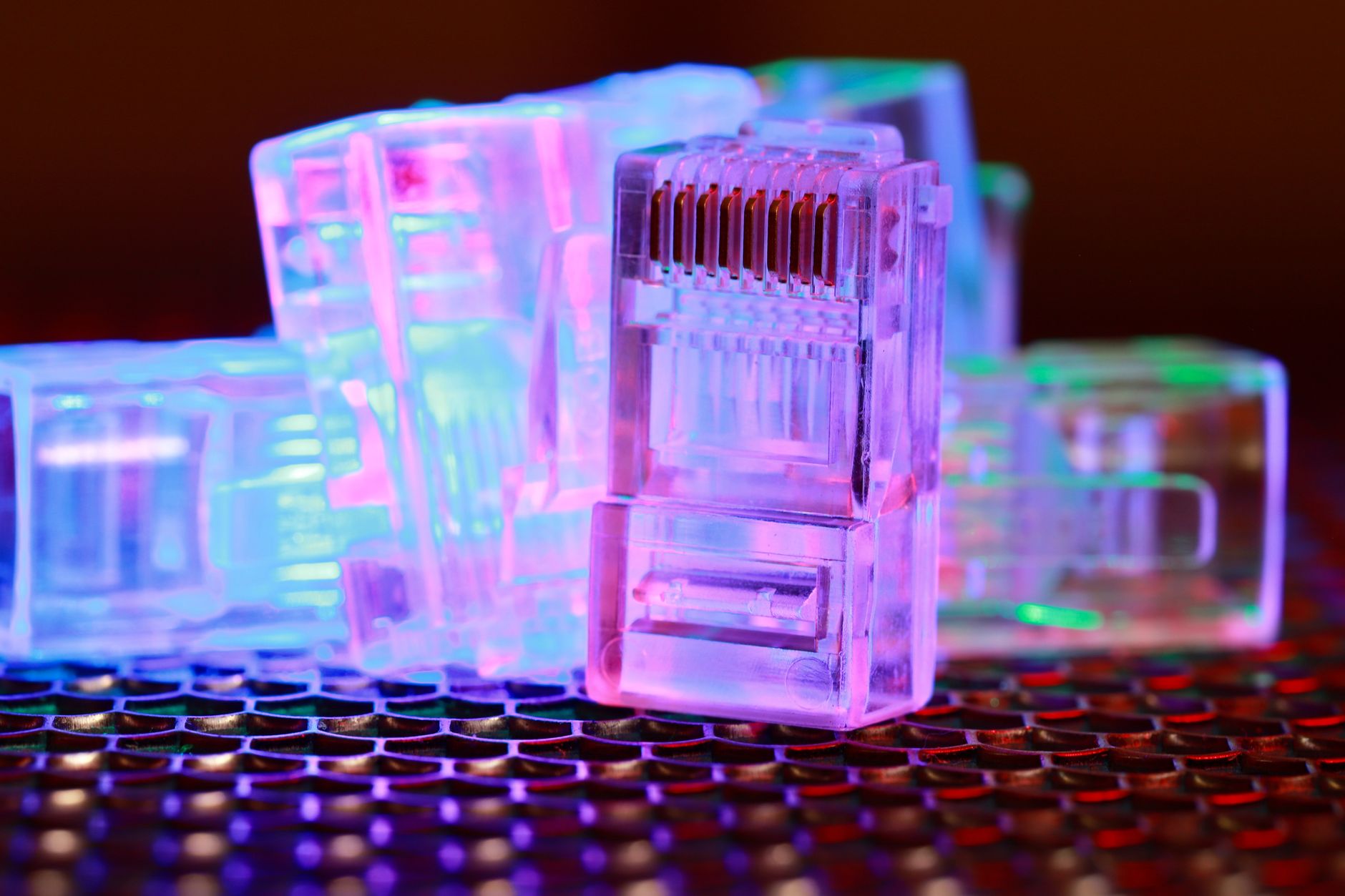
Normally, finding tangled or twisted wires is a sign of trouble, usually leading to performance drops or broken connections. Inside the cables that bring internet into homes and offices, however, intentional twists are completely necessary to deliver the best possible signal. This clever design choice prevents data bottlenecks and keeps high-speed networks running efficiently.
The concept of twisted pair wiring dates back to the 1880s and is credited to Alexander Graham Bell, who first implemented the technique for early telephone lines. Modern ethernet cables now rely on the exact same physical principles to manage electromagnetic interference. When electrical charges travel along a conductor, they generate an invisible magnetic field around the metal strand. If two parallel wires sit directly next to each other, the magnetic field from one wire interferes with the current on the adjacent line, ultimately slowing down data transmission.
Twisting the wires together neutralizes this problem by creating opposing magnetic fields that cancel out interference, allowing electric signals to move at peak speeds. Inside a standard contemporary ethernet cable, four pairs of copper wires operate simultaneously to support gigabit-tier speeds. Manufacturers even twist each individual pair at a slightly different rate to prevent cross-talk between the adjacent bundles. While outer foil coatings block external environmental noise, these internal geometric patterns ensure the internal channels never disrupt each other.





Comments