
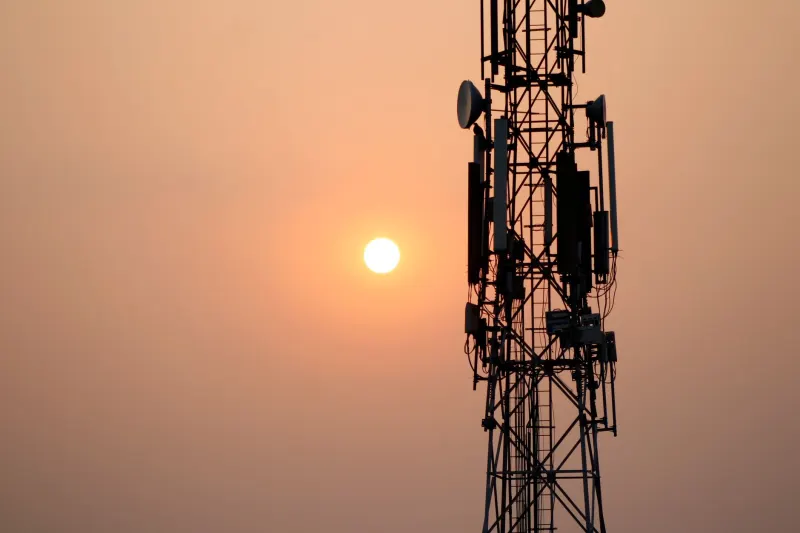
Telecommunications giant Ericsson is currently developing a new system that enables mobile networks to detect and follow drones without relying strictly on dedicated surveillance equipment. The proprietary approach, known as the Integrated Sensing and Communication system, analyses radio signals bouncing off flying objects. By leveraging existing cellular infrastructure, the network can successfully identify movements and track unauthorized aircraft across diverse landscapes.
The technology relies on radio transmission equipment deployed at multiple cellular sites to pinpoint objects flying within designated coverage areas. When transmitted signals encounter a drone, a portion of the energy returns toward receiving stations, allowing the network to evaluate the resulting reflections. By comparing data collected simultaneously from different locations, the system accurately estimates an object's precise position and follows its ongoing trajectory. According to Ericsson, this methodology helps identify small, fast-moving aircraft operating close to the ground where conventional surveillance equipment frequently encounters operational difficulties.
Key takeaways
- Ericsson is developing the Integrated Sensing and Communication system to track drones using cellular infrastructure.
- AT&T and Finland's Erillisverkot have already conducted successful trials of the network-based sensing technology.
- The system requires specialized hardware upgrades, including Massive MIMO antennas and dedicated computing resources.
- Limited commercial trials are officially scheduled for 2027, followed by a wider deployment in 2028.
Hardware requirements and practical testing
Implementing this network-sensing approach requires specific hardware upgrades rather than operating automatically across every existing mobile network. The system mandates specialized radio equipment, computing resources, and software, most notably Massive MIMO antennas. These advanced antennas utilize multiple transmission and reception elements capable of handling complex radio signals necessary for accurate environmental sensing. Major telecommunications operators have already begun evaluating the hardware in field settings. AT&T tested the equipment around Arlington, Texas, while Finland's Erillisverkot conducted parallel trials. Ericsson confirmed that both test exercises successfully identified multiple drones and tracked their movements using solely network-based sensing.
Ian Fogg, research director at CCS Insight, highlighted the unique structural advantages of leveraging telecommunications infrastructure for aerial monitoring. Mobile networks offer inherent coverage benefits because their antennas already span low elevations near ground level where drones routinely fly, contrasting with traditional radar installations. Furthermore, upcoming spectrum allocations expected with 6G networks will simplify the deployment of sensing across wide channels, ultimately boosting overall detection accuracy.
Addressing security threats and future applications
The development of cellular drone tracking comes amid rising security concerns surrounding sensitive locations and critical infrastructure. Unauthorized drone flights have frequently disrupted operations at major facilities, including an incident at Jersey Airport in the Channel Islands during Halloween weekend. Military installations have likewise reported an uptick in unauthorized approaches, prompting authorities to evaluate aggressive countermeasures. While British military personnel recently received legal authority to disable unauthorized drones near protected installations, deploying traditional radar coverage across expansive territories remains expensive.
Despite its potential, Ericsson notes that the cellular sensing system is designed to complement established surveillance equipment rather than completely replace conventional radar. Engineers must still determine how accurately the technology performs under challenging conditions where complex terrain, buildings, and competing radio signals complicate detection. Upcoming commercial trials in 2027 and wider availability slated for 2028 will provide crucial opportunities to assess whether mobile network sensing can deliver dependable results outside controlled testing environments.







Comments