
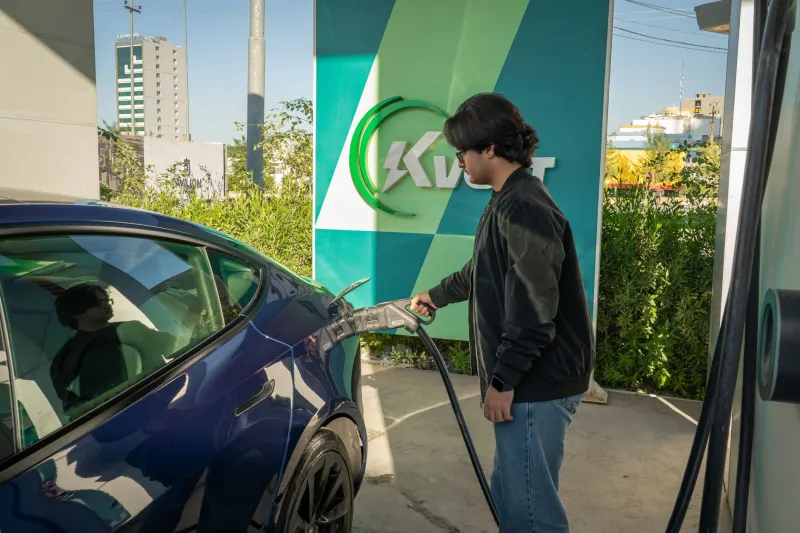
Most electric vehicle batteries hold significantly more capacity than a standard home battery, leading many owners to consider using their car as a backup power source. However, turning an EV into a home backup system involves navigating complex technical specifications, including battery capacity, power output, and vehicle-to-home compatibility. While the concept sounds straightforward, getting the energy out of the vehicle and into the house requires specialized hardware and costly home upgrades.
Key takeaways
- EV battery capacity dictates runtime, while power output determines which appliances can run simultaneously.
- V2H systems require bidirectional charging, DC-to-AC inverter hardware, and an islanding or transfer switch.
- Hardware setups can become expensive, involving bidirectional chargers, gateways, panel upgrades, and permits.
- Manufacturer support is often market-specific and restricted to particular models and proprietary ecosystems.
Understanding Technical Requirements and Limitations
Battery capacity, measured in kilowatt-hours, helps determine how long household items can stay running during an outage. Power output, measured in kilowatts, decides which specific appliances can operate at the same time. The vehicle-to-home system must also handle the brief startup surge when high-demand appliances like refrigerators and air-conditioners kick on. However, these numbers matter very little if the energy cannot be successfully extracted from the vehicle.
To use an EV for home backup, the vehicle must support bidirectional operation alongside a compatible V2H system. Standard charging connections do not automatically work in reverse. Drivers must also avoid confusing vehicle-to-home setups with vehicle-to-load systems, which only power individual devices through built-in power outlets rather than entire household circuits. Even when using V2L for individual appliances like a refrigerator or an electric foot massager, an approved installation is required.
Home Infrastructure and Financial Costs
Even with an EV that supports bidirectional charging, the house itself requires significant infrastructure upgrades. A whole-home or selected-circuit backup demands compatible power conversion equipment and a safe method to disengage the home from utility power to prevent energizing grid wiring during an outage. The financial investment can quickly add up, requiring a bidirectional charger, an inverter, a gateway, professional electrical work, and potential permits, alongside panel or wiring upgrades.
Practical everyday limitations further complicate the arrangement. The vehicle must be physically parked at home, connected to the system, and sufficiently charged. Any energy diverted to the house is energy subtracted from the vehicle's driving range. Furthermore, heavy workloads like electric heating and air-conditioning will consume runtime substantially, and frequent usage can contribute to battery wear over the long run.
Compatibility and Market Availability
Compatibility remains a strict hurdle, as most manufacturer systems are not interchangeable. General Motors vehicles work with the GM Energy PowerShift Charger and V2H Enablement Kit, while Kia offers an EV9 setup utilizing Wallbox's Quasar 2 charger and Power Recovery Unit. Tesla's Cybertruck supports PowerShare through a compatible home installation, and Tesla has listed Model 3 and Model Y support with the Powerwall 3. Setting these systems up requires matching every component correctly at a cost of thousands of dollars.
Geographic location also dictates availability. Certain manufacturers limit bidirectional services to specific regions, such as Polestar introducing bidirectional charging for Polestar 3 EVs exclusively for residents living in California. Consumers must verify that their specific vehicle model and model year support outage backup at their exact address, and obtain a formal installation quote before making any purchasing decisions.






Comments