
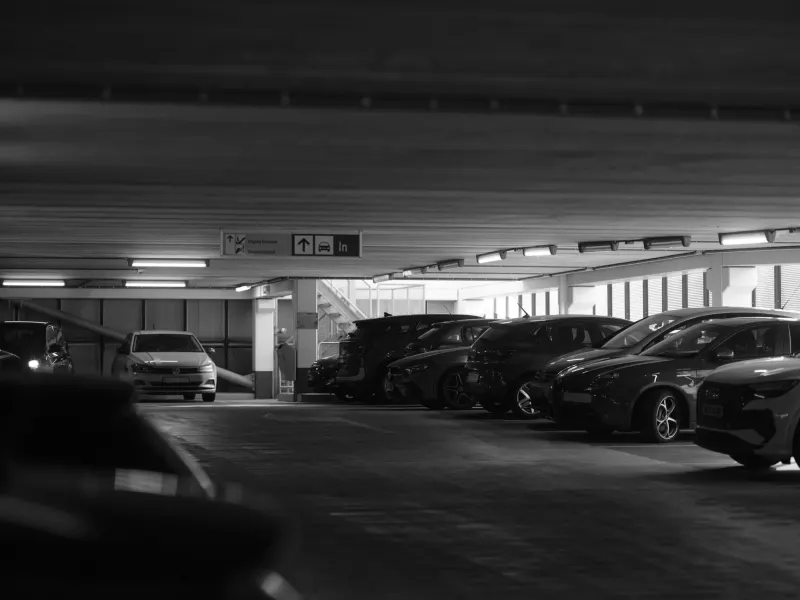
Uber has officially launched a new service that enables drivers to reserve parking spots directly inside its application. The rollout follows the company's acquisition of parking reservation app SpotHero roughly nine months prior. While SpotHero will continue to operate as a standalone app, the deal provided Uber with access to a vast network containing more than 13,000 parking garages, lots, and valet services spanning over 400 cities throughout the United States and Canada.
For the initial rollout, Uber Parking is live in 15 U.S. cities. The current deployment includes major metropolitan areas such as Atlanta, Austin, Boston, Chicago, Los Angeles, Miami, New York City, Philadelphia, San Francisco, and Washington, D.C., with future expansion plans already in the works. Users interacting with the platform will see a new Parking icon on the home screen of the Uber application. Tapping the icon allows customers to enter their destination, choose the precise date and time required, and inspect available spots through an interactive map that displays real-time pricing information.
Key takeaways
- Uber launched Uber Parking to let users find, compare, and reserve parking spots.
- The feature stems from Uber's acquisition of parking reservation app SpotHero.
- Uber Parking is currently available in 15 U.S. cities including New York and Los Angeles.
- The company envisions using parking facilities as staging areas for autonomous vehicles.
Navigating the New Parking Tool
Drivers using the new feature can filter results according to specific preferences. Available filters cover options such as self-parking, valet services, enclosed garages, and outdoor lots. To successfully secure a reservation, motorists must input their vehicle make, model, and license plate number into the platform. Upon arrival at the chosen facility, entry is granted either by scanning a QR code or utilizing license plate recognition technology, depending on the specifications of the specific location.
This strategic expansion offers Uber a monetization channel even during instances when customers bypass ride-hailing to drive their own vehicles. Amit Fulay, Uber's vice president of product, emphasized this goal by stating that the company aims to streamline travel whether customers choose a ride or drive independently. CEO Dara Khosrowshahi also highlighted commuters as core customers during a recent third-quarter earnings call, noting that the platform can now bundle rides, surge-avoidance passes, and parking options for daily commuters.
Long-Term Plans for Autonomous Fleets
Despite facilitating personal vehicle parking, leadership maintains its long-term forecast regarding autonomous technology. Executives have previously projected that vehicle ownership could significantly decline over the next decade or two as self-driving cars become widespread. CEO Dara Khosrowshahi estimated an autonomous transition timeline of 20 plus years, while President and COO Andrew Macdonald suggested a 15 to 20 year horizon on a podcast episode.
To bridge the gap between present parking operations and future autonomy, Uber is actively exploring ways to utilize the parking facilities within its network as holding, staging, and waiting hubs for self-driving vehicles. Company representatives state that repurposing these spaces could ultimately mitigate traffic congestion, cut down on unnecessary driving, and limit mechanical wear. Uber currently maintains partnerships with more than 30 autonomous vehicle entities across ride-hailing, delivery, and freight sectors, including industry players like Waymo and Zoox.



Comments