
SEC Charges Three
Companies for Hiding Cybersecurity Breaches From Investors
Category:
Policy, Regulations & Industry
The U.S.
Securities and Exchange Commission has brought enforcement charges against
three publicly traded companies for allegedly making materially misleading
disclosures about cybersecurity incidents, or failing to disclose significant
breaches in a timely manner as required by securities regulations. The cases
represent a significant escalation in regulatory scrutiny of how public
companies communicate cybersecurity risks to their investors.
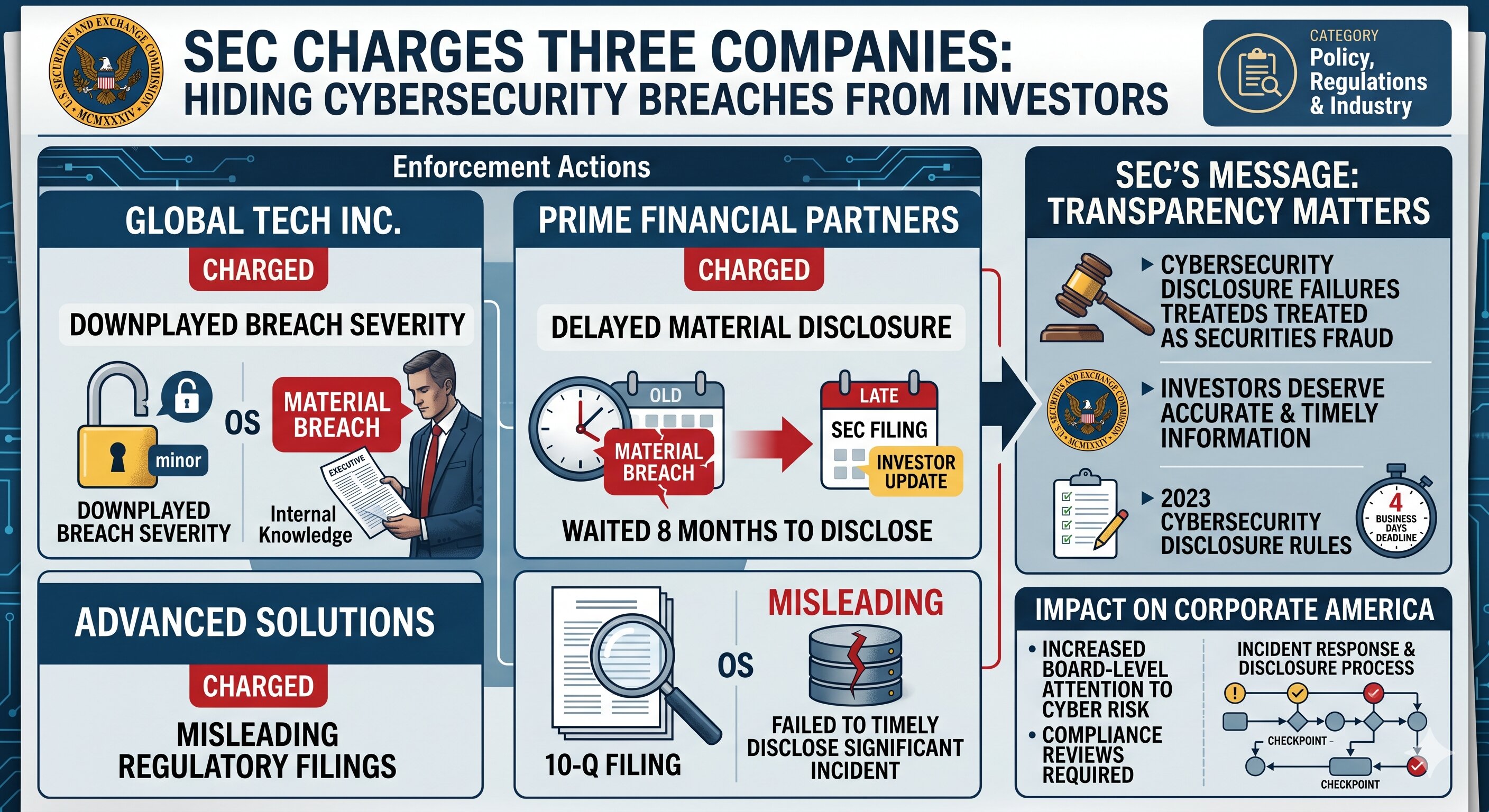
In one of the
cases, the SEC alleges that a technology company downplayed the severity of a
breach that compromised customer data, describing it in regulatory filings as a
"minor security incident" when internal documents showed that
executives were aware of its full scope and potential financial impact. In
another case, a financial services company is accused of waiting nearly eight
months to disclose a material breach that had occurred, well beyond the
regulatory disclosure window.
"Investors
deserve accurate and timely information about the cybersecurity risks facing
the companies they invest in," said the SEC Chair. "These cases send
a clear message that cybersecurity disclosure failures will be treated with the
same seriousness as any other form of securities fraud."
The cases
follow the SEC's 2023 cybersecurity disclosure rules, which require public
companies to disclose material cybersecurity incidents within four business
days and to provide annual disclosures about their cybersecurity risk
management programs.
The
enforcement actions are expected to significantly increase board-level
attention to cybersecurity disclosure practices across corporate America. Legal
and compliance experts are advising companies to review their incident response
plans and disclosure decision-making processes to ensure they meet current
regulatory expectations.





Comments