
A massive permitting bill is advancing through the United States Senate with bipartisan support, aiming to bring energy projects online much quicker and potentially lower utility bills for American households. The legislation, known as the Bipartisan American Affordability and Jobs Act (BAAJA), was introduced on September 30th by four senators: Shelley Moore Capito, Sheldon Whitehouse, Mike Lee, and Martin Heinrich. While proponents argue the bill will flood the grid with clean, affordable energy and force data centers to pay their fair share, critics warn it could also speed up polluting projects and limit public oversight.
Key takeaways
- The Senate will vote on the Bipartisan American Affordability and Jobs Act, which seeks to overhaul outdated environmental permitting rules.
- The legislation establishes a 45-day deadline for lead agencies to issue decisions under the National Environmental Policy Act and a 150-day limit for legal challenges.
- Modeling indicates the bill could lower annual household electricity bills by up to $78 by 2040, while Whitehouse estimates savings up to $251 annually.
- The bill introduces "and pricing" mandates to force large data center developers to cover costs for both added and existing grid infrastructure.
Overhauling Environmental Reviews and Limiting Litigation
If enacted into law, BAAJA would significantly alter bedrock environmental laws originating from the 1970s, such as the National Environmental Policy Act (NEPA), the Clean Water Act, the Endangered Species Act, and the National Historic Preservation Act. Supporters of the reform argue that bureaucratic processes have spiralled out of control, with endless litigation cycles holding up development across the board. Agencies currently spend excessive time preparing for lawsuits during permitting applications, delaying both fossil fuel initiatives and cleaner energy alternatives. Under BAAJA, the scope of projects subject to NEPA would narrow, creating exclusions for certain pipeline expansions, transmission upgrades, and projects receiving federal loans or grants.
Furthermore, the legislation imposes a strict 150-day limit for anyone to challenge a project in court over alleged violations of these environmental laws. It also strips away a court's authority to halt a project entirely if an agency is found to have violated NEPA, limiting judicial remedies to forcing the agency to correct any issues. While groups like the US Oil & Gas Association have urged immediate passage to jump-start construction, environmental organizations express deep concern. Critics point out that the legislation limits public participation requirements and restricts communities from stopping projects that might carry unforeseen environmental or public health consequences.
Data Center Expansion and Fossil Fuel Impacts
The rapid rise of energy-demanding data centers driving the artificial intelligence boom has intensified the urgency and controversy surrounding the bill. Data center energy demand has led to a surge of new gas projects across the United States. Environmental advocates, including the Natural Resources Defense Council (NRDC) and Earthjustice Action, warn that developers could exploit the new reforms to bypass public scrutiny and accelerate fossil fuel infrastructure. By streamlining reviews for pipelines and gas generation, the legislation could enable faster delivery of gas to power intensive data center build-outs.
Conversely, the legislation attempts to address public concerns by mandating that data centers shoulder a fairer portion of financial burdens. Current rules often shift transmission and infrastructure costs onto regular utility customers. BAAJA mandates "and pricing" rules requiring large electricity consumers like data centers to pay for both added and existing infrastructure. Additionally, the bill forces data developers to make financial assurances to utilities before breaking ground and holds them accountable for project costs if a data center shuts down prematurely.
Economic Projections and What Happens Next
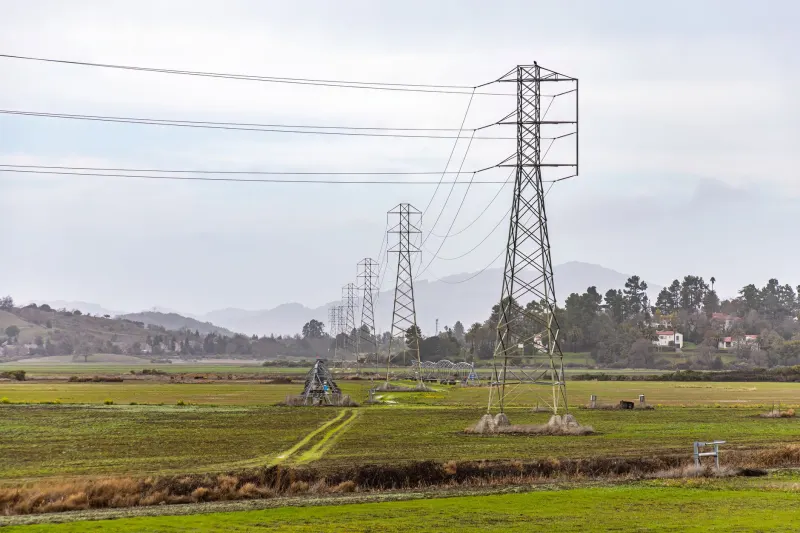
Economic modeling from various research organizations highlights potential financial benefits tied to the passage of BAAJA. Resources for the Future projects that the average annual cost of producing electricity could drop by up to 7 percent by 2041, while the Rhodium Group estimates household electricity bills will decrease by $50 to $78 per year by 2040. The White House released separate analysis claiming savings could reach up to $251 per household annually. Transmission lines, which are notoriously difficult to construct across patchwork jurisdictions, could see build times cut nearly in half from 10 years to roughly five or six years.
The Senate could vote to move the bill forward as early as the upcoming week, positioning it for potential action during the current lame-duck session before the end of the year. Bipartisan Policy Center executive vice president Xan Fishman noted that the White House has been heavily involved in negotiations, and President Trump is expected to sign the bill if the current Congress acts. However, newly empowered Democrats may drag out the debate into the following year to secure fewer concessions. The upcoming legislative battles will ultimately test whether lawmakers can successfully address rising energy costs and community concerns before the reform package reaches a final vote.




Comments