
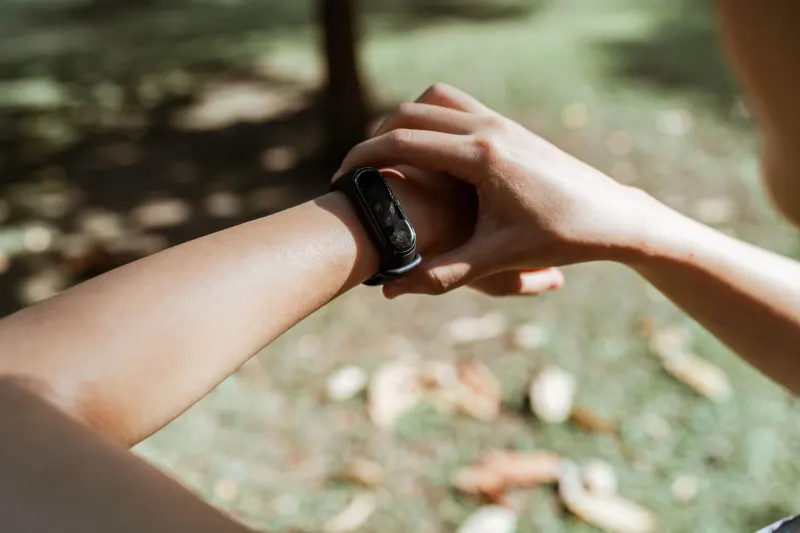
Whoop has carved out a distinct niche in the wearable market by offering a screenless, low-profile fitness tracker focused on vital health metrics and a dedicated social network. However, its pricing structure remains a significant hurdle for many buyers. The tracker is exclusively available through an annual membership ranging from $199 to $359, and cancelling the subscription stops the hardware from working entirely since users do not permanently own the device. Furthermore, the inability to use monthly billing for the first year creates a rigid financial commitment. For shoppers looking to escape this recurring trap without sacrificing core health insights, several compelling alternatives exist on the market today.
Key takeaways
- Xiaomi Smart Band 9 offers an 18-day battery life and core health metrics for $35.99.
- Google Fitbit Air features a screenless design, a 7-day battery, and optional AI wellness coaching.
- Apple Watch SE 3 provides deep iOS integration and Siri AI coaching for $249 with an 18-hour battery.
- Garmin vivosmart 5 bridges the gap between screenless bands and smartwatches at a $149.99 price point.
Budget and Screenless Alternatives
For entry-level users seeking an affordable entry point, the Xiaomi Smart Band 9 costs $35.99 and delivers up to three weeks of typical battery life. It tracks core metrics such as heart rate, sleep, stress, and blood oxygen while supporting more than 50 sport modes and offering customizable replaceable bands. Though it features a crisp display and more than 100 watch faces, it lacks a physical navigation button. Conversely, the Google Fitbit Air closely mirrors Whoop's screenless, low-profile aesthetic. Priced at $99, it lasts roughly a week on a single charge and features fast charging that delivers a day of power in just five minutes. It also tracks blood oxygen saturation while you sleep, a feature missing from some premium budget devices. Unlocking its personalized fitness plans requires a Google Health Premium subscription priced at $9.99 monthly or $99.99 annually.
Smartwatches and Feature-Rich Bands
Apple users seeking broader functionality can turn to the Apple Watch SE 3 for $249. While it diverges completely from Whoop's screenless aesthetic and offers an 18-hour battery life, it provides robust smartphone synchronization and Siri AI guidance to summarize complex health data and answer queries. Extended Siri AI usage ties into iCloud+ storage plans starting at $2.99 per month for the 200GB tier, but users retain permanent ownership of the hardware without mandatory ongoing membership fees. Meanwhile, the Garmin vivosmart 5 retails for $149.99, featuring a minimal display, smartphone notification syncing, and a companion app experience backed by the optional Garmin Connect+ tier at $69.99 per year. Despite lacking built-in GPS, it serves as a versatile middle ground for those wanting discrete notifications without a distracting full-size smartwatch screen.
Advanced Tracking and Built-In GPS Options
Rounding out the options, the Google Fitbit Charge 6 is priced at $159.95 and includes a small display measuring just over an inch. Unlike Whoop, it integrates built-in GPS and connects directly with smart home gym equipment like Peloton and NordicTrack to monitor real-time heart rates during workouts. It includes three free months of Google Health Premium, helping users determine whether the extra subscription features are worth keeping past the trial period. Whether you want an ultra-long-lasting budget band from Xiaomi or a GPS-enabled device from Fitbit, these five wearables provide robust health metrics without forcing you into Whoop's expensive and restrictive ongoing subscription model.



Comments