
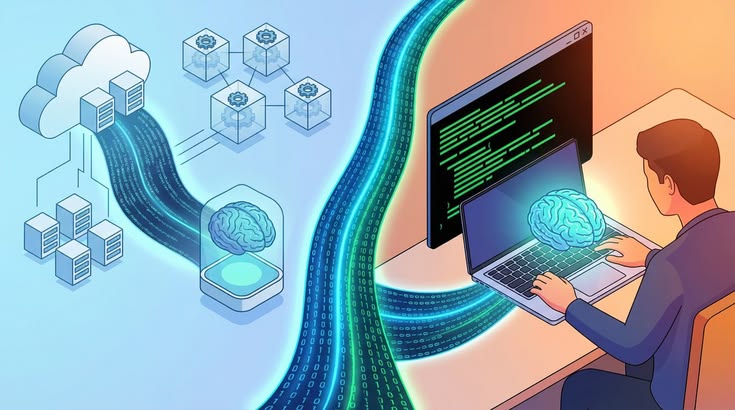
Atlassian has announced a major productivity upgrade for Jira, introducing one-click integration with popular AI coding agents to streamline software development workflows. The new capability allows developers to launch their preferred AI coding assistant directly from a Jira work item without manually copying task descriptions, gathering project details, or writing lengthy prompts. By automatically packaging the necessary project context and sending it to supported AI development tools, Atlassian aims to eliminate repetitive setup work and help engineering teams move from planning to coding much faster. The feature is part of the company's broader strategy to integrate artificial intelligence throughout the software development lifecycle while improving collaboration between project management and coding environments.
For many software teams, development begins inside Jira, where product requirements, bug reports, feature requests, and sprint planning are managed. Traditionally, developers needed to manually copy issue descriptions, acceptance criteria, and technical notes into AI coding assistants before work could begin. Although this process only takes a few minutes for each task, those minutes accumulate across hundreds of work items during every development cycle. Atlassian's latest update removes this friction by allowing developers to send complete work items directly to AI coding tools with a single click.
The new integration supports several leading AI coding platforms at launch. Desktop applications including Cursor, GitHub Copilot, OpenAI Codex, and Visual Studio Code can now be opened directly from Jira with a fully prepared prompt containing the relevant project information. Developers using command-line tools such as Claude Code and Rovo Dev CLI can also generate ready-to-use commands that include the required development context. Instead of manually assembling prompts, developers simply choose their preferred coding tool and begin working immediately.
One of the biggest advantages of the new workflow is automatic context generation. Jira collects information such as the issue summary, task description, project details, and other relevant context before transferring it to the selected AI coding assistant. This reduces the risk of missing important implementation details while allowing AI models to generate more accurate code suggestions from the very beginning. Better context often leads to higher-quality AI responses, reducing the amount of manual correction required later in the development process.
The update also improves developer productivity by reducing unnecessary context switching. Software engineers frequently alternate between project management platforms, documentation systems, integrated development environments (IDEs), and AI assistants throughout the workday. By connecting Jira directly with AI coding tools, Atlassian minimizes interruptions and enables developers to remain focused on implementation rather than administrative tasks.
Another notable improvement is that Jira remembers the developer's previously selected coding tool. Once a preferred AI assistant has been chosen, subsequent work items can be opened even more quickly without repeatedly configuring the integration. This small enhancement contributes to a smoother daily workflow, particularly for developers handling multiple issues during each sprint.
Atlassian is also expanding artificial intelligence across other parts of Jira. Recent platform updates include AI-generated summaries for Confluence links, allowing users to view concise document summaries without leaving Jira. The platform has also introduced AI-assisted JQL query correction, helping administrators automatically identify and fix syntax errors in Jira Query Language searches. These improvements reduce manual effort while making advanced Jira functionality more accessible to all users.
The Jira editor has received AI enhancements as well. Content generation tools are now more visible within the editor interface, allowing users to generate descriptions, comments, and documentation directly while working on tasks. AI-generated suggestions appear in real time and can be edited or accepted immediately, providing a more collaborative writing experience.
Development teams working with Agile methodologies are expected to benefit significantly from these updates. Product managers can continue creating detailed work items inside Jira while developers transfer those tasks directly into AI-assisted coding environments without additional preparation. This creates a smoother connection between project planning and software implementation, reducing delays during sprint execution.
Organizations adopting DevOps practices also gain productivity improvements. Faster task handoffs between planning and development reduce the time required to begin implementation, allowing engineering teams to deliver new features more efficiently while maintaining accurate project tracking within Jira.
Enterprise software teams managing large repositories can also leverage the integration to improve consistency. Because AI coding assistants receive structured task descriptions directly from Jira, generated code is more likely to align with project requirements and acceptance criteria, reducing misunderstandings during development.
Open-source contributors using Jira for issue tracking may also benefit from the streamlined workflow. Contributors can quickly transfer feature requests or bug reports into supported AI coding environments, accelerating debugging, code generation, and documentation without repeatedly switching between applications.
Educational institutions teaching software engineering can use the integration to demonstrate modern AI-assisted development practices. Students learn how project management platforms, coding environments, and artificial intelligence increasingly work together within professional software engineering workflows.
Industry analysts view Atlassian's latest announcement as another example of how project management software is evolving beyond traditional issue tracking. Rather than serving only as planning tools, platforms like Jira are becoming intelligent coordination hubs that connect planning, coding, documentation, testing, and deployment through artificial intelligence.
The integration also highlights the growing importance of interoperability within the developer ecosystem. Instead of requiring organizations to adopt a single AI platform, Atlassian supports multiple popular coding assistants, allowing development teams to continue using their preferred tools while benefiting from tighter workflow integration.
As artificial intelligence becomes increasingly embedded across software development, developers are looking for solutions that reduce repetitive administrative work while improving coding efficiency. Atlassian's one-click AI coding integration addresses this demand by eliminating manual prompt preparation and simplifying the transition from planning to implementation.
The latest Jira enhancements demonstrate how software development platforms are rapidly adapting to the AI era. By connecting project management directly with intelligent coding assistants, Atlassian is helping development teams spend less time on repetitive setup tasks and more time building high-quality software. As AI-assisted programming continues to mature, integrations like these are expected to become a standard component of modern software engineering workflows.





Comments