
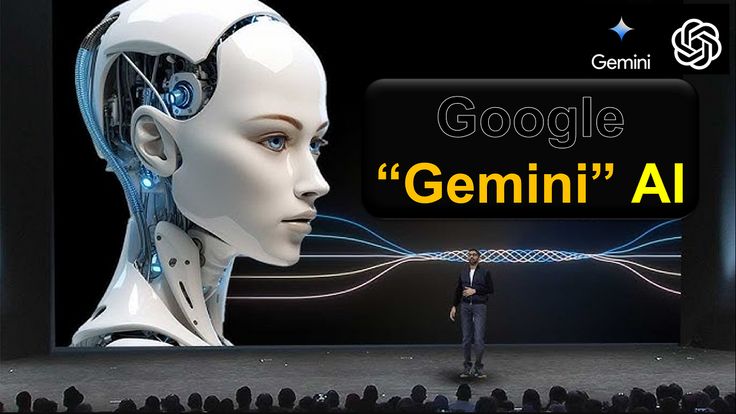
Google has announced a significant upgrade to Gemini, its flagship artificial intelligence assistant, by introducing Scheduled Actions, a new feature that enables users to automate recurring tasks and receive AI-generated assistance at specific times. The update represents another step in Google's broader vision of transforming Gemini from a conversational chatbot into a proactive digital assistant capable of managing daily routines without requiring constant user input. By allowing scheduled prompts and automated workflows, Gemini becomes more useful for both personal productivity and professional work, reducing the need to repeatedly perform the same actions every day. The feature is rolling out to eligible Gemini users as part of Google's ongoing AI expansion across its software ecosystem.
Artificial intelligence assistants have rapidly evolved over the past two years. Initially designed to answer questions and generate text on demand, modern AI platforms are now expected to anticipate user needs, organize information, and perform repetitive tasks automatically. Google's Scheduled Actions feature reflects this evolution by enabling Gemini to work proactively instead of simply responding to user requests.
With Scheduled Actions, users can instruct Gemini to perform a task at a specific time or on a recurring schedule. For example, a professional can ask Gemini to generate a summary of industry news every morning before work, create a weekly productivity report every Friday, remind them about important meetings, or provide a weather and calendar overview each day. Once configured, Gemini performs these tasks automatically according to the chosen schedule.
The feature significantly improves productivity by eliminating repetitive prompts. Instead of typing the same request every day, users only need to configure the task once. Gemini then remembers the instructions and executes them at the scheduled time, creating a more seamless and intelligent user experience.
Google has also designed the feature to integrate naturally with its existing ecosystem. Users who rely on Gmail, Google Calendar, Google Docs, Google Drive, and other Workspace applications can benefit from automated AI-generated summaries, reminders, document preparation, and organizational assistance. This integration makes Gemini a more central component of Google's productivity platform.
For business users, Scheduled Actions can simplify routine administrative work. Employees can receive automated meeting summaries, project updates, market reports, customer communication drafts, and daily planning suggestions without manually requesting them. This allows professionals to begin their workday with organized information already prepared by the AI assistant.
Students are expected to benefit as well. Gemini can automatically prepare study reminders, summarize educational materials, generate revision schedules, and provide daily learning plans based on recurring instructions. By automating routine academic tasks, students can spend more time focusing on learning instead of managing schedules.
Content creators may also find Scheduled Actions particularly valuable. Bloggers, marketers, journalists, and social media managers often perform repetitive research and planning tasks. Gemini can now automatically collect news summaries, suggest content ideas, generate writing outlines, or prepare daily inspiration reports based on predefined schedules.
Software developers can use the feature to receive technology news briefings, programming updates, open-source project summaries, security alerts, and documentation reminders every day. Instead of manually searching for updates across multiple websites, Gemini delivers curated information automatically at scheduled intervals.
The update also supports flexible scheduling. Users can configure tasks to run once, daily, weekly, monthly, or according to custom schedules depending on their individual requirements. This flexibility allows Gemini to adapt to both simple reminders and complex recurring workflows.
Privacy remains an important aspect of the feature. Google states that users maintain full control over their scheduled actions and can edit, pause, or delete automated tasks at any time. The company continues emphasizing transparency and user control as artificial intelligence becomes more deeply integrated into daily digital activities.
Artificial intelligence automation is becoming increasingly competitive across the technology industry. Major AI providers are moving beyond traditional chat interfaces by introducing features that proactively assist users instead of waiting for manual interaction. Scheduled Actions positions Gemini alongside other next-generation AI assistants that emphasize automation, personalization, and productivity.
The new capability also demonstrates Google's long-term strategy of embedding Gemini across its entire software ecosystem. Rather than functioning as a standalone chatbot, Gemini is gradually becoming an intelligent layer that enhances search, productivity applications, Android devices, cloud services, and enterprise software with AI-powered assistance.
Businesses adopting AI productivity tools are expected to benefit from lower administrative workloads and improved operational efficiency. Routine reporting, documentation, planning, and communication tasks can increasingly be delegated to AI systems, allowing employees to focus on higher-value responsibilities that require human judgment and creativity.
Educational institutions are also exploring proactive AI assistants to support both teaching and administration. Automated lesson summaries, scheduling assistance, research organization, and student reminders represent practical applications that could improve academic productivity while reducing repetitive manual work.
Industry analysts believe proactive AI assistants will become one of the defining trends in artificial intelligence over the next few years. Instead of requiring users to constantly initiate conversations, AI systems will increasingly anticipate needs, automate recurring activities, and deliver useful information at the right moment. Scheduled Actions represents an important milestone in that transition.
Google has indicated that additional automation capabilities are expected to arrive in future Gemini updates. As AI models become more capable of understanding context, managing workflows, and interacting with connected applications, users can expect even more sophisticated automation features across Google's ecosystem.
The introduction of Scheduled Actions highlights how artificial intelligence is moving from reactive assistance toward intelligent task management. By allowing Gemini to work in the background on recurring activities, Google is making AI more practical for everyday use while reducing repetitive digital work for millions of users.
As organizations and individuals continue embracing AI-powered productivity tools, features like Scheduled Actions are likely to become standard across modern digital assistants. Google's latest update demonstrates that the future of artificial intelligence lies not only in answering questions but also in helping users manage their time, organize their work, and automate routine tasks more effectively.
With enhanced automation, seamless integration with Google Workspace, flexible scheduling options, and a strong focus on productivity, Gemini continues evolving into one of the most capable AI assistants available today. The latest feature reinforces Google's commitment to making artificial intelligence a practical and reliable partner for work, learning, and everyday life.





Comments