
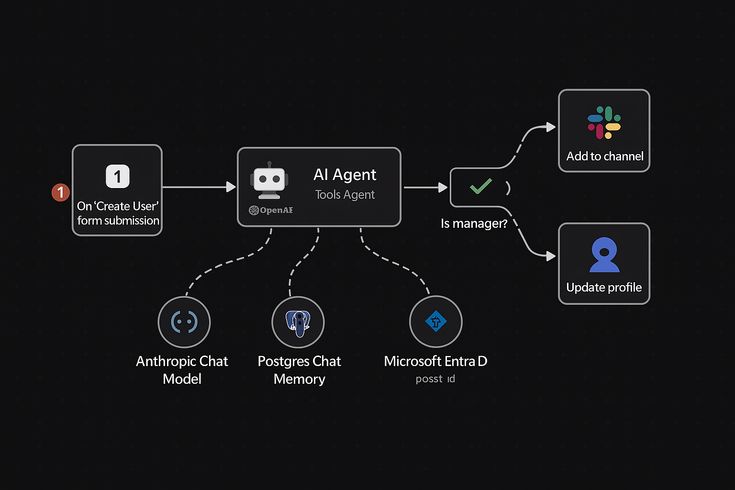
Docker has announced the launch of its AI Agent Toolkit, a comprehensive set of developer tools designed to simplify the creation, testing, deployment, and management of artificial intelligence agents. As AI-powered applications become increasingly capable of performing complex tasks autonomously, developers require better infrastructure to build, containerize, and deploy these intelligent systems efficiently. Docker's latest toolkit addresses this growing demand by providing standardized workflows that allow software engineers to develop AI agents using familiar container-based technologies while maintaining consistency across local development, testing, and cloud production environments.
Artificial intelligence agents represent the next major evolution of generative AI. Unlike traditional chatbots that simply respond to user prompts, AI agents can plan tasks, interact with external applications, retrieve information, execute multi-step workflows, and make decisions based on changing conditions. Building these systems often involves integrating multiple AI models, APIs, databases, and cloud services, creating significant complexity for development teams. Docker's new toolkit aims to reduce this complexity by providing a unified development platform.
One of the toolkit's most important features is containerized AI agent development. Developers can package AI applications together with their dependencies, libraries, runtime environments, and configuration settings into portable Docker containers. This ensures that AI agents behave consistently regardless of whether they are running on a developer's laptop, a testing server, or a cloud-based production environment.
The toolkit also introduces preconfigured templates that help developers quickly start new AI projects. Instead of manually configuring every component, engineers can choose from ready-made project structures optimized for common AI workloads, including conversational assistants, workflow automation agents, research assistants, customer support systems, and enterprise productivity applications.
Docker has also simplified integration with popular large language models and AI frameworks. Developers can connect AI agents with leading model providers, vector databases, orchestration frameworks, and cloud services using standardized configurations, reducing the amount of manual setup required during development.
Testing intelligent applications presents unique challenges because AI-generated responses may vary depending on context, prompts, and model behavior. Docker's toolkit includes improved testing workflows that allow developers to evaluate AI agent performance under different scenarios while maintaining reproducible development environments. This helps engineering teams identify issues before applications reach production.
Another major enhancement focuses on deployment automation. Once an AI application has been developed and tested, the toolkit simplifies deployment across cloud infrastructure, Kubernetes clusters, and enterprise container platforms. Automated deployment pipelines reduce manual configuration while ensuring that applications remain scalable and reliable as usage grows.
Collaboration has also become easier. Containerized development environments enable entire software teams to work with identical configurations, eliminating the "it works on my machine" problem that often affects complex AI projects. Developers, testers, and DevOps engineers can collaborate using consistent environments regardless of their operating systems or hardware.
Security remains a central priority for Docker. The AI Agent Toolkit incorporates image scanning, dependency validation, container isolation, and secure runtime practices that help developers identify vulnerabilities before deploying AI applications. These security capabilities are particularly important as organizations increasingly integrate AI into mission-critical business systems.
Enterprise organizations are expected to benefit significantly from the new toolkit. Businesses deploying AI-powered customer service platforms, internal productivity assistants, automation workflows, and intelligent data processing systems often require standardized infrastructure capable of supporting large-scale operations. Docker's container-first approach provides the consistency needed for enterprise AI deployment.
Cloud computing providers also play an important role in the toolkit's ecosystem. AI agents frequently rely on scalable cloud infrastructure for inference, storage, orchestration, and monitoring. Docker's standardized containers simplify migration between cloud environments while supporting hybrid and multi-cloud deployment strategies.
Open-source developers stand to gain valuable advantages as well. Many AI frameworks and libraries evolve rapidly, making dependency management increasingly difficult. Containerized environments help maintain compatibility between projects while reducing conflicts caused by changing software versions.
Educational institutions teaching artificial intelligence and software engineering can use the toolkit to provide students with realistic development environments that closely resemble modern industry workflows. By learning container-based AI development, students gain practical skills applicable across a wide range of enterprise software projects.
The growing popularity of agentic AI has created demand for better development infrastructure. Modern AI systems often coordinate multiple models, APIs, databases, and external services to complete sophisticated workflows. Docker's toolkit helps organize these components into manageable, portable applications that can be deployed consistently across different computing environments.
Performance optimization also receives attention. Developers can configure resource allocation, monitor container performance, and optimize AI workloads for efficient CPU and GPU utilization. These capabilities help reduce infrastructure costs while maintaining responsive AI services under increasing workloads.
Industry analysts believe standardized AI development platforms will become essential as organizations move from AI experimentation to large-scale production deployment. Consistent infrastructure reduces operational complexity while improving reliability, security, and maintainability across AI-powered software systems.
Docker's announcement reflects the broader evolution of software engineering. Artificial intelligence is no longer treated as an isolated technology but is increasingly integrated into mainstream development workflows alongside containers, cloud infrastructure, DevOps automation, and continuous integration pipelines.
The company has emphasized that the toolkit supports developer flexibility rather than enforcing a single AI framework or model provider. Teams can continue using their preferred programming languages, machine learning libraries, and cloud services while benefiting from Docker's standardized deployment model.
As businesses continue investing in AI-powered applications, reliable development infrastructure becomes increasingly important. Containerization allows organizations to accelerate innovation while maintaining operational consistency across development, testing, staging, and production environments.
The introduction of Docker's AI Agent Toolkit demonstrates how developer tools are adapting to the rapid growth of artificial intelligence. By combining container technology with modern AI workflows, Docker is helping engineering teams build intelligent applications more efficiently while reducing deployment complexity.
With standardized AI development environments, improved testing capabilities, automated deployment pipelines, stronger security features, seamless cloud integration, and enterprise-ready container support, Docker's AI Agent Toolkit represents a significant step forward in the future of AI software development. As intelligent applications become more common across industries, tools that simplify their creation and deployment will play an increasingly important role in the global software ecosystem.





Comments