
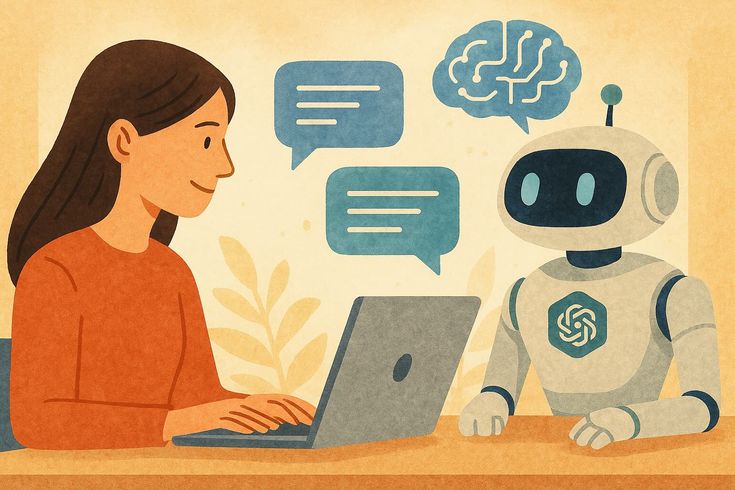
OpenAI has continued expanding the capabilities of ChatGPT's Memory feature, making conversations more personalized, context-aware, and productive for users across both personal and professional use cases. The latest enhancements allow ChatGPT to better remember user preferences, recurring tasks, communication styles, and long-term projects—while still giving users complete control over what is remembered and what is forgotten. As artificial intelligence evolves beyond one-time interactions, persistent memory is becoming one of the most valuable features for creating a truly intelligent digital assistant.
When generative AI first became widely available, every conversation typically started from scratch. Users had to repeatedly explain their preferences, writing style, project details, or professional requirements each time they started a new chat. While AI models were capable of generating high-quality responses, they lacked long-term continuity between conversations. OpenAI's improved Memory feature addresses this limitation by allowing ChatGPT to retain useful information over time, making future interactions faster, more relevant, and more personalized.
One of the most important improvements is better contextual understanding. ChatGPT can now remember details such as preferred writing tone, favorite programming languages, ongoing work projects, learning goals, and frequently used workflows. Instead of requiring users to provide the same information repeatedly, the AI automatically incorporates relevant context into future responses whenever appropriate.
The feature is especially valuable for professionals who regularly use AI for content creation, software development, project management, and research. For example, a software engineer can ask ChatGPT to remember preferred coding standards or programming frameworks, while a content creator can save preferred article formats, writing styles, and SEO guidelines. This reduces repetitive instructions and creates a more efficient workflow.
Students also benefit from improved memory capabilities. ChatGPT can remember learning objectives, preferred study methods, academic subjects, or ongoing assignments, allowing it to provide more consistent educational support over time. Instead of restarting every tutoring session from the beginning, the AI can continue building upon previous discussions and adapt explanations to the student's progress.
Businesses are increasingly adopting AI assistants that understand organizational workflows and employee preferences. Improved memory allows ChatGPT to support recurring business activities such as report preparation, meeting summaries, documentation, customer communication, and strategic planning while maintaining consistency across multiple conversations.
OpenAI has placed significant emphasis on user control and transparency. Users can view what ChatGPT remembers, update stored information, remove individual memories, or disable the feature entirely whenever they choose. This ensures that personalization remains optional and under the user's direct control rather than operating automatically without visibility.
Privacy remains a key priority throughout the Memory system. OpenAI has designed the feature so users decide what information should be retained. Temporary chats continue to function without using memory, allowing sensitive or one-time conversations to remain separate from long-term personalized interactions.
The enhanced memory capabilities also improve collaborative work. Teams using ChatGPT for ongoing projects can maintain consistent writing styles, project requirements, technical terminology, and documentation standards over extended periods. This reduces inconsistencies while helping organizations integrate AI more effectively into everyday workflows.
Software developers can use memory to store preferred coding conventions, technology stacks, debugging approaches, and project structures. As a result, ChatGPT can generate code that more closely aligns with existing development practices without requiring detailed explanations during every conversation.
Content creators, marketers, and journalists are expected to benefit significantly from persistent memory. The AI can remember preferred formatting styles, audience preferences, editorial guidelines, and recurring content themes, making article creation faster while maintaining consistency across multiple projects.
The latest enhancements also improve long-term project management. Users working on books, research papers, software applications, marketing campaigns, or business strategies can continue conversations over weeks or months without repeatedly summarizing earlier discussions. This continuity allows ChatGPT to function more like an ongoing project assistant rather than a standalone chatbot.
Artificial intelligence is increasingly moving toward personalized assistance instead of generic responses. Modern AI systems are expected to understand user habits, adapt to individual preferences, and provide recommendations based on previous interactions. Memory plays a central role in enabling this evolution while preserving flexibility and user control.
Enterprise organizations adopting AI assistants require both personalization and governance. OpenAI continues developing administrative controls that allow businesses to deploy memory features responsibly while respecting organizational privacy policies and security requirements.
Industry analysts believe persistent memory will become a standard capability across advanced AI assistants. As users rely on AI for increasingly complex tasks, remembering relevant context becomes essential for improving productivity, reducing repetitive work, and creating more natural interactions.
The expansion of ChatGPT's Memory also reflects the broader transformation of artificial intelligence from reactive systems into proactive digital assistants. Instead of responding only to isolated prompts, AI can now build long-term understanding, support ongoing objectives, and adapt continuously as user needs evolve.
OpenAI has emphasized that memory is designed to enhance convenience rather than replace user oversight. Users remain fully informed about stored information and retain complete authority over how the feature operates, reinforcing the company's commitment to responsible AI development.
The software industry is increasingly recognizing that personalization is one of the defining characteristics of next-generation AI. Digital assistants capable of remembering preferences, maintaining project continuity, and adapting to individual workflows offer significantly greater practical value than systems limited to one-time conversations.
With stronger contextual awareness, improved personalization, user-controlled memory management, better long-term project support, enterprise-ready capabilities, and a continued focus on privacy, ChatGPT's enhanced Memory feature represents another important milestone in the evolution of conversational artificial intelligence.
As AI assistants become more deeply integrated into daily life, features that reduce repetition and improve continuity will play an increasingly important role. OpenAI's latest Memory enhancements move ChatGPT closer to becoming a reliable long-term digital companion capable of supporting work, education, creativity, and productivity through more natural and personalized interactions.





Comments