
OpenAI has announced a significant expansion of ChatGPT Business, introducing a range of new collaboration, security, and workflow automation capabilities designed to help organizations integrate artificial intelligence into everyday business operations. The latest enhancements focus on making ChatGPT a more powerful workplace assistant by improving team collaboration, strengthening enterprise security, expanding knowledge management, and enabling organizations to automate routine tasks using conversational AI. As businesses continue increasing their investment in generative AI, the new features position ChatGPT Business as a comprehensive productivity platform for companies of all sizes.
Artificial intelligence has rapidly become an essential workplace technology across industries including finance, healthcare, education, software development, customer service, marketing, and legal services. While early AI adoption centered on individual productivity, organizations are now seeking enterprise-wide solutions that enable teams to collaborate securely while maintaining administrative control over sensitive business information. OpenAI's latest updates address this growing demand by introducing features specifically designed for collaborative business environments.
One of the most important improvements is shared collaborative workspaces. Teams can now organize conversations, documents, research projects, and AI-generated content within centralized environments where authorized members can access shared knowledge and continue ongoing discussions. Instead of keeping valuable AI interactions isolated within individual accounts, businesses can preserve institutional knowledge that remains available even as teams evolve over time.
Knowledge management has become another major focus of the update. Organizations often maintain large collections of documents, internal policies, technical manuals, product information, and operational guidelines that employees need to access regularly. ChatGPT Business can connect with approved organizational resources, allowing employees to retrieve relevant information through natural language conversations rather than manually searching multiple systems.
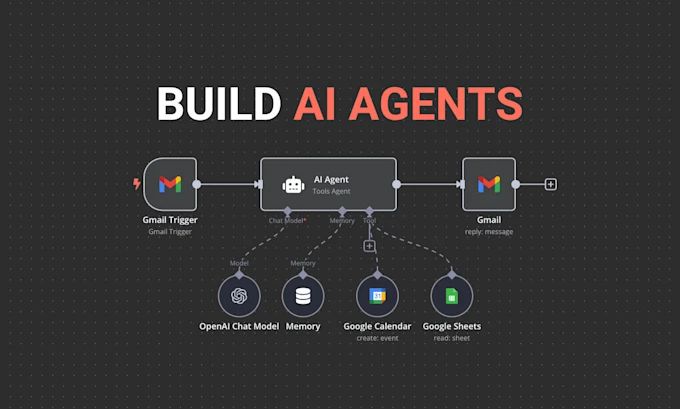
Workflow automation has also received significant enhancements. Businesses can create AI-assisted workflows that help draft reports, summarize meetings, prepare presentations, generate emails, organize research, analyze documents, and automate repetitive administrative tasks. These capabilities allow employees to spend less time on routine work while focusing on strategic decision-making and customer engagement.
Security remains one of the highest priorities for enterprise customers. OpenAI has strengthened administrative controls by providing organizations with improved user management, permission settings, workspace governance, audit capabilities, and data protection mechanisms. These features help businesses deploy AI responsibly while ensuring sensitive corporate information remains secure.
Software development teams can leverage ChatGPT Business to accelerate coding tasks, review technical documentation, explain complex source code, generate implementation ideas, and assist with debugging. Shared AI workspaces improve collaboration between developers while maintaining consistent technical knowledge across engineering projects.
Marketing departments are expected to benefit from AI-assisted content creation and campaign planning. Teams can collaborate on advertising copy, product descriptions, blog articles, social media content, market research, and customer communications while maintaining consistent brand messaging throughout their organization.
Customer service organizations can use ChatGPT Business to improve response quality by providing support agents with instant access to product documentation, troubleshooting procedures, customer policies, and recommended solutions. AI-assisted knowledge retrieval helps reduce response times while improving customer satisfaction.
Human resources departments may also adopt the platform for onboarding materials, employee handbooks, policy explanations, training content, interview preparation, and internal communications. AI simplifies access to organizational information while supporting more efficient employee engagement.
Business analysts increasingly rely on AI to process large volumes of information. ChatGPT Business assists with summarizing reports, identifying trends, organizing research findings, generating executive summaries, and preparing strategic recommendations based on available organizational knowledge. This enables faster decision-making while reducing manual analysis.
Educational institutions and corporate training programs are expected to benefit as well. AI-powered collaboration can support lesson planning, curriculum development, research assistance, personalized learning resources, and employee training initiatives within secure organizational environments.
OpenAI has also improved integration capabilities, allowing ChatGPT Business to connect more effectively with workplace applications, productivity tools, document management systems, and enterprise workflows. These integrations reduce context switching while embedding AI assistance directly into existing business processes.
Performance optimizations ensure that the platform remains responsive even as organizations manage larger projects involving multiple users and extensive document collections. Improved conversation management allows teams to maintain long-running discussions while preserving important context throughout ongoing work.
Industry analysts believe enterprise AI platforms are entering a new phase where collaboration, governance, and organizational knowledge are becoming just as important as language generation itself. Businesses increasingly expect AI systems that support entire teams rather than individual users working independently.
Competition within enterprise AI continues accelerating as technology companies expand workplace-focused offerings that combine conversational intelligence with workflow automation, document analysis, project management, and business productivity. OpenAI's latest ChatGPT Business enhancements strengthen its position within this rapidly growing enterprise software market.
Small and medium-sized businesses are also expected to gain significant advantages from the new capabilities. Organizations without large IT departments can implement enterprise-grade AI collaboration tools while reducing operational complexity and improving overall productivity through intelligent automation.
OpenAI continues emphasizing responsible AI deployment by providing organizations with controls that support transparency, user oversight, and secure handling of business information. Human decision-making remains central to enterprise workflows, with AI functioning as a collaborative assistant rather than an autonomous replacement for employees.
The latest expansion demonstrates OpenAI's broader strategy of evolving ChatGPT beyond a conversational chatbot into a complete workplace productivity platform capable of supporting communication, knowledge management, research, automation, and collaboration across entire organizations.
As artificial intelligence becomes increasingly integrated into everyday business operations, platforms that combine intelligent conversation with secure collaboration and workflow automation are expected to become essential components of the modern digital workplace.
With shared AI workspaces, advanced knowledge management, enterprise-grade security, workflow automation, improved integrations, collaborative document assistance, and scalable organizational features, the latest ChatGPT Business update represents another important milestone in the evolution of enterprise productivity software. As businesses continue embracing AI-driven transformation, ChatGPT Business is helping redefine how teams collaborate, access information, and accomplish work more efficiently in the age of intelligent software.





Comments