
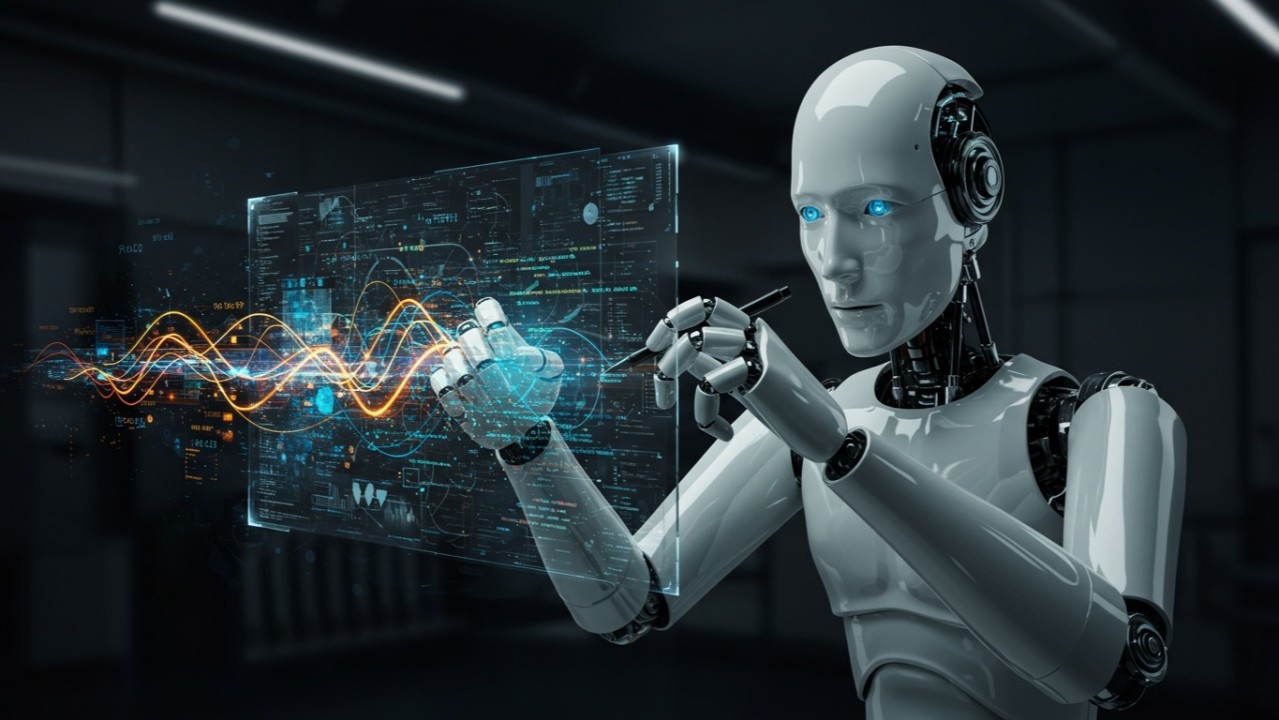
Artificial intelligence is reshaping the world of digital content production by introducing powerful creativity tools that help professionals and businesses create high-quality content more efficiently. From writing articles and designing graphics to producing videos, generating audio, and automating editing workflows, AI-powered creative platforms are transforming how digital content is planned, produced, and distributed.
As organizations face growing demand for engaging content across websites, social media, marketing campaigns, and digital platforms, AI creativity tools are becoming an essential part of modern content strategies. These technologies enable creators to reduce production time while maintaining consistency, quality, and scalability.
One of the most significant advancements is AI-assisted writing. Modern language models help generate blog posts, product descriptions, marketing copy, email campaigns, social media content, reports, and documentation. Intelligent writing assistants can also improve grammar, refine tone, summarize information, and optimize content for different audiences.
Image generation capabilities have expanded rapidly in recent years. AI-powered design tools can create illustrations, concept art, promotional graphics, product visuals, presentation assets, and marketing materials from natural language prompts. These tools help designers and businesses accelerate creative workflows while exploring new visual concepts.
Video production is also being transformed by artificial intelligence. AI platforms assist with script writing, scene generation, subtitle creation, voice narration, automated editing, and visual enhancements. Intelligent editing features reduce manual effort and enable creators to produce professional-quality videos more efficiently.
Audio creation technologies are becoming increasingly sophisticated. AI-generated voiceovers, speech synthesis, podcast editing, multilingual narration, and background music generation allow creators to produce engaging audio content for educational, entertainment, and commercial applications.
Automation is a major advantage of AI creativity tools. Repetitive tasks such as formatting, resizing assets, generating metadata, creating captions, translating content, and scheduling publications can now be handled automatically, allowing creative professionals to focus on storytelling and strategy.
Businesses are integrating AI creativity tools into marketing workflows to improve campaign execution. AI supports audience analysis, keyword optimization, personalized messaging, content recommendations, and performance insights, helping organizations produce more targeted and effective communications.
Multimodal AI systems are further expanding creative possibilities. Modern platforms can understand and generate text, images, audio, video, and structured information within a single environment. This unified approach simplifies complex production workflows and enables seamless collaboration across creative teams.
Content creators and influencers are increasingly adopting AI-powered tools to accelerate production for blogs, podcasts, online courses, livestreams, and social media platforms. Faster content creation allows creators to maintain consistent publishing schedules while exploring new creative formats.
Educational institutions and corporate training programs are using AI creativity platforms to develop presentations, instructional videos, interactive learning materials, quizzes, and digital course content. Personalized educational resources can be produced more quickly while adapting to different learning needs.
Software developers are incorporating AI into creative applications through intelligent design assistants, automated code generation, interface design recommendations, and collaborative development tools. These innovations improve both creative and technical productivity.
Cloud computing continues to support widespread AI adoption by providing scalable access to advanced creative models and enterprise-grade collaboration tools. Businesses of all sizes can leverage sophisticated AI capabilities without investing heavily in specialized infrastructure.
Responsible AI development remains an important priority. Technology providers are implementing safeguards related to copyright, content authenticity, data privacy, transparency, and ethical AI use to encourage responsible deployment of creative technologies across industries.
Collaboration between humans and AI is becoming more natural and productive. Rather than replacing human creativity, AI tools are increasingly serving as intelligent assistants that help generate ideas, automate routine tasks, and enhance creative decision-making while leaving artistic direction under human control.
Industry experts expect AI creativity tools to continue advancing through improved reasoning, richer multimodal capabilities, enhanced personalization, and deeper integration with professional creative software. Future platforms are likely to provide even more intelligent assistance across every stage of the content production lifecycle.
As digital content continues to play a central role in business communication, education, entertainment, and marketing, AI-powered creativity tools are becoming indispensable resources for organizations and creators alike. Their ability to combine automation with creative assistance is redefining content production, enabling faster workflows, greater innovation, and more engaging digital experiences.





Comments