
The Linux Kernel 6.17 has officially been released, bringing a broad range of improvements focused on hardware compatibility, performance optimization, virtualization, security, and power efficiency. As the core component of every Linux-based operating system, the latest kernel update introduces better support for next-generation AMD and Intel processors, faster file system performance, expanded virtualization capabilities, and enhanced driver compatibility. The release reflects the Linux community's continued effort to modernize the operating system while supporting everything from personal computers and enterprise servers to cloud infrastructure and embedded devices.
The Linux kernel serves as the bridge between hardware and software, managing processor scheduling, memory allocation, storage devices, networking, and system security. Although end users may not directly interact with the kernel, every improvement made at this level affects overall system responsiveness, application performance, and hardware stability.
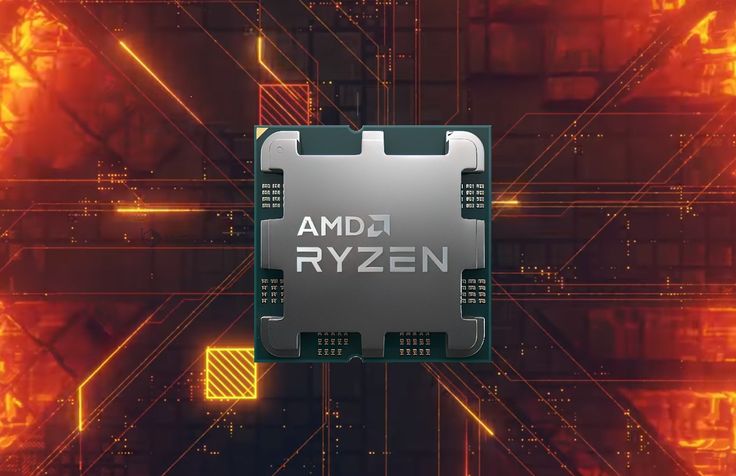
One of the biggest highlights of Linux Kernel 6.17 is expanded support for the latest AMD and Intel processors. New scheduler optimizations allow the operating system to better distribute workloads across modern multi-core CPUs, improving performance in demanding applications such as software development, virtualization, artificial intelligence, and scientific computing. These enhancements also contribute to improved power efficiency, particularly on laptops and mobile workstations.
Graphics support has received significant attention as well. Updated drivers improve compatibility with recent AMD Radeon and Intel Arc graphics hardware while enhancing stability for gaming, content creation, and GPU-accelerated computing. Better graphics driver support benefits both desktop Linux users and organizations deploying Linux workstations for professional workloads.
Storage performance continues to improve through optimizations to popular Linux file systems, including EXT4, Btrfs, and XFS. Faster metadata operations, improved caching, and reduced input/output latency help applications launch more quickly while accelerating file transfers and database workloads. These improvements are particularly valuable for enterprise servers handling large amounts of data.
Virtualization remains another major focus of the release. Linux Kernel 6.17 introduces enhancements for KVM (Kernel-based Virtual Machine), enabling more efficient virtual machine execution and better resource utilization. Cloud providers and enterprise organizations relying on virtualization platforms can expect improved scalability and reduced overhead when running multiple virtual machines simultaneously.
Containerized environments also benefit from the update. Modern software increasingly runs inside Docker containers and Kubernetes clusters, requiring efficient process isolation and resource management. Kernel-level optimizations improve container startup times, networking efficiency, and memory utilization, supporting the growing demand for cloud-native application deployment.
Networking performance has been further optimized through updated TCP/IP handling and improved support for high-speed network adapters. Organizations operating data centers, cloud infrastructure, and edge computing environments can take advantage of lower network latency and better throughput under heavy workloads.
Security remains a central priority throughout Linux Kernel 6.17. Developers have addressed several reported vulnerabilities while strengthening memory protection mechanisms, access controls, and kernel isolation technologies. These enhancements help reduce potential attack surfaces while improving overall operating system resilience.
Power management has also been refined, especially for laptops and portable Linux devices. Better CPU scheduling, more efficient background processing, and optimized hardware power states contribute to longer battery life without sacrificing performance. Users of Linux notebooks should notice improved energy efficiency during everyday workloads.
Driver support continues expanding across a wide range of hardware. Linux Kernel 6.17 introduces compatibility improvements for wireless adapters, storage controllers, USB devices, sensors, and newer peripheral technologies. Broader hardware support simplifies Linux installation on recently released computers while reducing the need for third-party drivers.
Artificial intelligence workloads are expected to benefit from several kernel improvements. AI training systems often rely on GPUs, high-performance storage, fast networking, and optimized memory management. Kernel-level enhancements help maximize hardware utilization for machine learning frameworks running on Linux servers.
Developers building Linux-based applications gain a more stable platform through updated kernel APIs, improved debugging tools, and better tracing capabilities. These enhancements simplify driver development, performance analysis, and low-level software optimization.
Enterprise organizations remain among the largest beneficiaries of each kernel release. Linux powers a significant percentage of cloud servers, supercomputers, enterprise databases, and container orchestration platforms worldwide. Incremental kernel improvements contribute directly to better reliability, scalability, and operational efficiency across these environments.
The open-source development model continues to drive Linux innovation. Thousands of contributors representing hardware manufacturers, technology companies, academic institutions, and independent developers participate in kernel development. This collaborative approach ensures broad hardware compatibility while accelerating support for emerging technologies.
Educational institutions also benefit from new kernel releases. Students studying operating systems, computer architecture, cybersecurity, and systems programming gain access to modern implementations of scheduling algorithms, memory management, device drivers, and virtualization technologies through the open Linux source code.
Industry analysts believe Linux will remain the dominant operating system for cloud infrastructure, artificial intelligence, edge computing, and enterprise servers throughout the coming decade. Continuous improvements at the kernel level ensure that Linux can efficiently support increasingly powerful processors, larger memory systems, and evolving cloud-native architectures.
Competition among operating systems continues encouraging rapid innovation. While Windows and macOS focus heavily on desktop experiences, Linux continues strengthening its position across cloud computing, embedded systems, enterprise infrastructure, and developer workstations through regular kernel updates.
The Linux development community has indicated that future kernel releases will continue expanding hardware compatibility, security protections, virtualization capabilities, AI infrastructure support, and energy efficiency while maintaining the stability expected from production operating systems.
With improved AMD and Intel processor support, faster file systems, stronger virtualization, enhanced networking, better graphics drivers, expanded hardware compatibility, refined power management, and continued open-source innovation, Linux Kernel 6.17 represents another major milestone for the world's most widely deployed open-source operating system. As Linux continues powering everything from smartphones and cloud platforms to supercomputers and enterprise servers, the latest kernel release further strengthens its foundation for the next generation of computing.





Comments