
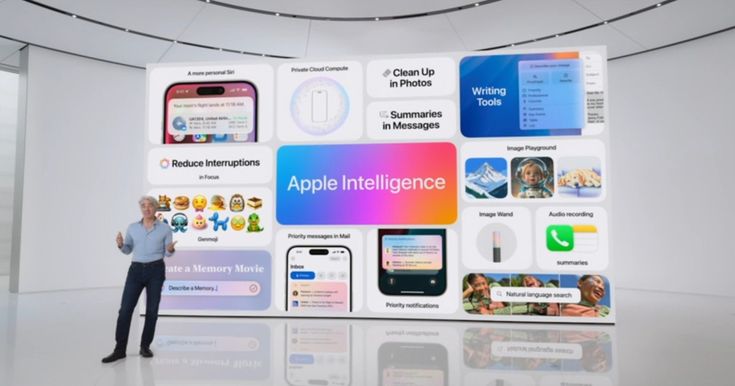
Apple has announced that its Foundation Models framework will become open source, marking one of the company's biggest developer-focused AI announcements in recent years. Revealed during WWDC 2026, the move is designed to make it easier for developers to build AI-powered applications across Apple's ecosystem while reducing infrastructure costs and improving access to advanced on-device and cloud-based AI capabilities. Alongside the announcement, Apple also introduced major enhancements to Xcode 27, expanded support for third-party AI models, and unveiled new tools for building intelligent applications across iPhone, iPad, Mac, and Vision Pro.
The Foundation Models framework serves as Apple's primary platform for integrating artificial intelligence into applications. It allows developers to access Apple's AI models using simple APIs without having to build or train large language models themselves. By making the framework open source, Apple hopes to encourage greater innovation while allowing developers to inspect, extend, and contribute to the underlying technology.
One of the most significant announcements is that smaller developers will receive free access to Apple's Private Cloud Compute infrastructure for Foundation Models, removing a major financial barrier to building AI-powered applications. Developers with fewer than two million first-time App Store downloads can access Apple's cloud AI services without paying infrastructure costs, making advanced AI development more accessible to startups and independent creators.
Apple has also expanded the framework to support image inputs, allowing applications to process both text and visual information. Developers can now build multimodal AI experiences capable of understanding photos, screenshots, scanned documents, diagrams, and other visual content alongside traditional text prompts.
Another major enhancement is support for third-party AI models. Instead of being limited to Apple's own models, developers can now call external models such as Claude and Gemini through the same Swift APIs used by the Foundation Models framework. This unified interface allows developers to switch between different AI providers without significantly changing application code, simplifying development while reducing vendor lock-in.
Apple also introduced Dynamic Profiles, a new system for creating multi-agent AI workflows. Rather than relying on a single AI model for every task, developers can design applications where multiple specialized AI agents collaborate to complete complex workflows such as document analysis, software development, customer support, or business automation.
The announcement is closely tied to the release of Xcode 27, which receives significant AI-powered improvements. Apple's development environment now includes more advanced coding agents capable of interacting with the iOS Simulator, generating localized content, running automated tests, identifying application crashes, and recommending fixes based on crash reports collected through Organizer. These enhancements help developers reduce debugging time while accelerating application development.
Xcode Cloud has also been optimized, with Apple reporting build times that are up to twice as fast as previous versions. Faster cloud builds allow developers to iterate more quickly while improving continuous integration and deployment workflows for both individual developers and enterprise engineering teams.
Apple's new Core AI framework further expands AI development by enabling developers to run custom machine learning models directly on Apple silicon devices. The framework includes optimized model compilation, performance analysis tools, and Python-based conversion utilities for machine learning models created using PyTorch. These capabilities make it easier to deploy efficient AI applications that run locally without requiring constant cloud connectivity.
Swift developers receive several additional improvements through Swift 6.4, including enhanced compiler diagnostics, better asynchronous programming support, simplified platform availability syntax, and performance improvements. Apple also revealed that portions of its own operating system kernel are now being written in Swift, highlighting the language's growing maturity for system-level development.
The update also strengthens App Intents and Siri integration. Developers can expose application content to Spotlight's semantic search index, allowing Siri to discover and interact with app data using natural language. A new View Annotations API enables Siri to understand on-screen content more effectively, making conversations with Apple's AI assistant more context-aware.
Enterprise developers are expected to benefit significantly from these announcements. Organizations building internal productivity tools, customer service platforms, healthcare applications, or financial software can integrate advanced AI capabilities while maintaining compatibility with Apple's privacy-focused architecture. Free cloud access for qualifying developers may also accelerate innovation among smaller software companies.
Privacy remains central to Apple's AI strategy. While cloud-based processing is available when needed, Apple continues emphasizing on-device execution whenever possible. The company states that developers can choose between local AI models, Apple's Private Cloud Compute, or supported third-party models depending on their application's requirements.
Educational institutions and independent developers are also likely to benefit. Open-sourcing the Foundation Models framework allows students, researchers, and open-source contributors to study Apple's AI implementation while building new tools and extensions for the broader developer community.
Industry analysts view the announcement as one of Apple's strongest efforts yet to compete in the rapidly evolving AI software ecosystem. By combining open-source development, flexible model selection, powerful developer tools, and privacy-focused infrastructure, Apple aims to attract developers seeking alternatives to more tightly controlled AI platforms.
Looking ahead, Apple has confirmed that the Foundation Models framework will officially become open source later this year, with continued investment planned in AI tooling, developer APIs, and intelligent application frameworks. Future updates are expected to expand multimodal capabilities, improve agent workflows, and deepen integration across Apple's operating systems.
With an open-source Foundation Models framework, free AI cloud access for qualifying developers, multimodal support, third-party model integration, Dynamic Profiles for multi-agent workflows, Xcode 27 enhancements, faster cloud builds, and new Core AI tools, Apple has delivered one of its most ambitious developer platform updates to date. As artificial intelligence becomes a core component of modern software development, these technologies position Apple's ecosystem as an increasingly attractive platform for building the next generation of intelligent applications.





Comments