
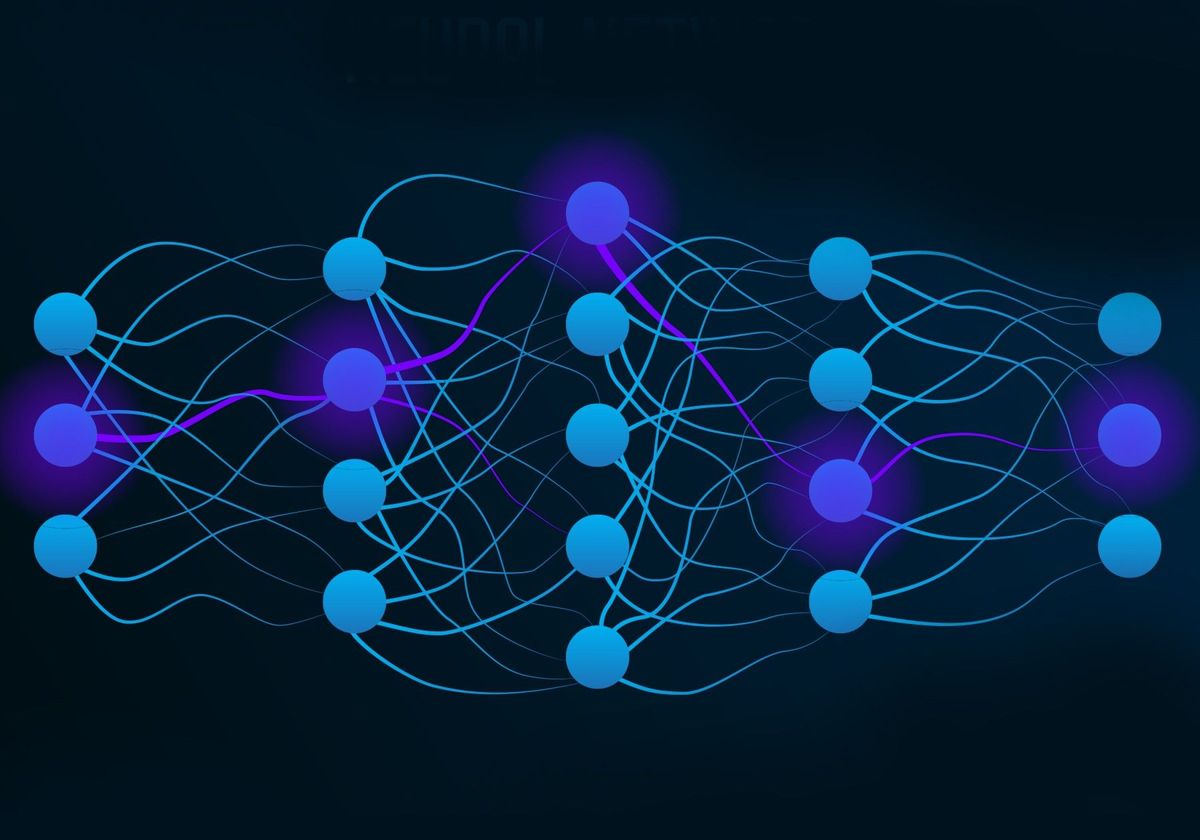
Scientists and artificial intelligence researchers are actively developing the next generation of neural networks to create AI systems that are more intelligent, efficient, adaptable, and reliable. Building on decades of progress in machine learning, researchers are exploring new neural network architectures that improve reasoning, learning efficiency, multimodal understanding, and real-world performance across a wide variety of applications.
Neural networks are the foundation of modern artificial intelligence, enabling computers to recognize patterns, process information, and perform tasks such as language understanding, image recognition, speech processing, and decision support. As AI adoption expands across industries, research is increasingly focused on making these models more capable while reducing computational requirements.
One of the primary research goals is improving reasoning capabilities. Next-generation neural networks are being designed to better understand context, solve multi-step problems, analyze complex relationships, and generate more accurate responses. Enhanced reasoning enables AI to support sophisticated applications in business, scientific research, education, software development, and healthcare.
Researchers are also advancing multimodal neural networks that can process multiple types of information—including text, images, audio, video, documents, and structured data—within a unified model. These systems enable richer interactions and allow AI to perform tasks that require understanding information from several sources simultaneously.
Efficiency has become another major area of innovation. Scientists are developing optimized neural network architectures that require fewer computational resources while maintaining strong performance. Improvements in model compression, sparse computing, parameter-efficient learning, and adaptive inference are helping reduce training costs, lower energy consumption, and expand access to advanced AI technologies.
Foundation models continue to benefit from advances in neural network research. Improved architectures support stronger language understanding, longer contextual memory, better knowledge retrieval, and more flexible adaptation for enterprise, research, and consumer applications.
Healthcare researchers are applying advanced neural networks to medical imaging analysis, biomedical research, clinical documentation, and healthcare administration. These AI systems assist healthcare professionals by improving information processing and supporting medical research while keeping clinical decisions under human supervision.
Software engineering is also evolving through improvements in neural network design. AI-powered coding assistants can generate software, explain programming concepts, review code quality, detect errors, and assist with debugging. More capable neural networks enhance developer productivity while supporting higher-quality software development.
Robotics research is leveraging next-generation neural networks to improve perception, navigation, object recognition, motion planning, and autonomous decision-making. Intelligent robots equipped with advanced AI can operate more effectively in manufacturing, logistics, agriculture, healthcare, and environmental monitoring.
Scientific research is accelerating through AI-powered neural networks that analyze large datasets, summarize literature, identify hidden patterns, and generate research insights. These capabilities support discoveries in biology, chemistry, materials science, climate research, and numerous other scientific disciplines.
Enterprise organizations are deploying advanced neural networks within workflow automation, business intelligence, customer support, cybersecurity, knowledge management, and digital collaboration platforms. Intelligent systems improve operational efficiency while enabling employees to focus on strategic and creative responsibilities.
Cloud computing infrastructure continues to support neural network innovation by providing scalable computing resources, specialized AI hardware, and distributed training environments. High-performance cloud platforms allow researchers to experiment with increasingly sophisticated models while making enterprise deployment more practical.
Responsible AI development remains an essential component of neural network research. Scientists are investigating methods that improve explainability, fairness, transparency, robustness, security, and privacy. These efforts help ensure that future AI systems remain trustworthy and suitable for deployment in critical applications.
Collaboration between universities, research laboratories, technology companies, and open-source communities continues to accelerate innovation. Shared datasets, software frameworks, evaluation benchmarks, and academic publications enable researchers worldwide to refine neural network architectures and expand practical AI capabilities.
Emerging research areas include adaptive learning, continual learning, memory-augmented neural networks, neuromorphic computing, and AI systems capable of learning more efficiently from limited data. These innovations aim to create models that are more flexible, scalable, and capable of operating effectively in dynamic environments.
Industry experts expect next-generation neural networks to become increasingly efficient, multimodal, and reasoning-focused, supporting advances in autonomous systems, enterprise AI, scientific discovery, personalized education, digital healthcare, and intelligent automation. Continued research is likely to unlock new possibilities for AI applications across nearly every sector of the global economy.
As artificial intelligence continues to evolve, next-generation neural networks are laying the foundation for more capable and versatile intelligent systems. By improving performance, efficiency, adaptability, and reliability, researchers are shaping the future of AI and enabling technologies that will transform industries, accelerate scientific progress, and enhance everyday digital experiences.





Comments