
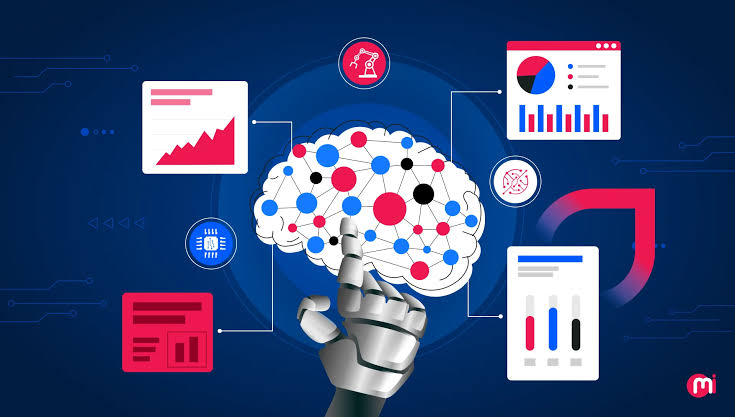
Machine learning is becoming an increasingly important technology across industries as organizations invest in intelligent systems to improve efficiency, automate routine processes, and gain deeper insights from data. Advances in algorithms, cloud computing, data infrastructure, and AI platforms are making machine learning more accessible, allowing businesses of all sizes to integrate predictive analytics and intelligent automation into their operations.
Unlike traditional software that follows predefined rules, machine learning systems identify patterns within data and use those patterns to support predictions, recommendations, and decision-making. As data volumes continue to grow, organizations are using machine learning to uncover insights that would be difficult or time-consuming to identify manually.
Healthcare is among the leading sectors adopting machine learning. Hospitals, research institutions, and healthcare providers are using ML to assist with medical imaging analysis, disease research, clinical documentation, hospital operations, patient scheduling, and resource planning. While healthcare professionals remain responsible for diagnosis and treatment, machine learning supports faster analysis and administrative efficiency.
Financial services continue to expand their use of machine learning for fraud detection support, risk assessment, compliance monitoring, customer service, and operational analytics. Intelligent models help financial institutions identify unusual patterns, automate repetitive tasks, and improve decision-making while managing large volumes of transactional data.
Manufacturing companies are integrating machine learning into predictive maintenance, quality inspection, production forecasting, inventory optimization, and supply chain management. By analyzing equipment performance and operational data, ML systems help reduce downtime, improve product quality, and optimize manufacturing processes.
Retail organizations are using machine learning to enhance customer experiences through personalized product recommendations, inventory management, demand forecasting, pricing optimization, and customer behavior analysis. These capabilities help businesses better understand market trends while improving operational efficiency.
Transportation and logistics providers are adopting machine learning to optimize delivery routes, forecast demand, manage fleet operations, and improve warehouse efficiency. Predictive analytics enable organizations to streamline logistics while reducing costs and improving service reliability.
Education is also benefiting from machine learning technologies. Educational institutions are implementing intelligent tutoring systems, personalized learning platforms, automated assessments, and student performance analytics to create more adaptive learning experiences and support educators with data-driven insights.
Enterprise organizations are integrating machine learning into business intelligence, document processing, customer support, cybersecurity, knowledge management, and workflow automation. Intelligent systems help employees analyze information more efficiently, automate repetitive administrative tasks, and improve organizational productivity.
Software development teams are leveraging machine learning to enhance code generation, software testing, application monitoring, predictive maintenance, and cybersecurity. ML-powered development tools support faster software delivery while improving quality and reliability.
Cloud computing platforms continue to accelerate machine learning adoption by providing scalable infrastructure, managed ML services, pre-trained models, and development frameworks. Cloud-based solutions reduce technical barriers and enable organizations to deploy machine learning applications without significant investments in on-premises hardware.
Edge computing is expanding machine learning beyond centralized data centers. Lightweight ML models can operate directly on smartphones, industrial equipment, vehicles, wearable devices, and Internet of Things (IoT) sensors, enabling real-time decision-making while reducing latency and supporting greater data privacy.
Responsible AI practices remain an important consideration as machine learning adoption grows. Organizations are investing in model transparency, fairness, data governance, cybersecurity, privacy protection, and ongoing performance monitoring to ensure ML systems operate reliably and ethically.
Research into efficient machine learning models continues to improve accessibility by reducing computational requirements and energy consumption. These advances allow businesses to deploy intelligent systems more economically while supporting sustainability goals and broader enterprise adoption.
Collaboration between universities, technology companies, startups, and industry organizations is accelerating innovation in machine learning. Open-source frameworks, shared research, standardized benchmarks, and professional training programs are helping organizations adopt ML technologies more effectively and develop a skilled workforce.
Industry experts expect machine learning to become even more deeply integrated into business operations as advances in generative AI, multimodal intelligence, autonomous systems, and AI agents continue to expand the capabilities of intelligent technologies. Future developments are likely to create new opportunities for automation, predictive analytics, and human-AI collaboration across virtually every sector.
As machine learning continues to mature, its adoption is transforming how organizations operate, innovate, and compete. By enabling smarter decision-making, improving operational efficiency, and unlocking valuable insights from data, machine learning is becoming a cornerstone of modern digital transformation and a key driver of future technological progress.





Comments