
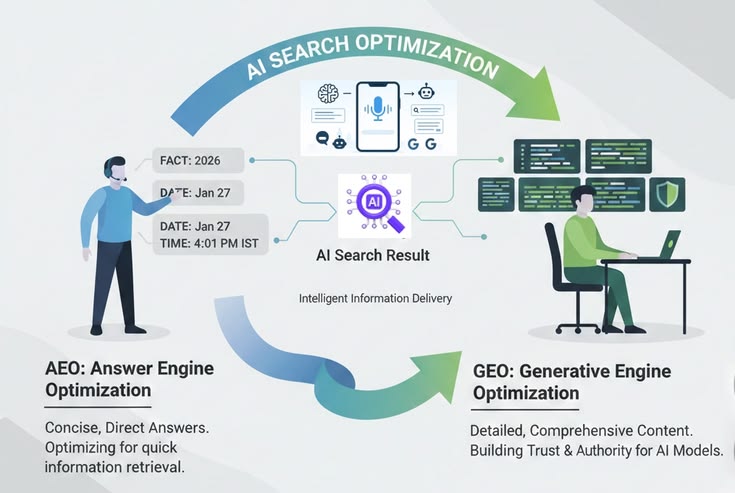
The OpenSearch Project has officially released OpenSearch 3.2, introducing major improvements in AI-powered search, vector database capabilities, indexing performance, and cluster management. The latest release expands support for generative AI applications, enhances semantic search, strengthens security, and improves overall scalability for organizations managing large volumes of structured and unstructured data. As AI-driven search becomes increasingly important across industries, OpenSearch 3.2 provides developers with more powerful tools for building intelligent search applications and real-time analytics platforms. (opensearch.org)
OpenSearch has become one of the leading open-source search and analytics platforms, powering enterprise search engines, log analytics, observability systems, security monitoring, e-commerce platforms, and AI applications. Its open-source model and growing ecosystem have made it a popular alternative for organizations seeking scalable search infrastructure.
One of the biggest highlights of OpenSearch 3.2 is its enhanced vector search engine. Vector databases are essential for modern AI applications because they allow systems to search information based on semantic meaning rather than exact keyword matching. The latest release improves vector indexing, similarity search accuracy, and query performance, enabling faster retrieval of relevant information for generative AI applications.
The platform also expands support for Retrieval-Augmented Generation (RAG) workflows. Developers building AI chatbots, intelligent assistants, and enterprise knowledge systems can retrieve highly relevant documents before generating responses, improving the quality and factual accuracy of AI-generated content.
Performance improvements are another major focus of the release. OpenSearch 3.2 introduces faster indexing speeds, optimized query execution, improved memory utilization, and better cluster resource management. These enhancements help organizations process larger datasets while maintaining low-latency search experiences.
Security continues to receive significant attention. The update strengthens authentication, role-based access control, encryption, and audit logging capabilities, helping enterprises protect sensitive information while meeting compliance requirements across regulated industries.
Cluster management has also been simplified through improved monitoring tools, better node balancing, and enhanced operational diagnostics. Administrators can identify performance bottlenecks more easily while maintaining high availability across distributed search clusters.
Developer productivity benefits from updated APIs, expanded client library support, and improved integration with popular programming languages including Java, Python, JavaScript, and Go. These improvements reduce development complexity while enabling faster deployment of AI-powered search applications.
Cloud-native deployments continue to evolve with stronger Kubernetes support and improved container compatibility. Organizations can deploy OpenSearch clusters across public, private, and hybrid cloud environments using modern DevOps workflows while maintaining consistent operational management.
Artificial intelligence remains central to the platform's roadmap. OpenSearch 3.2 integrates more closely with machine learning frameworks, enabling developers to combine semantic search, recommendation systems, anomaly detection, and generative AI capabilities within a single open-source platform.
Enterprise organizations are expected to benefit from the release by improving customer search experiences, strengthening cybersecurity monitoring, accelerating business intelligence, and building AI-powered internal knowledge management systems.
Educational institutions and research organizations can also leverage OpenSearch 3.2 for large-scale information retrieval, scientific data analysis, academic search platforms, and AI experimentation using open-source technologies.
The OpenSearch community continues to expand through contributions from developers, cloud providers, and enterprise organizations worldwide. This collaborative development model allows the platform to evolve rapidly while remaining transparent and accessible to users across different industries.
Industry analysts believe semantic search and vector databases will become foundational technologies for enterprise AI over the coming years. As organizations increasingly adopt generative AI, platforms capable of efficiently retrieving contextual information will play an increasingly important role in improving AI accuracy and reducing hallucinations.
Looking ahead, the OpenSearch Project has indicated that future releases will continue expanding AI integration, vector search performance, cloud-native capabilities, observability features, and enterprise security. These ongoing improvements are intended to support increasingly sophisticated search workloads across modern digital applications.
With enhanced vector search, stronger Retrieval-Augmented Generation support, faster indexing, improved query performance, expanded cloud-native deployment, enterprise-grade security, better cluster management, and continued open-source innovation, OpenSearch 3.2 represents one of the most significant open-source software releases of the year. As AI-powered search continues transforming enterprise software, OpenSearch remains a scalable and flexible platform for building the next generation of intelligent search and analytics solutions.





Comments