
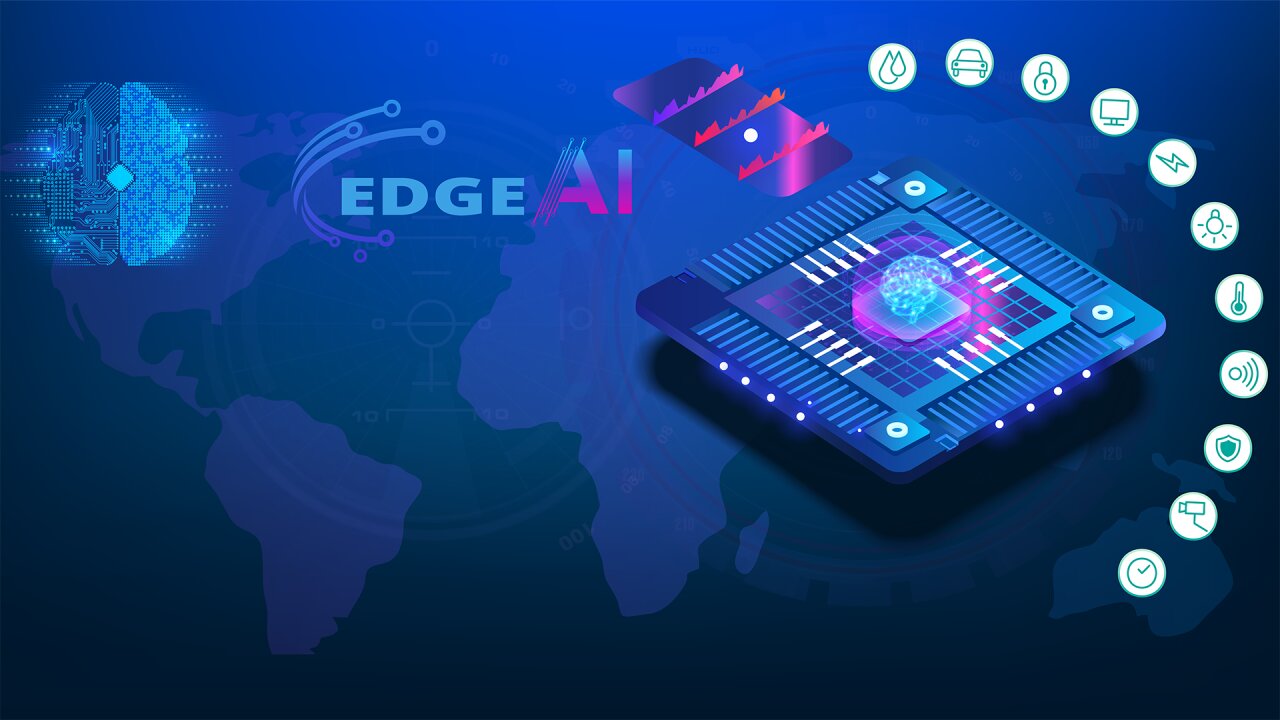
Edge machine learning is rapidly gaining industry adoption as organizations seek faster, more efficient ways to deploy artificial intelligence closer to where data is generated. By running machine learning models directly on edge devices rather than relying solely on cloud infrastructure, businesses can reduce latency, improve responsiveness, enhance privacy, and support real-time decision-making across a wide range of applications.
Edge machine learning combines AI algorithms with local computing resources embedded in devices such as industrial equipment, cameras, sensors, smartphones, autonomous robots, vehicles, drones, and Internet of Things (IoT) systems. This approach allows data to be processed locally, minimizing the need to transmit large volumes of information to centralized cloud servers.
One of the primary benefits of edge machine learning is real-time performance. Applications that require immediate responses—such as robotics, industrial automation, autonomous systems, and smart monitoring—can make decisions within milliseconds, improving operational efficiency and reducing delays caused by network communication.
Manufacturing is among the leading sectors adopting edge AI technologies. Smart factories use machine learning models on production equipment to detect product defects, monitor machinery, predict maintenance requirements, and optimize manufacturing processes in real time. Local AI processing helps maintain productivity even when internet connectivity is limited.
Healthcare organizations are exploring edge machine learning for medical devices, patient monitoring systems, wearable technology, and diagnostic support tools. Processing data locally enables faster analysis while helping organizations manage sensitive information within secure environments and reduce dependence on continuous cloud connectivity.
The automotive industry is increasingly integrating edge machine learning into advanced driver assistance systems (ADAS), in-vehicle safety technologies, predictive maintenance, and intelligent navigation. Real-time processing is essential for applications that require rapid interpretation of sensor data and immediate operational decisions.
Retail businesses are deploying edge AI for smart checkout systems, inventory monitoring, customer analytics, shelf management, and loss prevention. Cameras and intelligent sensors equipped with on-device machine learning can analyze store activity instantly, improving operational efficiency while reducing bandwidth requirements.
Logistics companies are adopting edge machine learning to optimize warehouse automation, fleet management, package tracking, and route planning. Autonomous mobile robots and intelligent scanning systems use locally processed AI models to navigate efficiently, recognize objects, and adapt to changing operational conditions.
Agriculture is benefiting from edge AI through precision farming solutions that analyze crop health, soil conditions, irrigation needs, and environmental data directly on agricultural equipment and field sensors. Local processing enables faster decision-making in remote locations where network connectivity may be limited.
Industrial Internet of Things (IIoT) deployments are accelerating the adoption of edge machine learning. Connected sensors continuously monitor equipment performance, energy consumption, environmental conditions, and production metrics, allowing AI systems to identify anomalies and optimize operations without transmitting every data point to the cloud.
Computer vision is one of the most common edge AI applications. Smart cameras equipped with machine learning models perform object detection, quality inspection, facial recognition where permitted, traffic monitoring, and safety analysis in real time. Processing images locally reduces response times while limiting unnecessary data transmission.
Cloud computing continues to complement edge machine learning rather than replace it. Cloud platforms remain valuable for large-scale model training, centralized analytics, software updates, and long-term data storage, while edge devices handle immediate operational tasks. This hybrid approach combines the strengths of both cloud and edge computing.
Privacy and cybersecurity are important considerations in edge AI deployments. Local data processing can reduce the amount of sensitive information transmitted over networks, while organizations continue to implement encryption, secure device management, and AI governance practices to protect systems and maintain regulatory compliance.
Advances in specialized AI processors, low-power chips, and optimized machine learning models are making edge computing more practical and energy efficient. These innovations allow sophisticated AI applications to run on compact devices with limited computing resources, expanding deployment opportunities across industries.
Collaboration between semiconductor manufacturers, AI software developers, cloud providers, device manufacturers, and research institutions continues to accelerate innovation in edge machine learning. Improvements in hardware acceleration, model optimization, and distributed intelligence are making on-device AI increasingly accessible to businesses of all sizes.
Industry experts expect edge machine learning to become a foundational technology for future digital infrastructure as connected devices continue to grow. Advances in multimodal AI, autonomous systems, robotics, and intelligent sensors are expected to further increase demand for local AI processing capable of delivering fast, reliable, and context-aware decision-making.
As organizations continue to embrace digital transformation, edge machine learning is enabling a new generation of intelligent applications that combine speed, efficiency, and operational resilience. By bringing AI closer to the source of data, businesses can improve productivity, reduce latency, strengthen privacy, and unlock innovative opportunities across manufacturing, healthcare, transportation, retail, agriculture, and many other industries.





Comments