
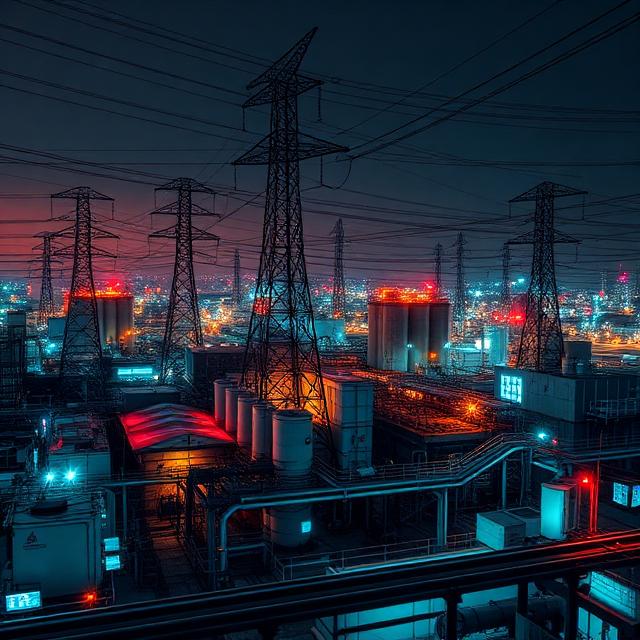
Power grids, water treatment facilities, and
transportation systems increasingly rely on digital control systems that were
never designed with cybersecurity as a primary consideration. Many of these
operational technology environments run on decades-old software and hardware
that cannot simply be patched or replaced without risking disruption to
physical processes that millions of people depend on daily.
Nation-state actors have shown sustained interest in
probing and sometimes pre-positioning access within critical infrastructure
networks, reportedly not always for immediate disruption but potentially to
maintain the option of causing damage during a future geopolitical crisis. This
pre-positioning strategy makes detection especially difficult, since the goal
is quiet persistence rather than the kind of loud, immediate impact that would
trigger a rapid response.
The convergence of information technology and
operational technology networks, once kept largely separate for safety reasons,
has introduced new risk as organizations pursue efficiency gains from
connecting industrial systems to corporate networks and cloud analytics
platforms. A vulnerability in a corporate email system can now, in poorly
segmented environments, become a pathway toward systems that control physical
processes with real-world safety consequences.
Regulatory frameworks have tightened considerably in
response, with governments in multiple regions introducing mandatory incident
reporting requirements and minimum security standards for operators of critical
infrastructure. These requirements are pushing utilities and industrial
operators, many of which have historically underinvested in cybersecurity
relative to sectors like finance, to build out dedicated security programs and
hire specialized operational technology security talent that remains in short
supply.
Defending these environments requires expertise that
spans both traditional IT security and the specialized world of industrial
control systems, where availability and safety often take priority over
confidentiality in ways that differ from typical enterprise security
priorities. Building this cross-disciplinary capability, combined with stronger
network segmentation between IT and OT environments and closer information
sharing between operators and government agencies, represents one of the most
consequential security challenges facing modern society given how directly it
touches public safety.
Operators of critical infrastructure make the fastest
progress by prioritizing network segmentation between IT and OT environments
first, since this single control limits how far a compromise starting in a
corporate network can spread into systems that control physical processes.
Pairing that segmentation with specialized OT-aware monitoring, rather than
assuming traditional IT security tools translate directly, closes a gap that
has been exploited in several well-documented real-world incidents.
It is also worth noting that international cooperation
on critical infrastructure protection has grown alongside the threat, with
allied governments increasingly sharing threat intelligence specific to
infrastructure-targeting campaigns and coordinating on response planning for
scenarios that could affect multiple countries simultaneously, such as an
attack on shared energy grid infrastructure or undersea communication cables
that span national boundaries.
The bottom line is that critical infrastructure
protection is no longer a niche concern for utility operators alone, but a
matter of broad public safety that deserves sustained investment and
cross-sector collaboration. Utilities that build strong relationships with
regional information-sharing groups tend to detect and respond to emerging
threats considerably faster than those operating in isolation from industry
peers.





Comments