
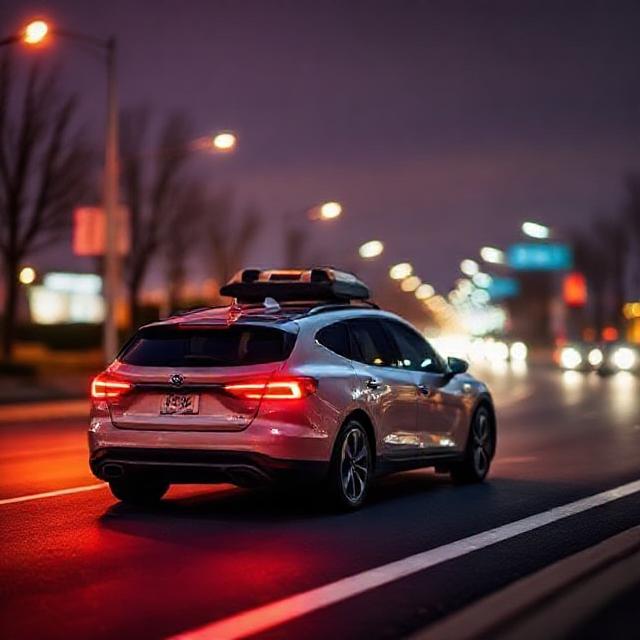
Self-driving cars have captured public imagination for over a decade, with predictions of fully autonomous vehicles dominating roadways arriving repeatedly and repeatedly being pushed back. The gap between demonstration videos and everyday reality reveals just how difficult the underlying engineering and regulatory challenges truly are.
The industry generally categorizes autonomy into levels, ranging from no automation to full autonomy requiring no human attention whatsoever. Most vehicles currently marketed with advanced driver assistance features operate at intermediate levels, requiring human drivers to remain alert and ready to take control at any moment. True full autonomy — where a vehicle can navigate any road condition without any human oversight — remains limited to specific, carefully mapped environments rather than universal deployment.
The technical challenges are substantial. Autonomous vehicles must interpret an enormous variety of real-world scenarios: unpredictable pedestrian behavior, construction zones with ambiguous signage, adverse weather conditions that obscure sensors, and the countless edge cases that experienced human drivers navigate through intuition built over years of experience. Teaching a machine to handle situations it has never explicitly encountered, using judgment rather than rigid rules, remains one of the hardest problems in applied artificial intelligence.
Sensor technology has advanced considerably, combining cameras, radar, and lidar to build detailed three-dimensional models of a vehicle's surroundings. Companies differ in their approach — some rely heavily on camera-based systems paired with sophisticated machine learning, while others insist that lidar's precise distance measurements are essential for safety. This technical disagreement reflects genuine uncertainty about which sensor combination will ultimately prove most reliable across diverse conditions.
Regulatory frameworks have struggled to keep pace with the technology. Questions about liability when an autonomous vehicle causes an accident, standards for testing and certification, and varying regulations across different jurisdictions create a complex patchwork that companies must navigate. Some regions have embraced permissive testing environments to attract investment and innovation, while others have taken more cautious approaches following high-profile incidents involving autonomous vehicle testing.
Public trust remains another significant hurdle. Surveys consistently show that a substantial portion of the public remains hesitant to ride in or share the road with fully autonomous vehicles, even as the technology has demonstrably improved. High-profile accidents, even when statistically rare compared to human-caused accidents, tend to receive outsized media attention and can set back public confidence significantly.
Despite these challenges, progress continues steadily. Robotaxi services now operate commercially in several cities, offering rides without a human safety driver within carefully geofenced areas. These deployments provide valuable real-world data that companies use to refine their systems, gradually expanding operational areas as confidence grows. Freight and logistics applications, where autonomous trucks operate on predictable highway routes, have also advanced as a potentially easier near-term application than complex urban driving.
The realistic path forward likely involves gradual, incremental expansion of autonomous capabilities into progressively more complex environments, rather than a sudden universal transformation of personal transportation. Highway driving, controlled logistics routes, and geofenced urban services will likely achieve reliable autonomy well before autonomous vehicles can confidently navigate every unpredictable scenario a human driver might encounter. Patience, rather than breathless anticipation, remains the most useful lens through which to view this ongoing technological evolution.





Comments