
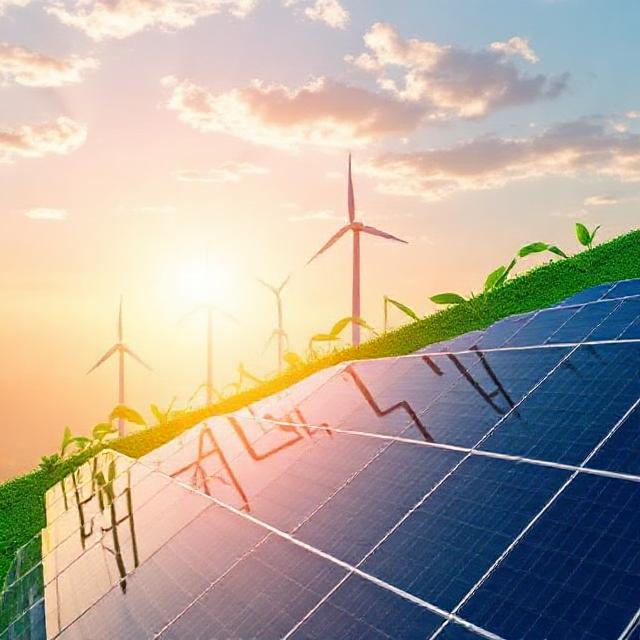
Green technology has transitioned from a niche environmental concern into one of the most significant areas of technological investment and innovation worldwide. Driven by climate change concerns, energy security considerations, and increasingly favorable economics, clean energy technologies are reshaping how societies generate, store, and consume power.
Solar and wind energy have led this transformation, with costs declining dramatically over the past decade to the point where renewable energy is now frequently the cheapest option for new electricity generation in many regions, even without accounting for environmental benefits. This economic shift has been as important as environmental concern in driving adoption, since utilities and investors increasingly favor renewables simply because they make financial sense.
Battery technology has become the critical enabler that determines how effectively renewable energy can be integrated into power grids. Because solar and wind generation naturally fluctuates with weather and time of day, storing excess energy for use during periods of low generation is essential for reliable power supply. Advances in lithium-ion battery technology, alongside emerging alternatives like solid-state batteries and various flow battery chemistries, are gradually solving this storage challenge, though significant technical and cost hurdles remain before storage can fully match the scale needed for widespread grid stabilization.
Electric vehicles represent perhaps the most visible manifestation of green technology adoption to everyday consumers. Improvements in battery density, charging infrastructure, and manufacturing scale have driven down costs while extending driving range, making electric vehicles increasingly competitive with traditional combustion engines. Many countries have set ambitious timelines for phasing out new combustion engine vehicle sales entirely, accelerating investment in charging infrastructure and battery manufacturing capacity.
Beyond transportation and power generation, green technology innovation extends into areas like sustainable agriculture, where precision farming techniques use sensors and data analytics to minimize water and fertilizer usage while maximizing crop yields. Vertical farming technologies allow food production in urban environments with dramatically reduced water usage and transportation emissions compared to traditional agriculture, though questions remain about the energy costs of artificial lighting required for these systems.
Carbon capture technology, which extracts carbon dioxide directly from industrial emissions or even ambient air, has attracted significant investment despite ongoing debate about its cost-effectiveness compared to simply reducing emissions at the source. Proponents argue that some industrial processes will remain difficult to fully decarbonize, making carbon capture a necessary complement to emissions reduction rather than a substitute for it. Critics worry that emphasis on carbon capture could reduce urgency around more fundamental emissions reduction efforts.
Green hydrogen, produced using renewable electricity to split water into hydrogen and oxygen, has emerged as a promising option for decarbonizing industries that are difficult to electrify directly, such as steel production and heavy shipping. However, production costs remain considerably higher than fossil-fuel-based hydrogen production, and significant infrastructure investment would be needed to build out hydrogen storage and distribution networks at meaningful scale.
The overall trajectory of green technology suggests continued acceleration rather than a temporary trend. As costs continue declining and government policies increasingly favor clean energy adoption through incentives and regulations, the economic case for green technology grows stronger independent of environmental considerations alone. This convergence of environmental necessity and economic advantage suggests that green technology will likely remain one of the most consequential areas of technological development for decades to come.





Comments