
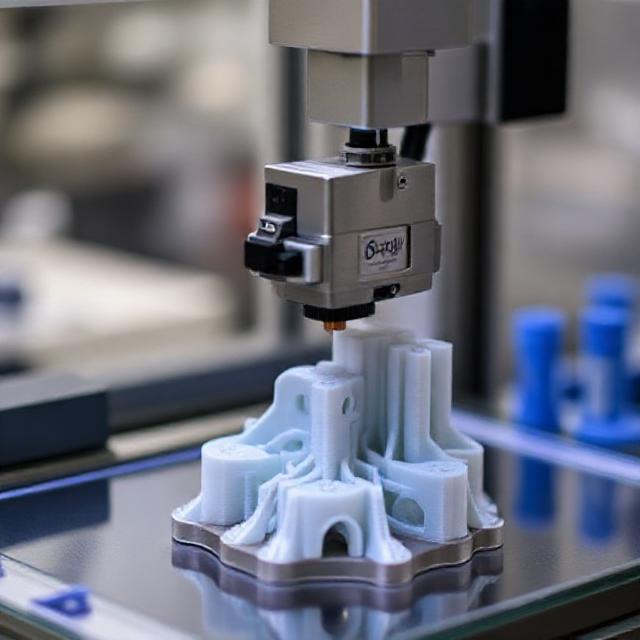
3D printing, also known as additive manufacturing, has evolved from a niche prototyping tool into a genuinely transformative production technology used across industries ranging from aerospace and healthcare to fashion and construction. Understanding this evolution reveals why additive manufacturing continues to attract significant ongoing investment and innovation.
Unlike traditional manufacturing methods that typically involve cutting, drilling, or molding materials into a desired shape, additive manufacturing builds objects layer by layer directly from digital design files, depositing material only where needed. This fundamental difference offers several distinct advantages, particularly for complex geometries that would be difficult or impossible to produce using traditional manufacturing techniques, and for applications requiring highly customized, low-volume production rather than mass-produced identical items.
Aerospace manufacturing has embraced 3D printing extensively for producing complex components with intricate internal structures that reduce weight while maintaining structural strength, an especially valuable capability given how directly component weight affects aircraft fuel efficiency and payload capacity. Some aerospace manufacturers now use 3D-printed components extensively throughout both engines and airframes, taking advantage of additive manufacturing's ability to consolidate what previously required multiple separately manufactured parts into single, more efficient printed components.
Medical applications have similarly benefited substantially from additive manufacturing capabilities, most notably in producing highly customized prosthetics and orthopedic implants tailored precisely to an individual patient's unique anatomy, based on detailed medical imaging data. This level of customization was prohibitively expensive using traditional manufacturing methods but has become increasingly accessible through 3D printing technology. Researchers are also exploring bioprinting, an emerging and still largely experimental frontier that aims to eventually print functional human tissue and potentially entire organs using specialized bio-compatible printing materials and techniques.
Construction has emerged as a somewhat unexpected but increasingly significant application area for large-scale additive manufacturing, with specialized construction printers capable of printing entire building walls using concrete or other building materials. Proponents argue this approach could significantly reduce construction costs and timelines, particularly valuable for addressing affordable housing shortages, while also reducing material waste compared to traditional construction methods. Several demonstration projects have successfully printed functional residential and commercial buildings, though widespread adoption of construction-scale 3D printing remains in relatively early stages compared to more established smaller-scale applications.
Fashion and consumer products have also found creative applications for 3D printing technology, ranging from highly customized footwear designed to match an individual's precise foot measurements, to intricate jewelry designs that would be difficult or prohibitively expensive to produce using traditional manufacturing techniques. Some designers have embraced 3D printing specifically because it enables entirely new aesthetic possibilities that simply weren't achievable using conventional manufacturing approaches.
Despite these genuine successes, additive manufacturing still faces meaningful limitations compared to traditional mass production methods for many applications. Production speed remains considerably slower for high-volume manufacturing compared to established techniques like injection molding, and material options, while continuously expanding, remain more limited than the vast range of materials available through traditional manufacturing processes. Cost-effectiveness for additive manufacturing generally favors complex, customized, or low-volume production rather than simple, high-volume identical parts, where traditional mass production methods generally remain considerably more economical.
Supply chain resilience has emerged as an additional motivation driving interest in additive manufacturing, as the ability to produce replacement parts on-demand, closer to where they're actually needed, rather than depending on complex global supply chains for specific components, offers meaningful advantages for reducing vulnerability to the kind of supply chain disruptions that have affected numerous industries in recent years.
As material science continues advancing and printing speeds improve, additive manufacturing is likely to continue expanding into an increasingly broad range of production applications, gradually complementing rather than fully replacing traditional manufacturing methods, with each approach finding its most suitable and economically viable niche within the broader manufacturing landscape.





Comments