
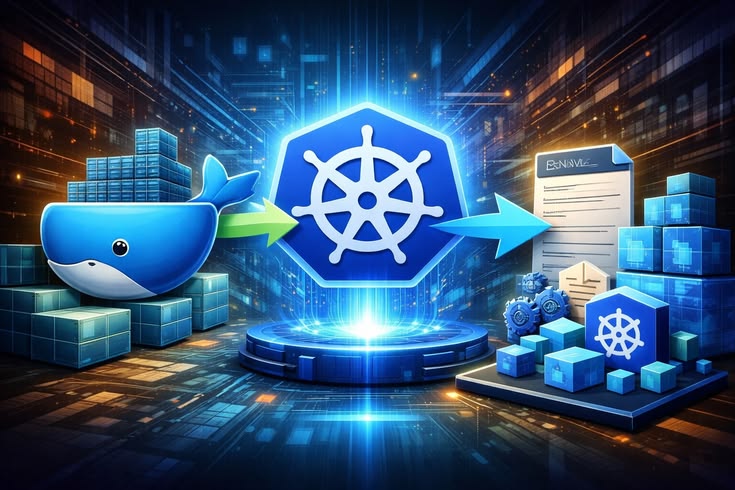
Docker has officially released Docker Desktop 4.45, introducing major improvements aimed at developers building containerized, cloud-native, and AI-powered applications. The latest update enhances Kubernetes integration, improves container performance, refines the developer experience, and introduces new capabilities for artificial intelligence workflows. With modern software development increasingly centered around containers and microservices, Docker Desktop 4.45 continues to simplify application development, testing, and deployment across Windows, macOS, and Linux. (docker.com)
Docker Desktop remains one of the most widely used development platforms for creating, testing, and managing containers. It provides developers with an integrated environment that includes Docker Engine, Docker Compose, Kubernetes, and tools for building cloud-native applications locally before deploying them to production.
One of the biggest highlights of Docker Desktop 4.45 is its expanded support for AI development workflows. The update introduces improvements that make it easier to build, test, and deploy containerized AI applications, including support for local inference environments, AI frameworks, and machine learning development pipelines. These enhancements help developers work more efficiently with generative AI models and modern AI services.
Kubernetes integration has also received significant attention. Docker Desktop 4.45 improves cluster management, deployment workflows, and resource handling, allowing developers to create and test Kubernetes-based applications more efficiently on local machines before deploying them to production cloud environments.
Container performance has been optimized across the platform. Faster image builds, improved startup times, more efficient resource allocation, and better file synchronization contribute to shorter development cycles and a smoother overall experience when working with complex applications.
Developer productivity benefits from updated Docker Compose features, enhanced image management, refined debugging tools, and better command-line integration. These improvements simplify the process of managing multi-container applications while reducing configuration complexity.
Cloud-native development continues to be a major focus. Docker Desktop 4.45 strengthens compatibility with popular cloud platforms and DevOps workflows, enabling developers to transition more seamlessly from local development to production deployments using Kubernetes, containers, and continuous integration pipelines.
Security has also been enhanced with updated container scanning capabilities, refreshed dependencies, and improved vulnerability detection. These features help developers identify security risks earlier in the software development lifecycle while supporting secure software supply chain practices.
Cross-platform consistency remains one of Docker Desktop's strongest advantages. The latest release delivers a more reliable and consistent experience across Windows, macOS, and Linux, making collaboration easier for development teams working across different operating systems.
Networking and resource management have also been refined. Improvements to container networking, volume handling, and system resource allocation provide better performance for applications that require multiple interconnected services or large development environments.
Educational institutions continue using Docker Desktop to teach cloud computing, DevOps, containerization, Kubernetes, and software engineering. Students gain practical experience with the same tools widely used in professional development environments and enterprise infrastructure.
The Docker community remains highly active, contributing tutorials, extensions, documentation, and open-source projects that expand Docker Desktop's capabilities. This collaborative ecosystem continues driving innovation while helping developers adopt best practices for containerized application development.
Industry analysts expect demand for container platforms to continue growing as organizations expand their use of microservices, cloud-native architectures, and artificial intelligence. Docker Desktop's ongoing investments in AI tooling and Kubernetes integration position it well for the next generation of software development.
Looking ahead, Docker plans to continue improving AI development support, container performance, Kubernetes capabilities, and cloud integration in future releases. The company is also expected to expand automation features that further simplify building and deploying modern applications.
With enhanced AI development workflows, stronger Kubernetes integration, faster container performance, improved security scanning, refined Docker Compose features, better cross-platform compatibility, optimized resource management, and continued innovation, Docker Desktop 4.45 represents one of the most significant developer tool releases of the year. As cloud-native and AI-powered applications continue transforming the software industry, Docker Desktop remains an essential platform for modern application development.





Comments