
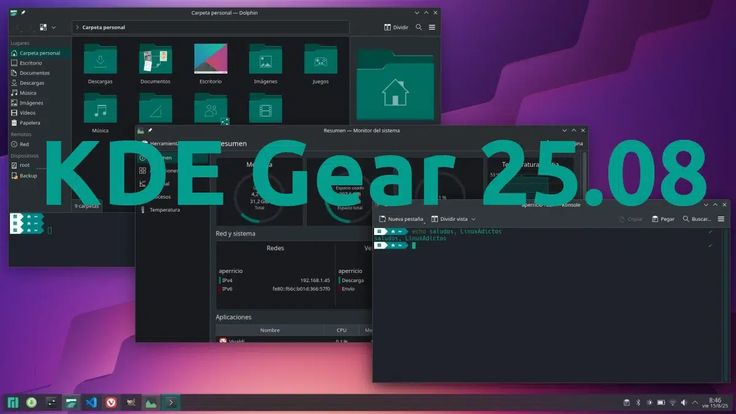
The KDE Project has officially released KDE Gear 25.08, bringing a comprehensive update to its collection of desktop applications. The latest release introduces improvements across popular KDE applications, including Dolphin, Kate, Konsole, Okular, Gwenview, and Kdenlive, while also delivering better performance, enhanced usability, bug fixes, and stronger cross-platform compatibility. As one of the largest open-source desktop software suites, KDE Gear 25.08 continues to improve productivity for Linux users while expanding support for Windows and other platforms. (kde.org)
KDE Gear is a collection of more than 150 open-source applications developed by the KDE community. The suite includes tools for file management, document viewing, multimedia editing, terminal access, communication, graphics, and software development. These applications are widely used across KDE Plasma desktops and many other Linux distributions.
One of the biggest highlights of KDE Gear 25.08 is the continued improvement of Dolphin, KDE's feature-rich file manager. The latest update enhances file browsing performance, search capabilities, network file access, and user interface responsiveness. Users can manage files more efficiently while benefiting from smoother navigation and improved accessibility.
Kate, KDE's advanced text editor, receives updates that improve syntax highlighting, project management, plugin compatibility, and performance. Developers and power users benefit from a more responsive editing experience with better support for modern programming languages and workflows.
Konsole, KDE's terminal emulator, has also been refined with improved session handling, faster rendering, enhanced tab management, and better compatibility with modern terminal features. These improvements help developers and system administrators work more efficiently from the command line.
Okular, KDE's universal document viewer, introduces better PDF rendering, improved annotation tools, enhanced document navigation, and increased compatibility with additional file formats. These updates make reading and reviewing documents more convenient for both personal and professional use.
Creative users also benefit from updates to Gwenview and Kdenlive. Gwenview includes faster image loading and better metadata handling, while Kdenlive receives performance optimizations, timeline improvements, and enhanced video editing stability for content creators.
Performance has been improved across the entire KDE Gear suite. Faster application startup, reduced memory usage, optimized file handling, and improved responsiveness contribute to a smoother user experience on both modern and older hardware.
Cross-platform compatibility remains a priority. While KDE Gear is primarily developed for Linux, many applications continue to receive improvements for Windows and other supported operating systems, allowing users to maintain consistent workflows across multiple platforms.
Accessibility has also been enhanced with refinements to keyboard navigation, screen reader support, and interface scaling. These improvements help ensure KDE applications remain usable for a broader range of users with different accessibility requirements.
Security and stability continue to improve through numerous bug fixes, updated libraries, and compatibility enhancements. These updates provide a more reliable experience while addressing issues reported by the KDE community.
Educational institutions continue using KDE applications because of their open-source licensing, rich feature set, and flexibility. Students learning programming, graphic design, multimedia production, and Linux administration benefit from professional-grade applications that are freely available.
The KDE community remains one of the most active in the open-source ecosystem, with contributors worldwide continuously improving applications, documentation, translations, and accessibility. This collaborative development model has enabled KDE Gear to remain one of the most comprehensive desktop software collections available.
Industry analysts expect open-source desktop applications to continue gaining popularity as users seek powerful alternatives to proprietary software. KDE Gear's regular updates and broad application portfolio make it an attractive choice for both individual users and organizations.
Looking ahead, the KDE Project plans to continue improving application performance, expanding cross-platform support, refining user interfaces, and introducing new productivity features in future KDE Gear releases. Community feedback will continue to play an important role in shaping the software's evolution.
With improved Dolphin file management, enhanced Kate and Konsole functionality, better document handling in Okular, optimized multimedia tools, stronger cross-platform compatibility, refined accessibility, improved performance, and continued open-source innovation, KDE Gear 25.08 represents one of the most significant desktop software releases of the year. As open-source productivity applications continue evolving, KDE Gear remains a powerful and versatile suite for users across Linux and beyond.





Comments