
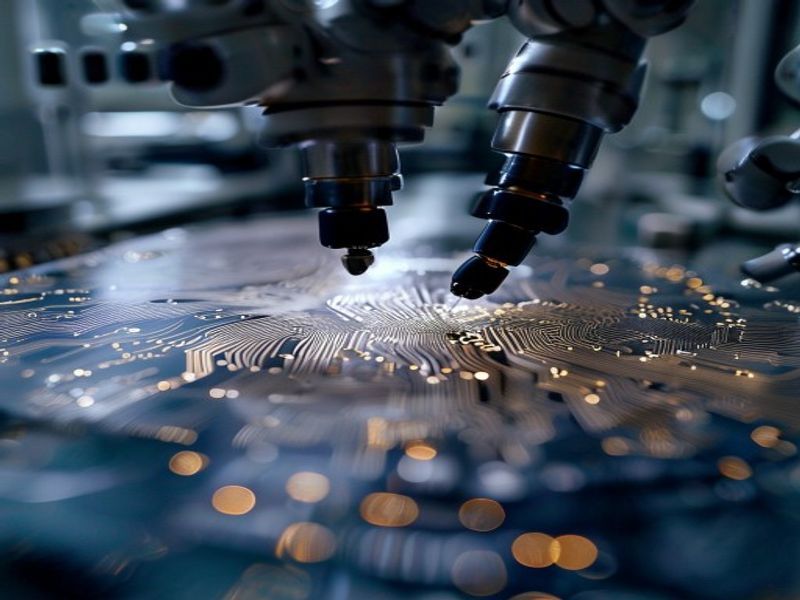
The furious pace of artificial intelligence innovation now hinges on an unexpectedly fragile supply chain: the highly specialized manufacturing of advanced computing chips and their accompanying high-bandwidth memory (HBM). What was once considered a niche segment of semiconductor production has rapidly transformed into a pivotal choke point, determining which AI projects flourish and which languish.
While much public attention focuses on groundbreaking algorithms and sophisticated model architectures, the physical infrastructure beneath it all — particularly the fabrication of cutting-edge GPUs and the intricate stacking of HBM modules — represents a profound bottleneck. These components, produced by only a handful of global manufacturers, demand immense capital investment, highly precise photolithography machines from companies like ASML, and years of accumulated expertise. The demand for these specialized components has far outstripped supply, driven by the insatiable appetite of large language models, generative AI systems, and the accelerating race for AI supremacy.
This acute scarcity translates directly into skyrocketing costs for AI developers and startups, often delaying project timelines and giving a significant advantage to well-funded tech giants capable of securing limited allocations. Smaller players find themselves struggling to compete for these vital resources, a dynamic that inevitably stifles the diversity of AI research and application development. Beyond the immediate economic implications, this hardware bottleneck also introduces geopolitical sensitivities, as nations increasingly recognize the strategic importance of control over these foundational technologies for future economic and military advantage.
Industry leaders are exploring various avenues to alleviate this systemic pressure, ranging from investing heavily in expanding existing manufacturing capacity to designing more efficient AI architectures that can perform powerful tasks with less raw compute power. Concurrently, cutting-edge research into novel chip materials, advanced packaging technologies, and entirely new computing paradigms offers long-term promise. However, given the multi-year lead times required for constructing new fabrication plants and maturing nascent technologies, this critical choke point is likely to persist, fundamentally shaping the trajectory of AI's evolution for the foreseeable future.





Comments