
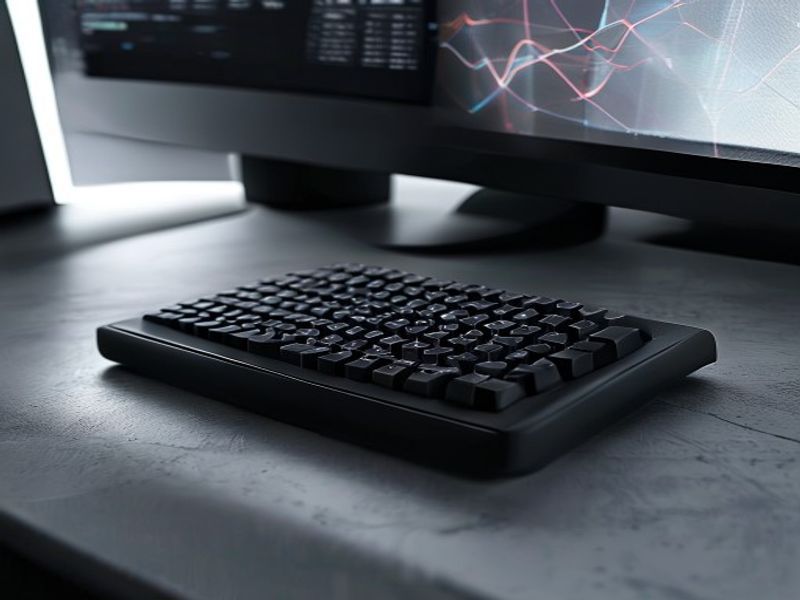
OpenAI has quietly introduced its first foray into physical hardware, a specialized keypad priced at $230, engineered to facilitate more direct control over its Codex AI agents. This tangible device marks a significant strategic pivot for the research firm, best known for its advanced AI models, by providing a dedicated physical interface for what has historically been a purely software-driven interaction.
The keypad's introduction addresses a growing need for more intuitive, immediate control as AI models become increasingly sophisticated and integrated into complex workflows. Codex agents, primarily known for their ability to translate natural language into code and automate various programming tasks, can benefit immensely from dedicated hotkeys and customizable inputs that bypass layers of software menus. Developers, researchers, and power users working with these agents might find the keypad a more efficient tool for invoking specific commands, switching contexts, or triggering sequences of AI-driven actions, streamlining their interaction with advanced AI capabilities.
This move positions OpenAI not just as a developer of cutting-edge AI, but also as a potential architect of the interfaces through which humans engage with that intelligence. While the initial offering is a relatively niche product targeting those deep in the AI development ecosystem, it raises questions about OpenAI's long-term vision. Could this keypad be the precursor to a broader line of AI-specific hardware, or even influence the design of future computing peripherals? It reflects a broader industry trend where specialized hardware is emerging to optimize the performance and usability of AI applications, moving beyond general-purpose computing to tailored solutions.
The $230 price point suggests a professional-grade tool rather than a mass-market consumer gadget, aligning with the current developer-centric use cases of Codex. Its existence underscores a fundamental challenge in AI adoption: making powerful, complex models accessible and manageable without requiring deep technical expertise for every interaction. By bridging the gap between abstract AI commands and physical button presses, OpenAI aims to reduce friction and enhance productivity, paving the way for more seamless human-AI collaboration in an increasingly intelligent world.





Comments