
The Most Common Types of Cyber Attacks Explained Simply
Every day, millions of cyber
attacks take place around the world. Some are sophisticated, nation-state-level
operations. Others are simple tricks that fool even tech-savvy people. Knowing
the most common types of attacks is your first line of defense.
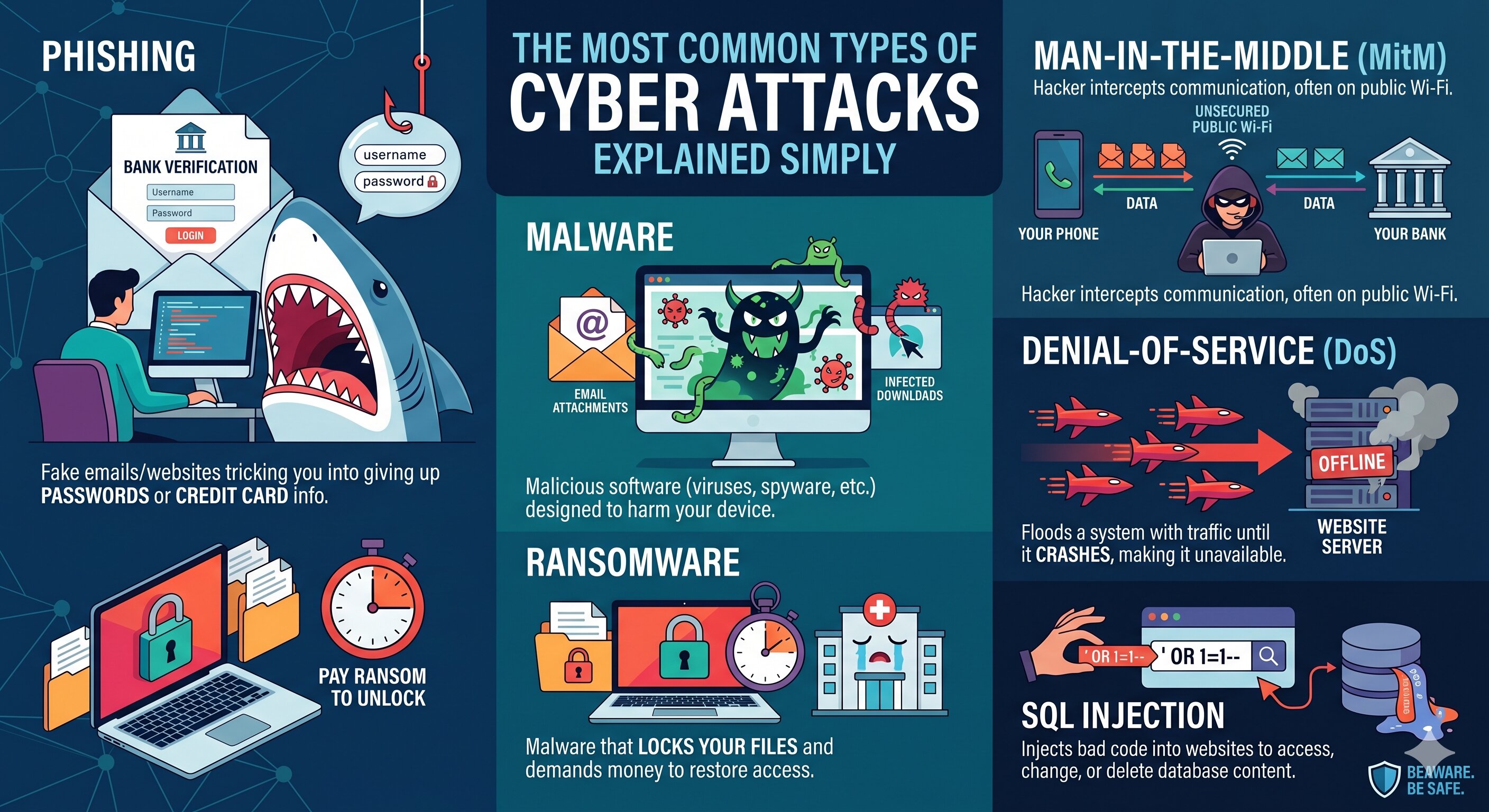
Phishing
Phishing is the most widespread
cyber attack. It involves tricking people into revealing sensitive information
— like passwords or credit card numbers — through fake emails, texts, or
websites that look legitimate.
Example: You receive an email
from what appears to be your bank asking you to verify your account. You click
the link, enter your credentials — and now hackers have them.
Malware
Malware (short for malicious
software) is any program designed to harm or exploit a device or network. It
includes viruses, worms, spyware, and ransomware. Malware can be delivered
through email attachments, infected downloads, or compromised websites.
Ransomware
Ransomware is a type of malware
that locks your files and demands payment to restore access. Hospitals,
schools, and businesses have all been hit — sometimes paying hundreds of
thousands of dollars to recover their data.
Man-in-the-Middle (MitM) Attacks
In a MitM attack, a hacker
secretly intercepts communication between two parties — like between you and
your bank's website. This often happens on unsecured public Wi-Fi networks.
Denial-of-Service (DoS) Attacks
These attacks flood a system
with traffic until it crashes, making it unavailable to legitimate users.
Websites of major companies and government agencies have been brought down this
way.
SQL Injection
This targets databases through
vulnerable websites. By inserting malicious code into a website's input field
(like a search bar), attackers can access, modify, or delete database content.
Stay Informed, Stay Safe
You don't need to understand the
technical details of every attack — but knowing what's out there helps you
recognize red flags.





Comments