
Foldable Phones: Gimmick or the Future of Mobile?
When foldable phones first
appeared, many dismissed them as an expensive gimmick — fragile novelties for
tech enthusiasts with too much money. Several years later, the picture is more
nuanced. Are foldables the future of the smartphone?
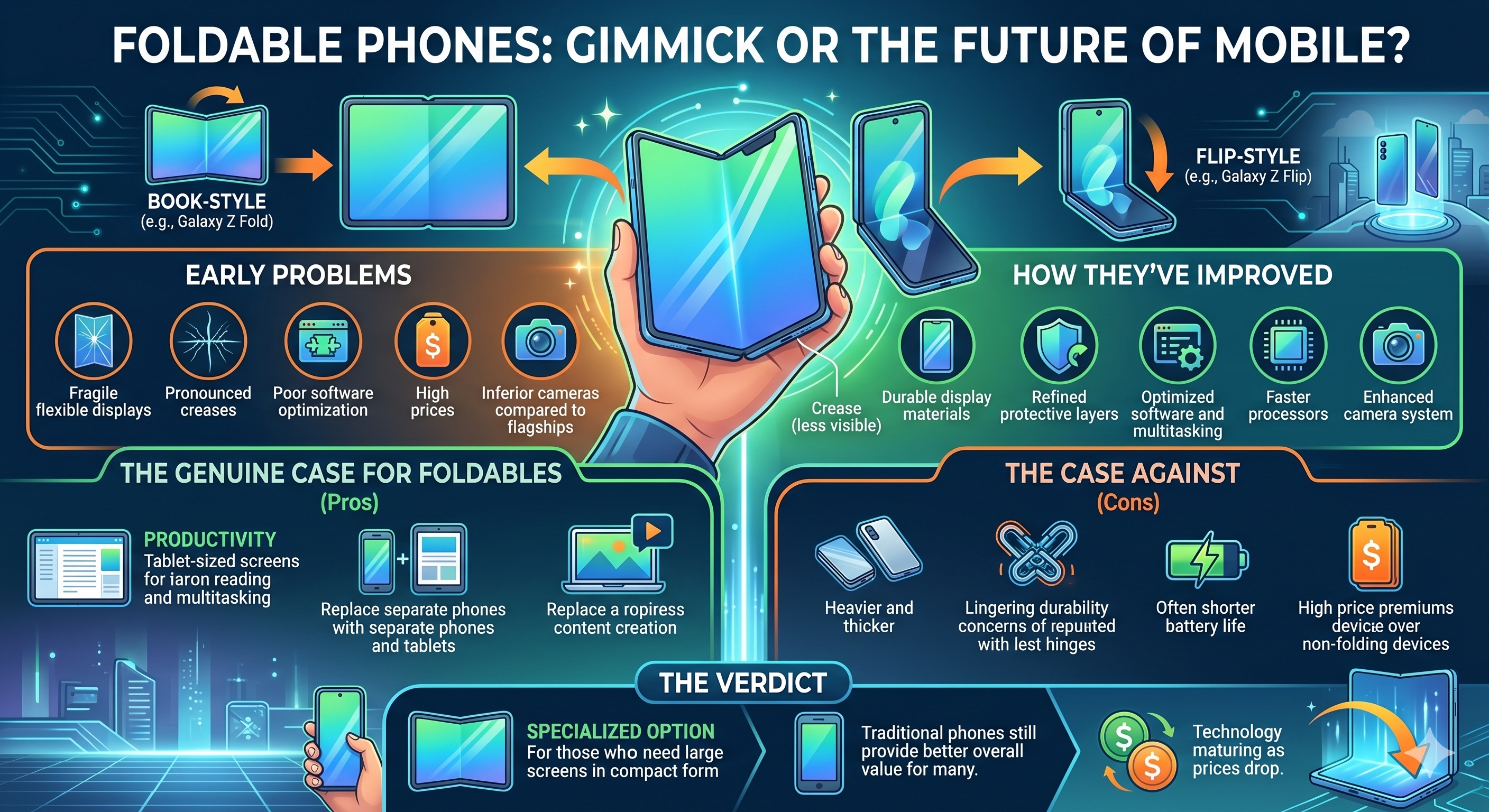
What Are Foldable Phones?
Foldable smartphones use
flexible display technology to create screens that can physically fold. They
come in two main form factors: book-style devices that unfold to reveal a
tablet-sized screen (like the Samsung Galaxy Z Fold), and flip-style devices that
fold in half vertically (like the Samsung Galaxy Z Flip or Motorola Razr).
The Early Problems
First-generation foldables were
genuinely problematic. The flexible displays were fragile and prone to crease
damage. Software wasn't optimized for the unique form factor. Cameras were
inferior to flagship competitors. And prices were eye-watering — often double
the cost of premium non-folding devices.
How They've Improved
Several generations of
refinement have addressed most early issues. Displays are far more durable,
with improved protective glass layers. Software optimization has improved
significantly. Cameras have caught up. Prices, while still premium, have come
down considerably. The crease is still there — but less pronounced.
The Genuine Case for Foldables
For many users, foldables offer
a compelling productivity advantage. A book-style foldable gives you a tablet
screen for reading, multitasking, and content creation — while fitting in a
jacket pocket when folded. For those who currently carry both a phone and
tablet, a foldable can replace both devices.
The Case Against
They're still heavier and
thicker than non-folding flagships. The durability concerns haven't fully
disappeared. Battery life often lags behind. And the price premium remains
significant. For most users, a traditional smartphone still offers the better overall
experience per dollar.
The Verdict
Foldables are not a gimmick —
they represent a genuine evolution in form factor. But they're not yet a
replacement for traditional smartphones for most people. They're best
understood as a specialized option for users who specifically benefit from the
large screen in a pocketable form. As the technology matures and prices drop,
that may change.





Comments