
Smart Home Devices: Are They Worth the Hype?
Smart home technology promises
a life of effortless convenience — lights that adjust automatically,
thermostats that learn your schedule, locks you can control from anywhere. But
after years of hype, are these devices actually delivering? Let's take an honest
look.
What Smart Home Technology Promises
The vision is compelling: a home
that knows you're almost home and warms up before you arrive. Lights that dim
when you start a movie. A doorbell that recognizes familiar faces. Appliances
that reorder their own supplies. Security cameras you can check from anywhere.
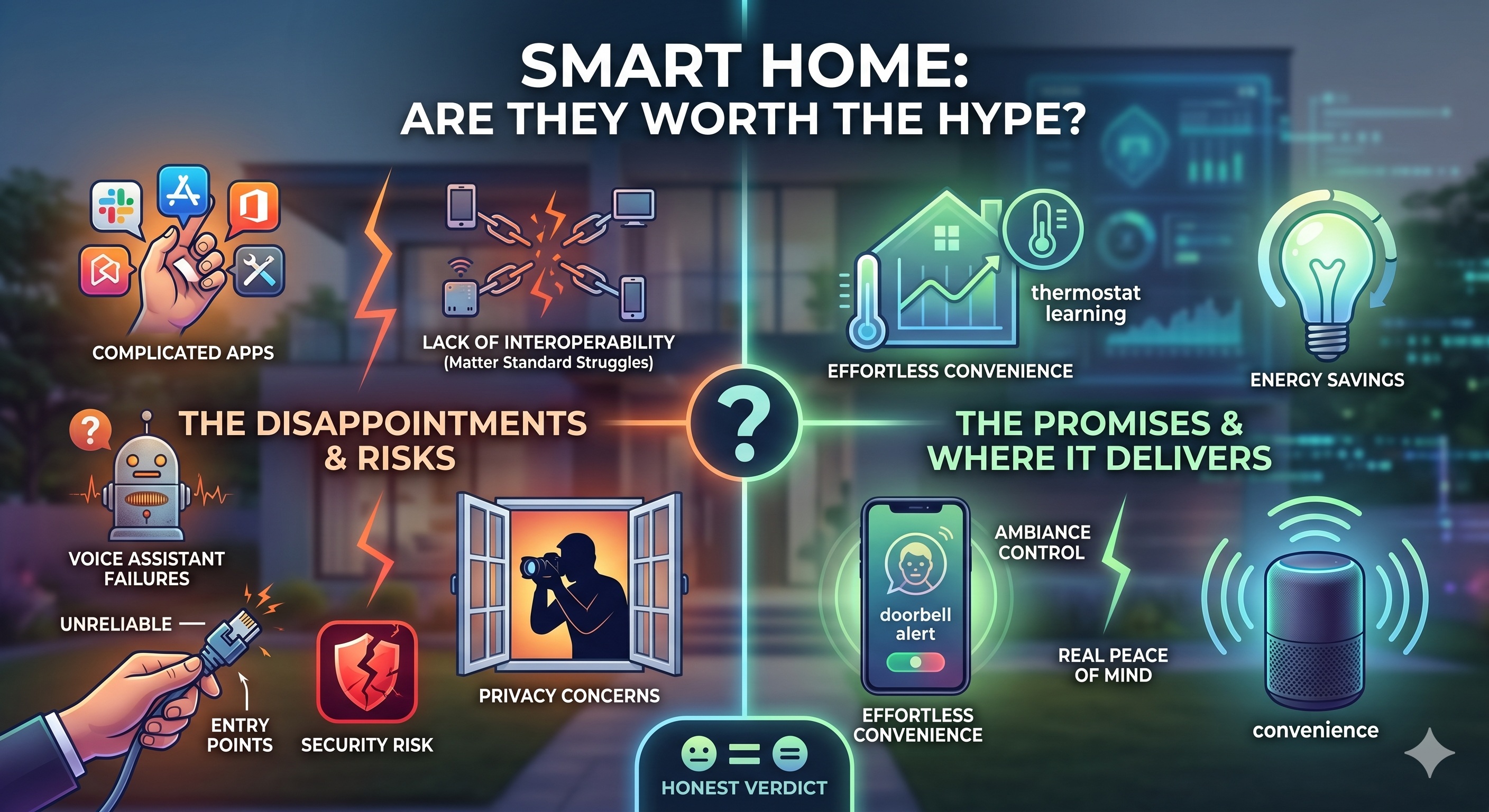
Where It Actually Delivers
Smart speakers have genuinely
changed how people interact with music, timers, and quick information. Smart
thermostats like Nest legitimately save energy and money. Smart lighting
systems offer real flexibility and ambiance control. Video doorbells provide
real peace of mind. These are devices with clear, tangible benefits that most
users would genuinely miss.
Where It Disappoints
Many smart home devices are more
complicated than their 'dumb' equivalents without delivering proportional
value. App-dependent products become useless when the company discontinues
support. Interoperability between brands remains frustrating despite standards
like Matter. And voice assistants, while improving, are still unreliable enough
to cause more frustration than they prevent.
The Privacy Problem
Smart home devices collect
substantial data about your behavior, schedule, and home environment.
Microphones, cameras, and sensors are always on. Questions about how this data
is stored, who can access it, and how it might be used are serious and often inadequately
answered by manufacturers.
The Security Risk
Each smart device is a potential
entry point into your home network. Many ship with poor default security
settings and receive infrequent software updates. A compromised smart home
device can be used to spy on you or as a foothold to access other devices on
your network.
The Honest Verdict
Smart home technology is
genuinely useful — in specific applications, for specific users. But the vision
of a seamlessly automated home remains partially unrealized. Buy devices that
solve a specific problem you actually have, from manufacturers with strong
security track records, and don't buy into ecosystem lock-in without careful
thought.





Comments