
Is Your Smartphone Spying on You? Here's What to Know
Your smartphone knows more
about you than almost anyone else — your location, contacts, messages, browsing
habits, and daily routines. But who else might have access to all that
information? Let's separate fact from fear.
The Short Answer
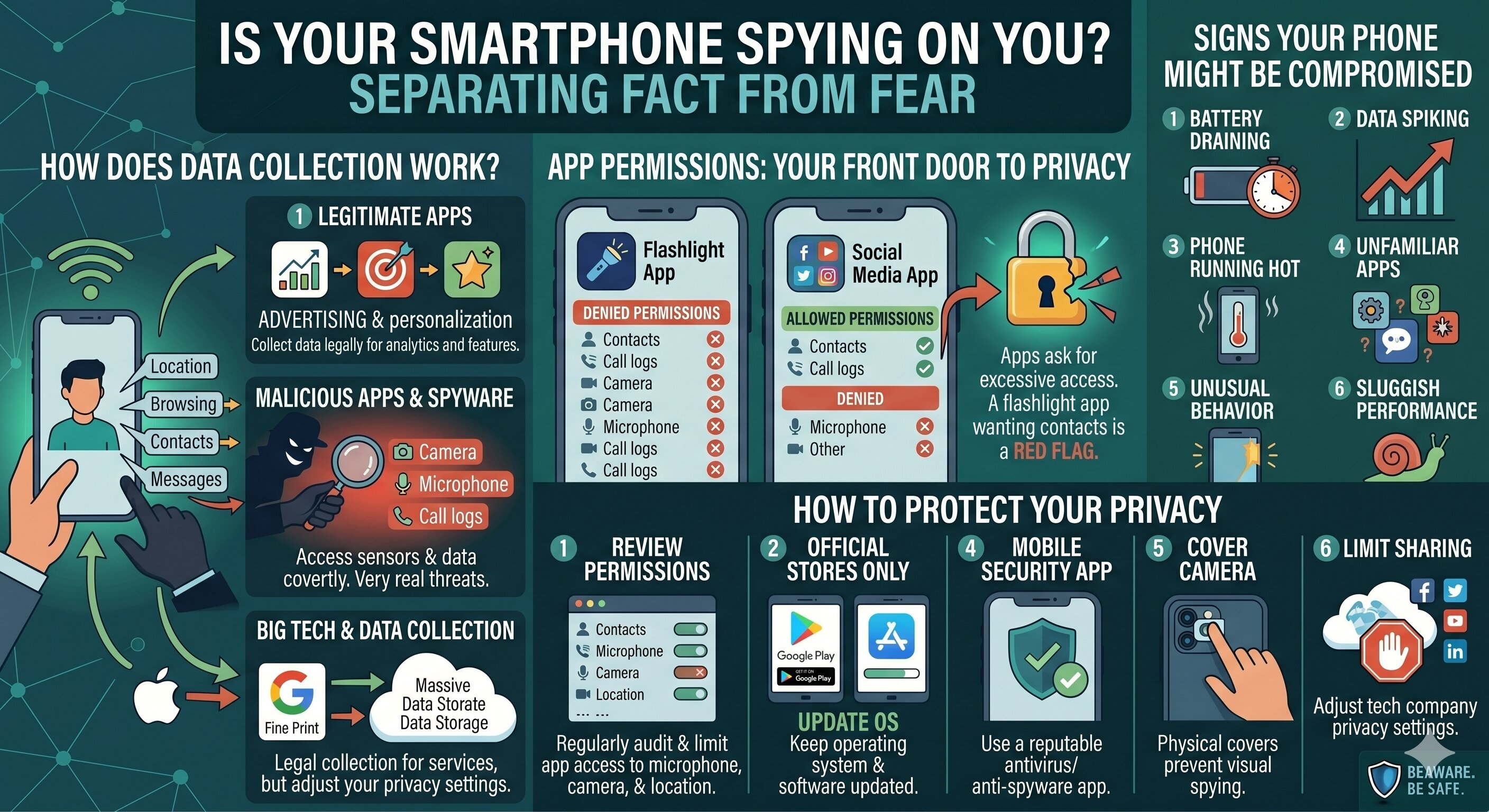
Your phone is collecting data —
that's undeniable. But whether that crosses the line into 'spying' depends on
what we mean. Legitimate apps collect data for advertising, analytics, and
personalization. Malicious apps or attackers can go much further — accessing
your camera, microphone, messages, and location without your knowledge.
App Permissions: The Front Door to Your Privacy
Every app that asks for
permissions — camera, microphone, contacts, location — is a potential privacy
risk. Many apps request far more access than they need to function. A
flashlight app that wants access to your contacts should raise immediate red
flags.
Spyware and Stalkerware
These are malicious apps
designed to covertly monitor your device. Spyware can log your keystrokes,
record calls, access your photos, and track your location. Stalkerware is often
installed by abusive partners or employers and is deliberately hidden from the
victim.
Signs Your Phone Might Be Compromised
Battery draining unusually fast.
Data usage spiking without explanation. Phone running hot even when idle.
Unfamiliar apps appearing. Unusual behavior like the screen lighting up when
not in use.
How to Protect Your Privacy
Review and limit app permissions
regularly. Only download apps from official stores (Google Play or Apple App
Store). Keep your operating system updated. Use a reputable mobile security
app. Cover your camera when not in use (yes, this is legitimate advice).
Big Tech and Data Collection
Beyond malware, it's worth
noting that major tech companies — including Google and Apple — collect
significant amounts of data through their services. This is legal and disclosed
in their privacy policies, though often buried in fine print. Adjust your privacy
settings in your device and apps to limit what's shared.





Comments