
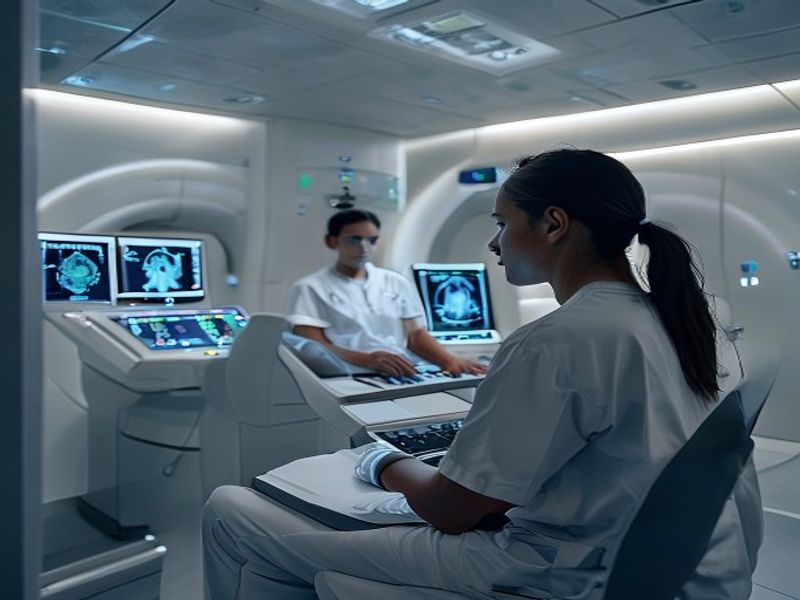
Twelve new radiologic technologists have entered the crucial healthcare sector, graduating from Mary Lanning's program to staff an increasingly complex landscape of medical imaging. These skilled professionals arrive at a pivotal moment, as diagnostic capabilities hinge on both cutting-edge technology and the expert human touch required to operate it effectively.
The role of a radiologic technologist extends far beyond simply pressing buttons; it involves a deep understanding of physics, anatomy, and patient care, all while mastering intricate machinery such as X-ray systems, CT scanners, and MRI units. Mary Lanning's program, like others across the nation, is specifically designed to cultivate this blend of technical proficiency and clinical acumen, ensuring graduates are prepared to contribute immediately to patient diagnosis and treatment pathways. This specialized training is indispensable, bridging the gap between advanced hardware and its practical application in diagnosing conditions ranging from fractures to complex internal pathologies.
The demand for these highly specialized technologists continues to grow, fueled by an aging population, the expansion of medical services, and rapid advancements in imaging modalities that offer unprecedented insights into human health. Hospitals and clinics nationwide rely on these professionals to deliver accurate, timely diagnostic images, which are foundational to effective medical decisions. Without a robust pipeline of qualified radiologic technologists, even the most sophisticated imaging equipment remains underutilized, directly impacting patient outcomes and healthcare system efficiency.
As artificial intelligence begins to play a larger role in image analysis, the human element of radiologic technology will only evolve, not diminish. Future technologists will increasingly collaborate with AI systems, focusing more on complex case interpretation, optimizing scan protocols, and ensuring patient comfort and safety. This graduating class from Mary Lanning represents more than just new hires; they embody the ongoing adaptation and indispensable human expertise driving the future of medical diagnostics.





Comments