
ChatGPT and the Rise of Conversational AI: What It Means for You
When ChatGPT launched in
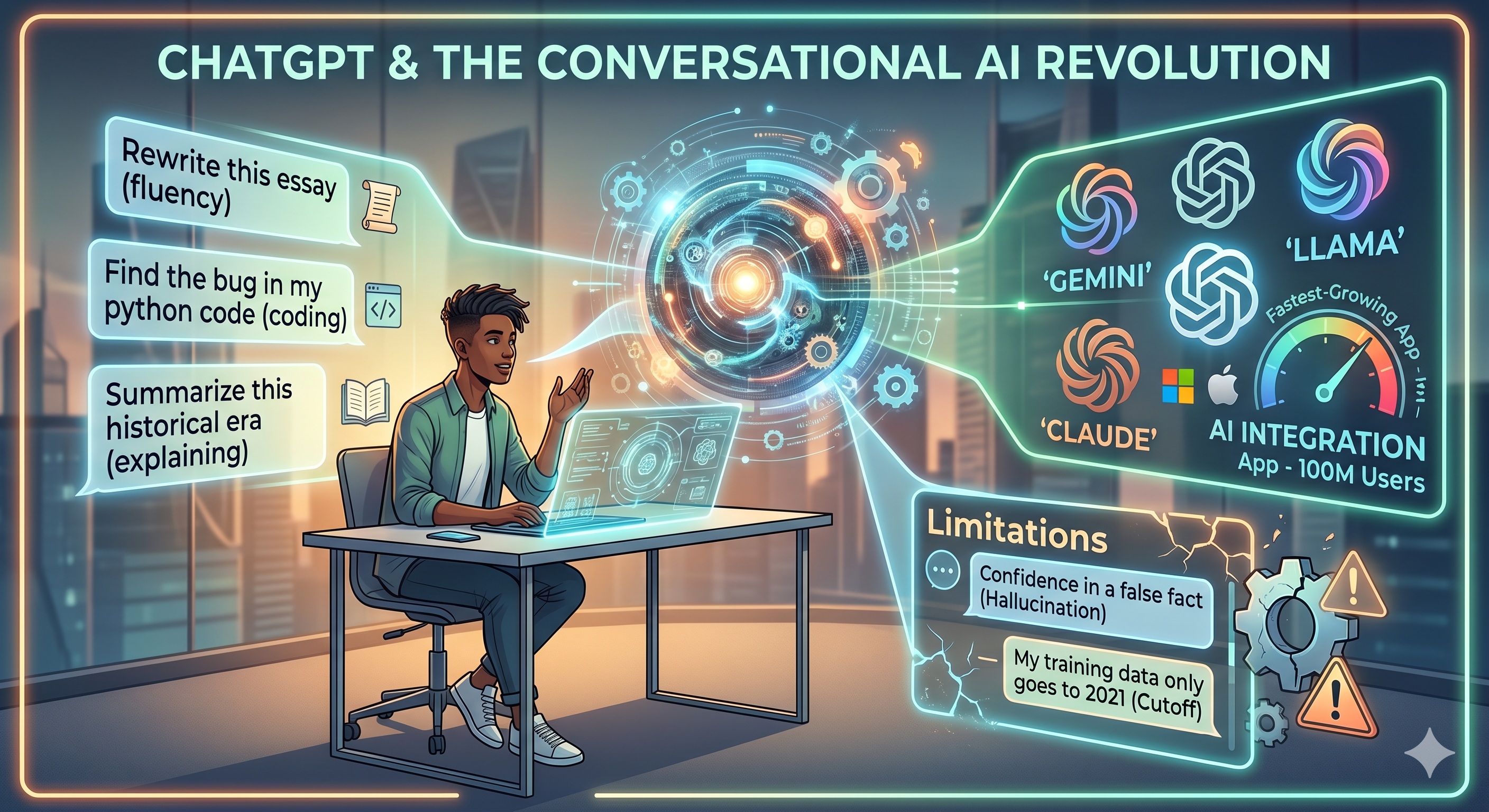
November 2022, it became the fastest-growing consumer application in history,
reaching 100 million users in just two months. Conversational AI had arrived —
and the world has not been the same since. Here's what it means for you.
What Changed With ChatGPT?
AI chatbots existed before
ChatGPT, but they were largely disappointing — narrow, brittle, and
frustrating. ChatGPT demonstrated something qualitatively different: a system
that could hold nuanced conversations, write fluent prose, explain complex
topics, debug code, draft legal documents, and generate creative content — all
in natural language.
How Large Language Models Work
ChatGPT is built on a Large
Language Model (LLM) — an AI system trained on enormous amounts of text.
Through this training, the model learns statistical patterns in language and
develops the ability to generate coherent, contextually appropriate responses.
It's not 'understanding' language the way humans do — but the outputs can be
remarkably similar.
The Race That Followed
ChatGPT's success triggered a
technological arms race. Google launched Gemini. Meta released Llama. Anthropic
built Claude. Microsoft integrated AI into its entire product suite. Apple
built Apple Intelligence into its operating systems. Conversational AI became a
competitive battleground for every major tech company.
Real-World Uses That Are Changing Lives
Students use AI to understand
difficult concepts and get personalized tutoring. Developers use it to write
and debug code dramatically faster. Writers use it to overcome creative blocks
and draft content. Non-native speakers use it to improve their writing. Small
business owners use it to handle tasks they'd otherwise need to hire
specialists for.
The Real Limitations
Conversational AI hallucinates —
it confidently states incorrect information. It can reflect biases present in
its training data. It has knowledge cutoffs and doesn't know recent events. It
can be manipulated into producing harmful content. Understanding these
limitations is essential to using these tools wisely.
The Bigger Picture
Conversational AI is the most
significant new interface paradigm since the smartphone. The ability to
interact with computers in natural language — to ask questions and get
thoughtful, nuanced responses — is fundamentally changing how people access
information and accomplish tasks.





Comments