
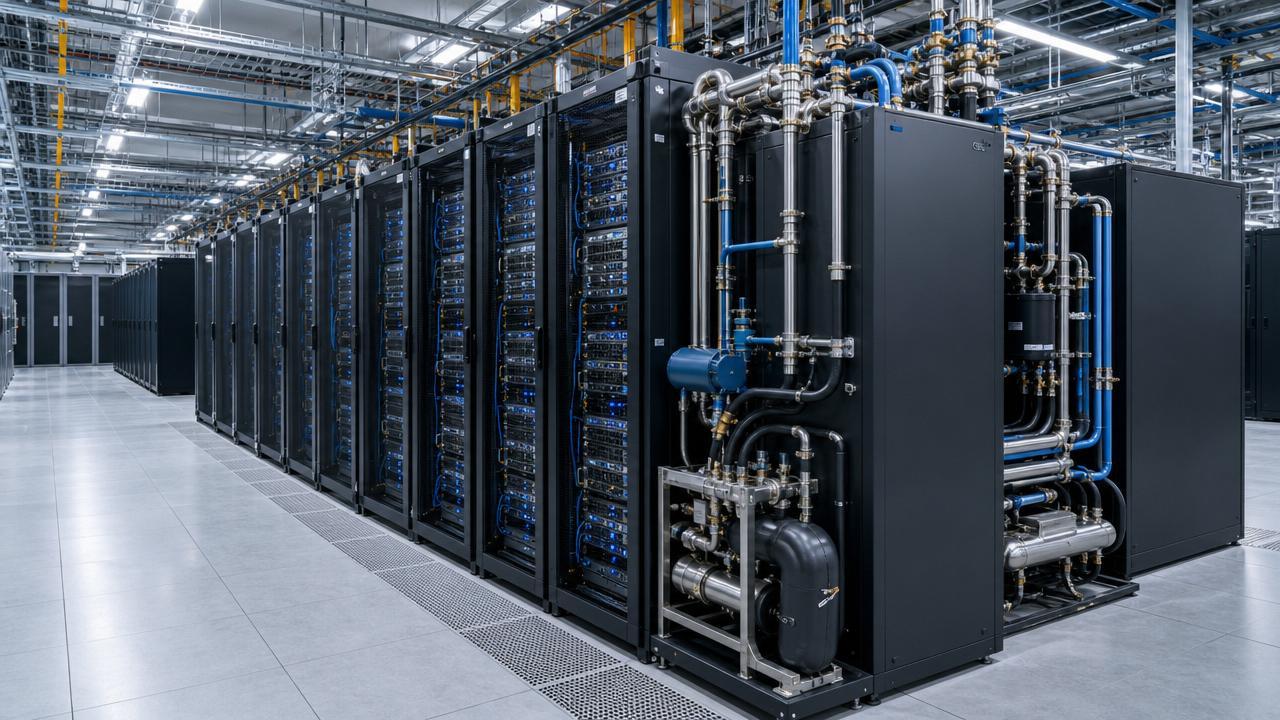
JERA, Dell Technologies and RHAELM have signed a memorandum of understanding (MoU) to develop a large-scale AI data center in Chiba, Japan, as demand for computing infrastructure continues to grow with the expansion of artificial intelligence.
The planned project is expected to represent an initial investment of around $15 billion and will be developed as a 400-megawatt-class hyperscale AI data center.
WHAT IS THE PROJECT?
The facility will be developed in Chiba, Japan, and is intended to provide large-scale computing infrastructure for AI workloads.
The project is being designed around a 400 MW power capacity, making it significantly larger than a typical enterprise data center.
The companies plan to develop the facility in phases, with operations expected to begin in 2028 and the full 400 MW capacity targeted for 2029.
ROLE OF JERA
JERA will provide the project with the required land and 400 MW of power capacity under a long-term agreement.
The company will support the project through its energy infrastructure, helping provide the electricity required to operate the large-scale computing facility.
ROLE OF RHAELM
RHAELM will take responsibility for developing, constructing, operating and financing the data center.
The company will work on turning the planned site into a hyperscale facility capable of supporting large AI computing workloads.
ROLE OF DELL TECHNOLOGIES
Dell Technologies will provide rack-scale AI infrastructure for the planned data center.
Rack-scale infrastructure combines computing, networking, storage and other components into systems designed to handle demanding workloads such as artificial intelligence and high-performance computing.
WHY DOES THE PROJECT MATTER?
Modern AI models require enormous amounts of computing power. Training and running these systems requires large numbers of specialized processors, high-speed networking and substantial amounts of electricity.
As AI adoption expands, technology companies and infrastructure providers are investing in larger data centers capable of handling these workloads.
The Chiba project is part of this broader expansion of AI infrastructure in Japan.
HOW MUCH POWER WILL THE DATA CENTER USE?
The planned facility is designed around 400 MW of power capacity.
For comparison, 1 megawatt equals 1,000 kilowatts, meaning 400 MW represents 400,000 kilowatts of potential electrical capacity.
The large power requirement reflects the energy-intensive nature of modern AI data centers, where thousands of processors can operate simultaneously.
WHEN WILL THE DATA CENTER BECOME OPERATIONAL?
The companies plan to bring the facility online in phases.
Initial operations are expected to begin in 2028, while the project is targeting full 400 MW capacity by 2029.
The exact construction and deployment schedule may change as the project progresses.
APOLLO GLOBAL MANAGEMENT'S ROLE
Apollo Global Management is expected to participate as a strategic investment and financing partner for RHAELM.
Its involvement is intended to support the financing required for the large-scale infrastructure project.
AI DATA CENTERS ARE BECOMING A MAJOR INFRASTRUCTURE MARKET
The project highlights how the growth of AI is creating demand beyond chips and software.
AI infrastructure requires data centers, electricity, cooling systems, networking equipment and specialized computing hardware.
Companies including technology providers, energy companies and financial institutions are increasingly working together to build the infrastructure required for the next generation of AI services.
The JERA, Dell Technologies and RHAELM project in Chiba is one such planned development, combining energy infrastructure, data-center development and AI computing hardware.
Important: The project is currently a planned development under an MoU. The $15 billion figure represents the planned initial investment, not money that has already been spent, and the data center has not yet been completed.





Comments