
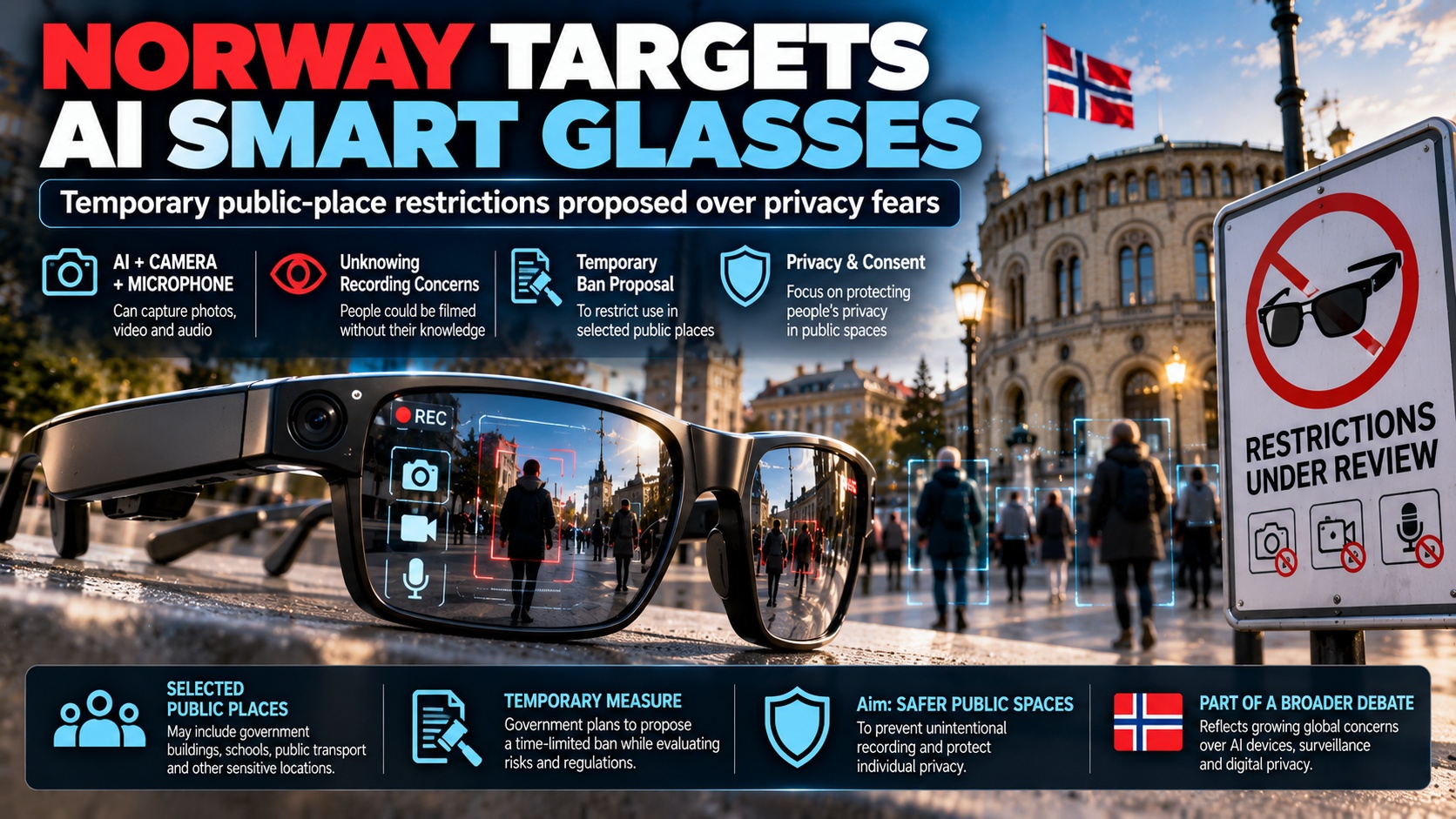
Norway is preparing to propose temporary restrictions on the use of AI-powered smart glasses in selected public places, as concerns grow over the ability of camera-equipped wearables to record people without their knowledge. The Norwegian government announced the move on October 5, 2026, highlighting privacy and consent concerns surrounding the rapidly developing smart-glasses market.
Modern AI smart glasses can combine cameras, microphones and artificial-intelligence assistants, allowing users to capture photos and videos, record audio, translate conversations and interact with AI using voice commands. While these capabilities can make wearables more useful, they also create a difficult privacy question: people around the wearer may not always know when they are being recorded.
Norway's proposed measure would target specific public locations rather than introducing a blanket nationwide ban on smart glasses. The government wants to examine how the technology should be regulated while protecting individuals from unwanted recording and potential misuse.
The development comes amid a broader international debate over AI-powered eyewear. In the Netherlands, retailer Hans Anders recently suspended sales of Meta's Ray-Ban smart glasses in the Netherlands and Belgium, citing growing public and political concerns about privacy.
Technology companies are also responding to the issue. Meta says its AI glasses include a capture LED designed to indicate when the camera is recording, along with safeguards intended to disable the camera if the indicator is blocked or tampered with.
Norway's move shows that the future of AI wearables may depend not only on better hardware and smarter AI, but also on public trust, privacy rules and clear boundaries around recording people in everyday life.





Comments