
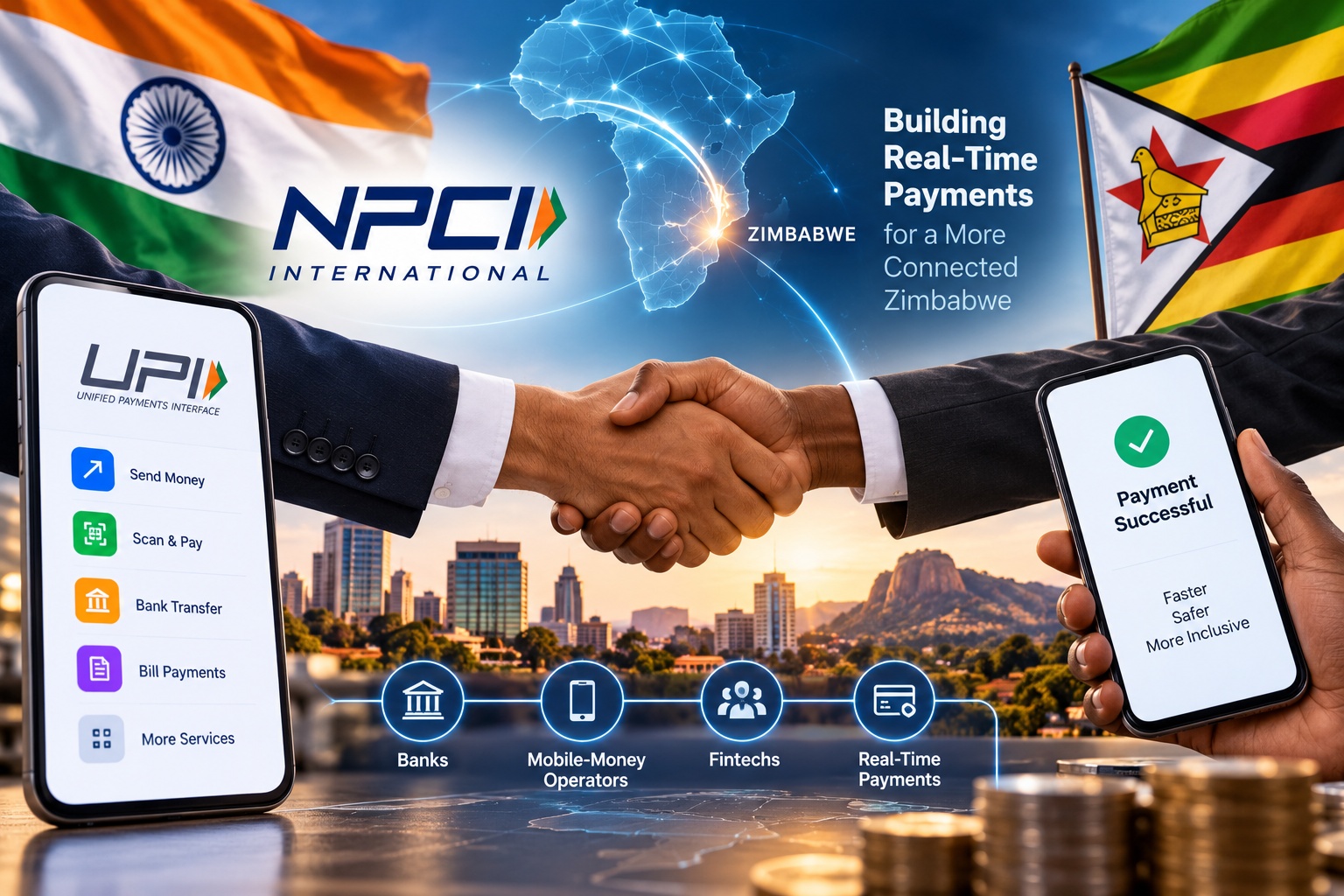
Zimbabwe is looking to India’s successful digital payments technology as it explores a new real-time payments network that could transform how consumers and businesses make digital transactions across the country. The country’s central bank is currently in discussions with NPCI International Payments Limited (NIPL), the international arm of the organisation behind India’s Unified Payments Interface (UPI).
The proposed system would use UPI-style real-time payment infrastructure to connect banks, fintech companies and mobile-money operators through a common network. The aim is to create a more interoperable digital payments ecosystem while reducing fragmentation between different financial service providers.
Zimbabwe’s central bank has indicated that negotiations with NPCI International are underway, with an agreement potentially targeted for October 31, 2026. The initiative is expected to support faster and more accessible digital payments, particularly for smaller transactions where traditional card-based payments can be expensive or less practical.
Importantly, Zimbabwe is not simply adopting India’s consumer-facing UPI application model. Instead, the discussions centre on using the technology and infrastructure principles behind UPI to develop a payment network suited to Zimbabwe’s own financial ecosystem.
The move highlights how India’s digital public infrastructure is increasingly attracting international interest. UPI has grown into one of the world’s largest real-time payment systems, processing billions of transactions every month and connecting hundreds of participating banks.
For Zimbabwe, adopting a UPI-inspired model could help accelerate digital payments, improve interoperability between financial institutions and expand access to modern payment services.
The development also demonstrates how India’s homegrown fintech infrastructure is evolving from a domestic success story into a potential exportable technology platform for digital economies worldwide.





Comments