
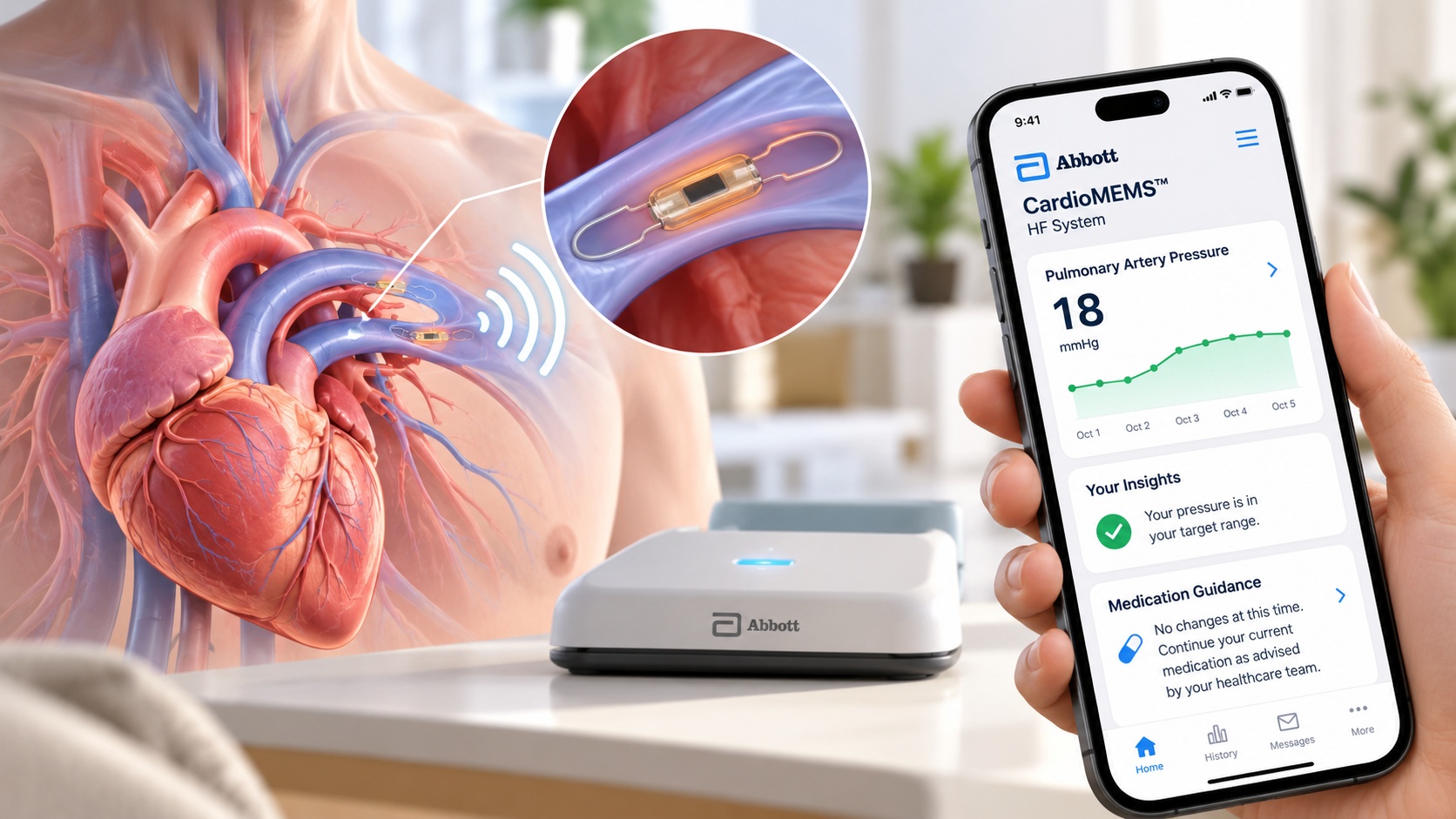
Abbott has received U.S. FDA approval for new capabilities in its CardioMEMS HF System, giving heart-failure patients a more direct way to engage with their health data through a smartphone. The updated system allows patients to view their pulmonary artery pressure (PAP) readings on a compatible smartphone, rather than relying only on healthcare providers to access and interpret the information.
CardioMEMS is an implantable heart-failure monitoring system designed to measure pressure in the pulmonary artery. Changes in PAP can provide an early indication that a patient's heart-failure condition may be getting worse, potentially allowing clinicians to adjust treatment before symptoms become more serious.
With the new FDA-approved capabilities, eligible patients can use the CardioMEMS HF System mobile application to see their pressure readings and receive personalized medication-related information from their healthcare team. Abbott says the expanded smartphone functionality is designed to improve patient engagement while maintaining remote monitoring as an important part of heart-failure management.
The update is significant because heart failure often requires continuous monitoring rather than occasional hospital or clinic visits. Smartphone-based access can make health information more visible to patients and potentially help them better understand changes in their condition.
Abbott's CardioMEMS platform combines an implanted sensor, a wireless monitoring system and software used by healthcare professionals. The technology is intended for patients whose doctors determine that pulmonary artery pressure monitoring could help guide their treatment.
The latest approval represents another step toward connected medical devices, where implanted sensors and mobile applications work together to provide continuous health information outside traditional clinical settings.





Comments