
Remote Work and Cybersecurity: What's at Risk?
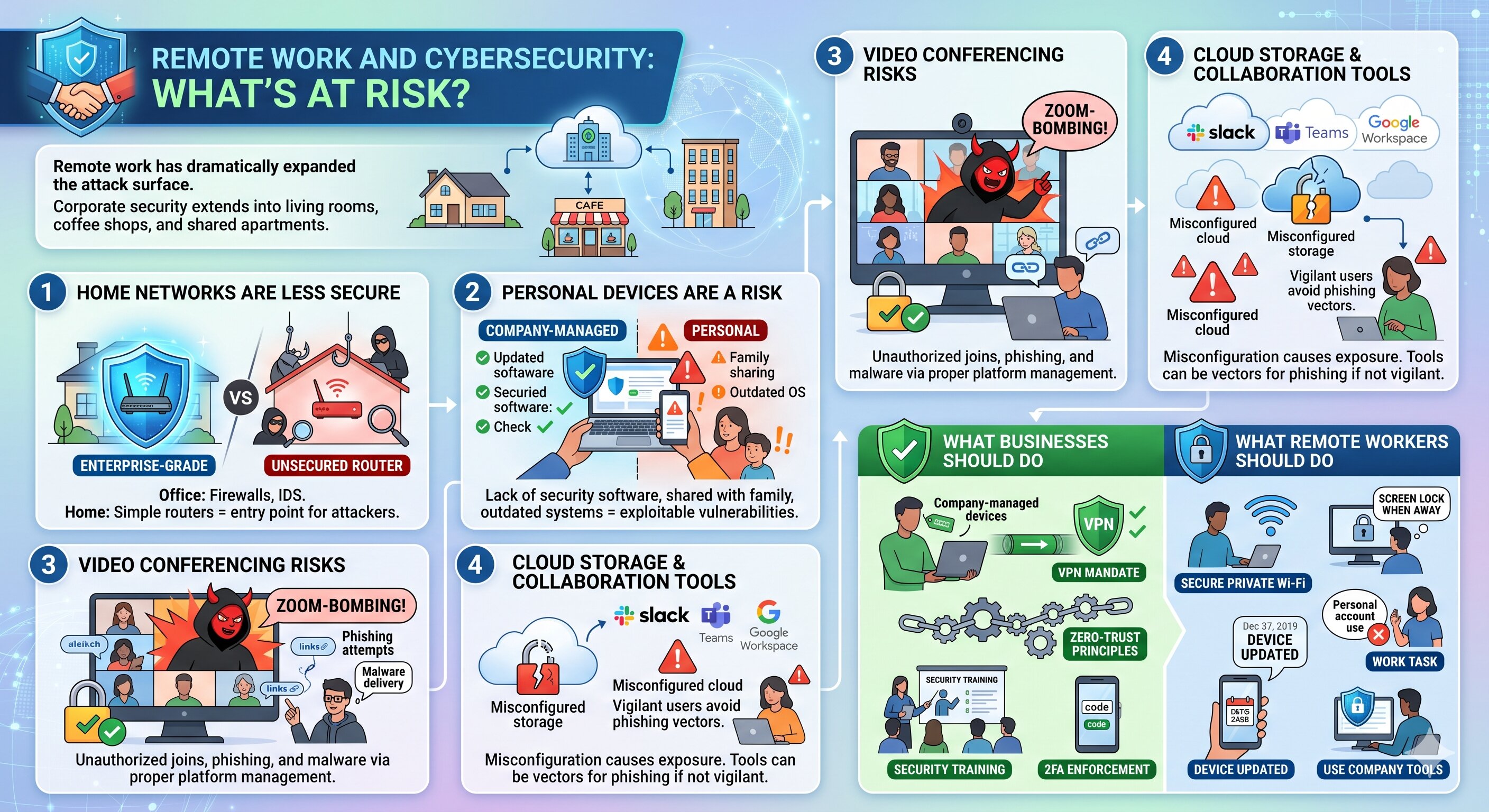
Remote work has transformed the
modern workplace — but it has also created a dramatically expanded attack
surface for cybercriminals. When employees work from home, the perimeter of
corporate security extends into living rooms, coffee shops, and shared apartments.
Home Networks Are Less Secure
Corporate offices typically have
enterprise-grade firewalls, intrusion detection systems, and secure network
infrastructure. Home networks rarely have any of these. A simple unsecured
router can be the entry point attackers need.
Personal Devices Are a Risk
When employees use personal
laptops or phones for work, those devices may not have company-approved
security software, may be shared with family members, or may be running
outdated operating systems. This creates vulnerabilities that attackers can
exploit.
Video Conferencing Risks
Zoom-bombing — where
unauthorized people join video calls — became widely known during the pandemic.
Beyond that, video conferencing platforms can also be targets for phishing and
malware delivery if not properly managed.
Cloud Storage and Collaboration Tools
Remote work relies heavily on
cloud services. Misconfigured cloud storage is one of the most common causes of
data exposure. Collaboration tools like Slack, Teams, and Google Workspace can
also be vectors for phishing if users aren't vigilant.
What Businesses Should Do
Provide or require
company-managed devices. Mandate the use of VPNs for accessing company
resources. Implement zero-trust security principles. Conduct regular
remote-work-specific security training. Enforce 2FA on all business accounts.
What Remote Workers Should Do
Use a secure, private Wi-Fi
network. Lock your screen when others are nearby. Avoid using personal accounts
for work tasks. Keep your home devices updated. Use the security tools your
company provides — and ask for help if you're unsure how.





Comments