
What Is a VPN and Do You Actually Need One?
VPNs have been heavily marketed
in recent years — often by YouTubers and podcast hosts. But what do they
actually do? And do you really need one? Let's cut through the marketing noise
with a clear, honest answer.
What Does a VPN Do?
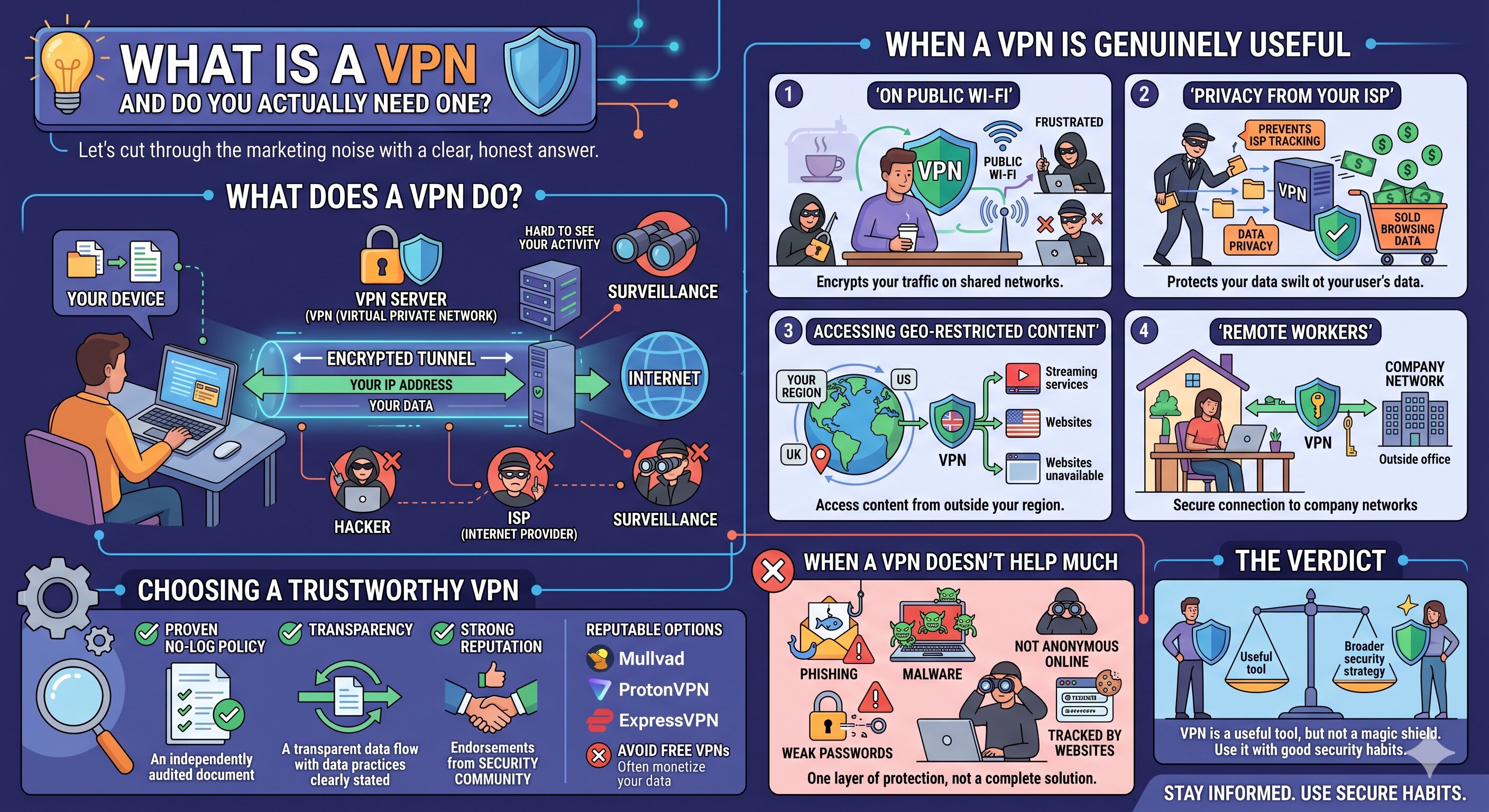
A VPN (Virtual Private Network)
creates an encrypted tunnel between your device and the internet. It hides your
IP address and encrypts your data, making it much harder for anyone — hackers,
your internet provider, or surveillance entities — to see what you're doing
online.
When a VPN Is Genuinely Useful
On public Wi-Fi: A VPN encrypts
your traffic so attackers on the same network can't intercept it — this is its
most legitimate use case.
Privacy from your ISP: Your
internet service provider can track and sell your browsing data in many
countries. A VPN prevents this.
Accessing geo-restricted
content: VPNs let you access streaming services or websites unavailable in your
region.
Remote workers: VPNs create a
secure connection to company networks from outside the office.
When a VPN Doesn't Help Much
A VPN won't protect you from
phishing attacks, malware, or weak passwords. It won't make you anonymous
online — your activity can still be tracked by the websites you visit through
cookies and account logins. It's one layer of protection, not a complete solution.
Choosing a Trustworthy VPN
This is critical — a bad VPN is
worse than no VPN. Look for providers with a proven no-log policy
(independently audited), transparency about their data practices, and a strong
reputation in the security community.
Reputable options include
Mullvad, ProtonVPN, and ExpressVPN. Avoid free VPNs — they often monetize your
data.
The Verdict
A VPN is a useful tool —
especially on public Wi-Fi and for privacy from your ISP. But it's not a magic
shield. Use it as part of a broader security strategy, not as a replacement for
good security habits.





Comments