
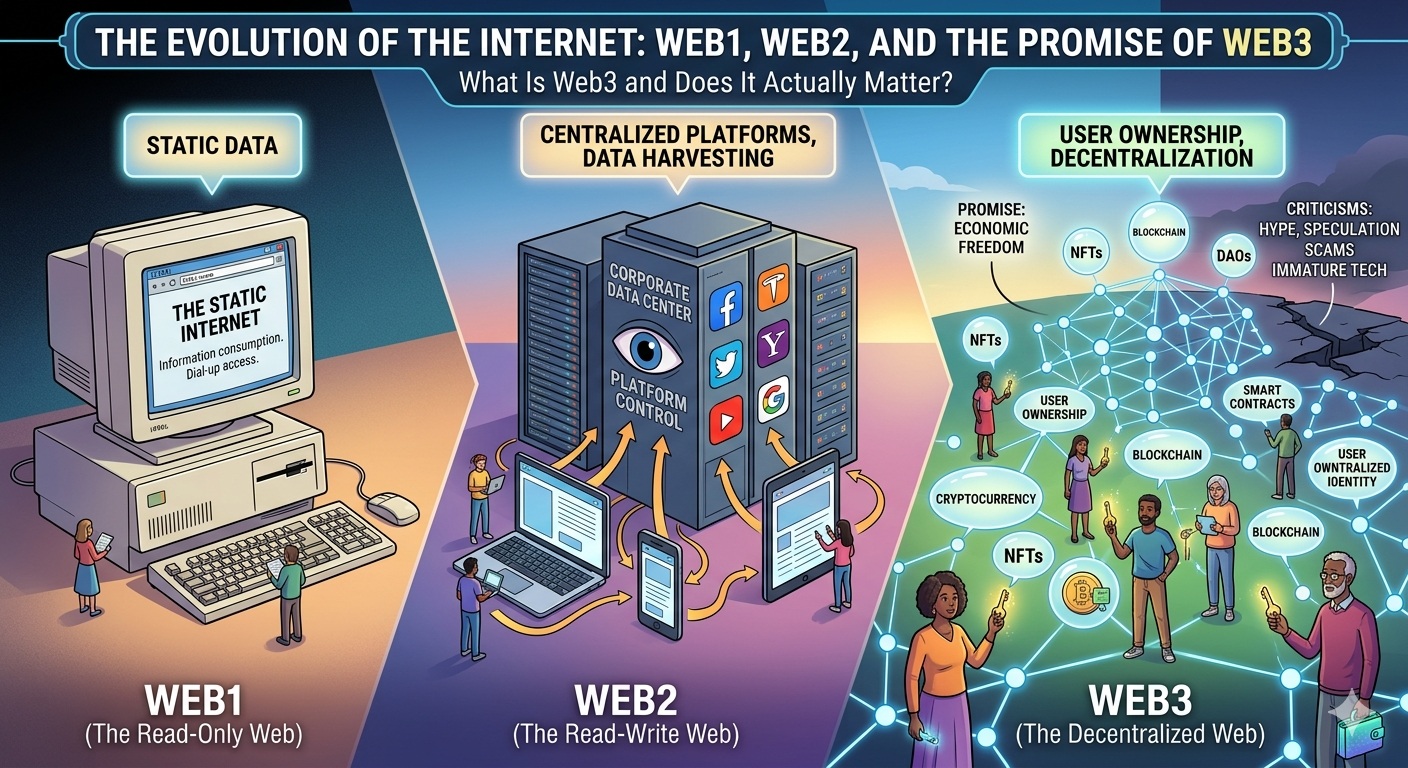
What Is Web3 and Does It Actually Matter?
Web3 was one of the most
talked-about technology concepts of the early 2020s — and also one of the most
controversial. Proponents called it the future of the internet. Critics called
it a solution in search of a problem. Let's cut through the noise.
A Brief History: Web1, Web2, Web3
Web1 (1990s–early 2000s) was the
read-only web — static pages of information. Web2 (2004–present) is the
interactive, social web — platforms like Facebook, YouTube, and Twitter where
users generate content but corporations control the infrastructure and profit
from data. Web3 proposes a third era built on blockchain technology, where
users own their data, identity, and digital assets.
The Core Web3 Vision
Web3 advocates argue that the
current internet has become dominated by a handful of powerful platforms that
extract value from users while retaining control. Web3 proposes to decentralize
this — using blockchains, cryptocurrencies, and smart contracts to create
systems where users are owners, not just consumers.
NFTs: The Visible Face of Web3
Non-fungible tokens (NFTs) —
unique digital assets recorded on a blockchain — became the most visible Web3
application. The NFT boom of 2021–2022 saw digital art selling for millions.
The subsequent crash revealed that many NFT markets were driven by speculation
rather than genuine utility.
What Genuine Web3 Applications Look Like
Decentralized Finance (DeFi) —
financial services like lending, borrowing, and trading conducted through smart
contracts without traditional banks. Decentralized Autonomous Organizations
(DAOs) — community-governed organizations where decisions are made through
token holder voting. These are genuinely novel organizational and financial
structures.
The Real Criticisms
Web3's technical foundations are
immature. Blockchains are slower and more expensive than centralized databases.
User experience remains deeply unfriendly. The decentralization promise is
often superficial — in practice, power still concentrates. And much of the
space has been plagued by scams, fraud, and speculation.
Does It Matter?
Web3 contains genuinely
important ideas — about data ownership, digital identity, and reducing platform
monopoly power — even if the current implementations often fail to deliver on
them. Whether blockchain specifically is the right technology for these goals
remains genuinely debated. The vision matters more than any particular
implementation.





Comments