
AI-Powered Cyberattacks: The New Threat You Need to Know About
Artificial intelligence has
transformed industries from healthcare to finance. Unfortunately, it's also
transformed cybercrime. AI is now being used to make attacks faster, more
convincing, and harder to detect. Here's what you need to know.
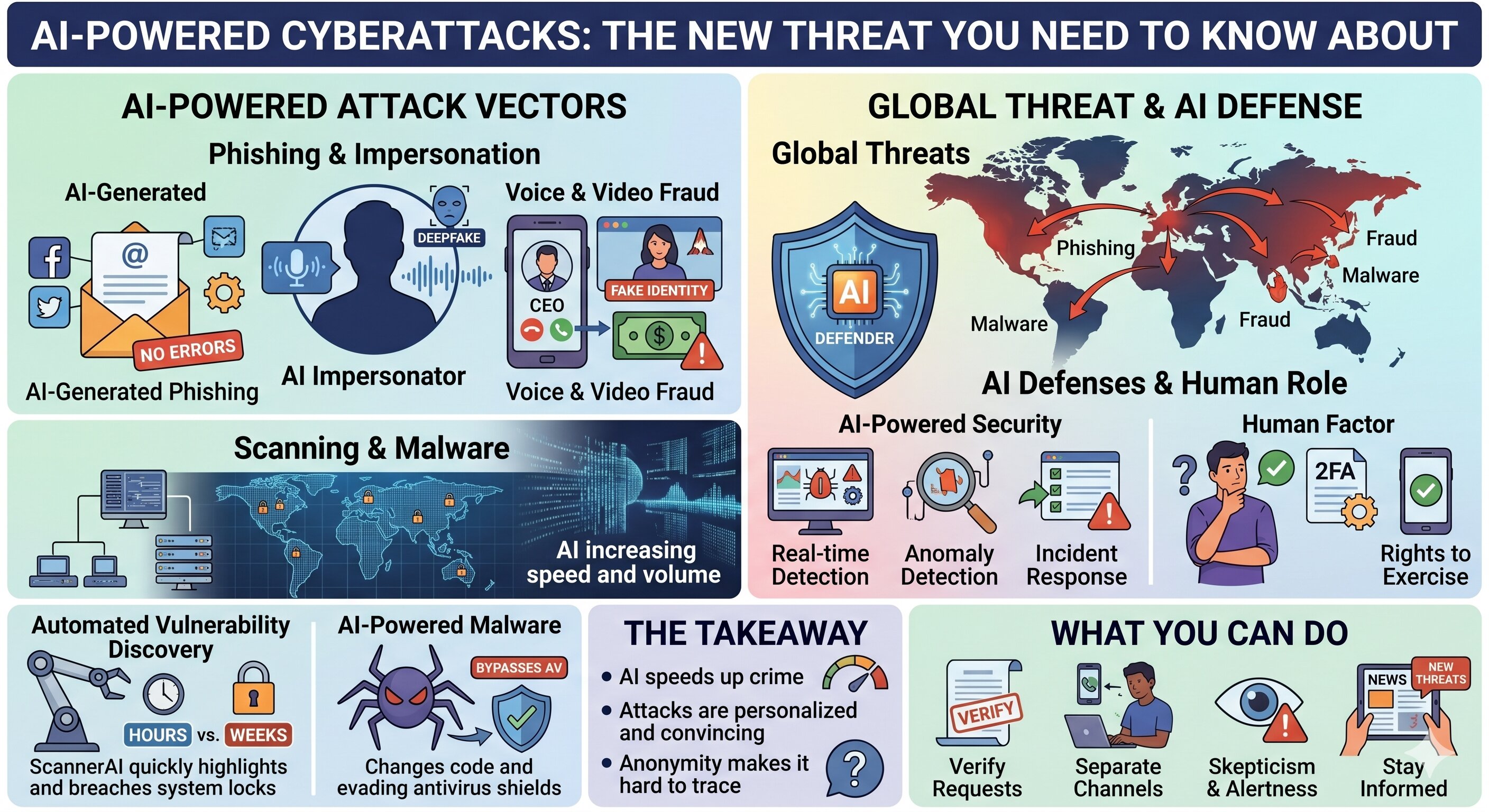
AI Is Making Phishing Dramatically More Convincing
Traditional phishing emails were
often riddled with grammatical errors and awkward phrasing — easy to spot.
AI-generated phishing emails are now flawlessly written, personalized using
scraped social media data, and sent at massive scale. They're far harder to
identify.
AI-Generated Voice and Video Fraud
Criminals are using AI to clone
voices and create convincing deepfake videos. There have been documented cases
of employees wiring large sums of money after receiving 'calls' or 'video
messages' from people who appeared to be their CEO — but were AI impersonations.
Automated Vulnerability Discovery
AI tools can scan systems for
vulnerabilities at speeds and scales impossible for human hackers. What might
take a team of attackers weeks can now be accomplished in hours. This
dramatically increases the speed and volume of attacks.
AI-Powered Malware
Researchers have demonstrated
AI-driven malware that can adapt its behavior to evade detection, change its
code to bypass antivirus tools, and identify the most valuable targets within a
network — all autonomously.
The Good News: AI Is Also on Our Side
The same technology being
weaponized by attackers is also being used to defend against them. AI-powered
security tools can detect anomalies, identify threats in real time, and respond
to incidents faster than any human team.
What You Can Do
Verify unusual requests —
especially for money or sensitive information — through a separate channel. Be
skeptical of anything that feels urgent or out of the ordinary, even if it
appears to come from a trusted source. Stay informed about new AI-enabled threats
as they evolve.





Comments