
The Digital Divide: Why Half the World Is Still Left Behind by Technology
We live in an age of
technological miracles — artificial intelligence, instant global communication,
vast stores of knowledge at our fingertips. But these miracles are not equally
distributed. The digital divide — the gap between those with access to technology
and those without — is one of the defining equity challenges of the 21st
century.
The Scale of the Problem
Despite enormous progress,
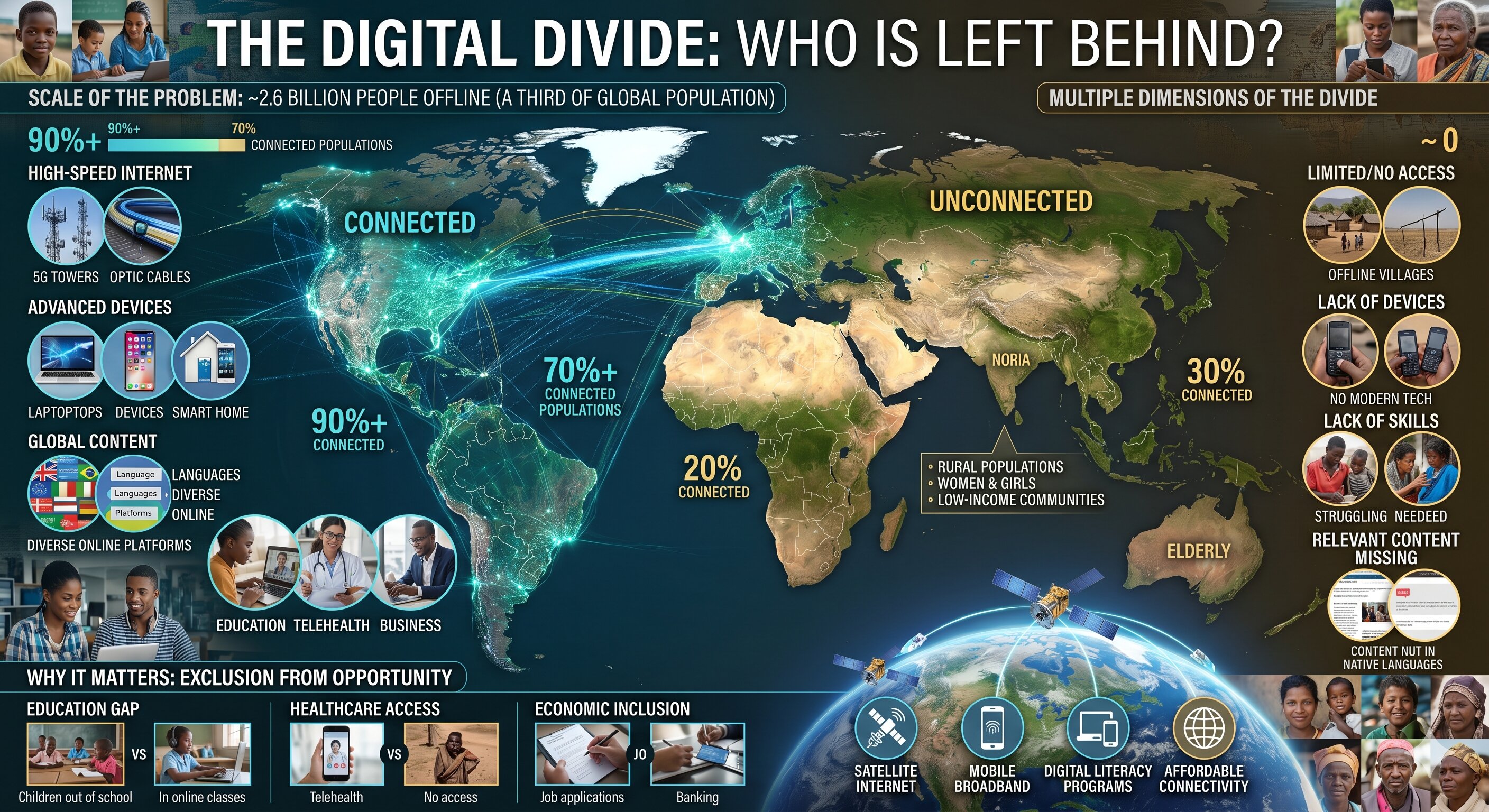
approximately 2.6 billion people — roughly a third of the world's population —
remain without internet access. But the divide isn't just about connectivity.
Even among those technically online, huge disparities exist in connection
speed, device quality, digital skills, and the relevance of available content
to people's actual lives and languages.
The Multiple Dimensions of the Divide
Access divide: Do you have
internet connectivity at all? Device divide: Do you have a device capable of
meaningful internet use? Skills divide: Do you have the digital literacy to use
technology effectively? Content divide: Is there content available in your
language that's relevant to your needs? Each dimension matters, and addressing
connectivity alone is insufficient.
Who Is Left Behind?
The unconnected are
disproportionately rural, elderly, low-income, female, and located in the
Global South. Within connected countries, similar patterns emerge — low-income
households, rural areas, and older adults consistently have worse access. The
digital divide mirrors and amplifies existing social and economic inequalities.
Why It Matters So Much
Internet access is no longer a
luxury — it's infrastructure as fundamental as roads and electricity. During
COVID-19, children without internet access fell behind in school. Telehealth
reached those with connectivity but not those without. Job applications,
government services, banking, and social connection have all moved online.
Exclusion from digital technology increasingly means exclusion from
opportunity.
What's Being Done
Satellite internet (Starlink and
competitors) is addressing geographic connectivity gaps. Governments are
investing in broadband infrastructure, particularly for rural areas. Mobile
connectivity has reached populations that wired internet never did — smartphones
and mobile data have been the primary internet access point for most new
internet users globally. Digital literacy programs are helping people develop
the skills to use technology effectively.
Technology Alone Won't Close the Divide
Ultimately, the digital divide
is not primarily a technology problem — it's a poverty and inequality problem.
Affordable devices, affordable connectivity, and relevant content matter. But
so do income levels, educational systems, language policies, and political
will. Closing the digital divide requires addressing the underlying conditions
that create it. Technology is necessary but not sufficient — and the urgency
has never been greater.





Comments