
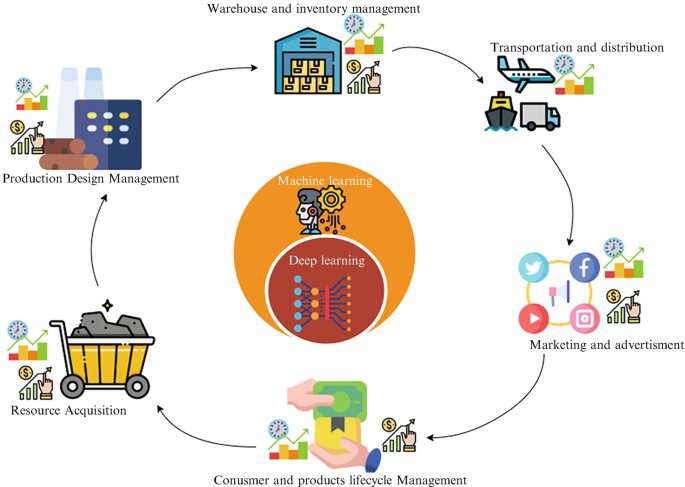
Machine learning is revolutionizing supply chain management by helping organizations improve efficiency, reduce operational costs, and make more accurate business decisions. As global supply chains become increasingly complex, companies are turning to advanced machine learning technologies to gain better visibility, predict market demand, and optimize logistics operations. This growing adoption is transforming how businesses manage inventory, transportation, procurement, and distribution networks.
One of the biggest challenges in supply chain management is accurately forecasting customer demand. Traditional forecasting methods often rely on historical data and manual analysis, making it difficult to respond to sudden market changes. Machine learning models can analyze vast amounts of real-time data, identify hidden patterns, and generate highly accurate demand forecasts. This enables organizations to better anticipate customer needs and maintain optimal inventory levels.
Inventory management is another area where machine learning is delivering significant benefits. AI-powered systems can predict stock requirements, identify potential shortages, and recommend replenishment strategies. By maintaining the right inventory levels, businesses can reduce storage costs, minimize waste, and improve customer satisfaction by ensuring product availability.
Transportation and logistics operations are also becoming more efficient through machine learning. Intelligent algorithms can analyze traffic conditions, weather patterns, fuel costs, delivery schedules, and route performance to optimize transportation planning. These insights help logistics providers reduce delivery times, lower transportation expenses, and improve overall supply chain performance.
Machine learning is also helping organizations identify and manage supply chain risks. Modern supply chains are vulnerable to disruptions caused by economic uncertainty, natural disasters, geopolitical events, and changing consumer behavior. Predictive analytics models can detect potential risks early, allowing businesses to take proactive measures and improve resilience against unexpected disruptions.
Manufacturing companies are increasingly integrating machine learning into production planning and procurement processes. By analyzing supplier performance, production capacity, and market demand, AI systems can recommend more efficient purchasing strategies and improve resource allocation. This helps organizations reduce costs while maintaining operational continuity.
Another important application is warehouse automation. Machine learning technologies are being used to optimize warehouse layouts, improve order fulfillment processes, and enhance inventory tracking. Smart warehouse systems can analyze operational data in real time, increasing efficiency and reducing human errors in logistics operations.
The rise of e-commerce has further accelerated the adoption of machine learning in supply chain management. Online retailers must handle large volumes of orders, dynamic customer demands, and fast delivery expectations. Machine learning enables businesses to improve forecasting accuracy, optimize delivery networks, and provide better customer experiences through intelligent supply chain operations.
Despite its advantages, implementing machine learning in supply chains requires high-quality data, advanced infrastructure, and skilled professionals. Organizations must also address concerns related to data security, integration complexity, and system reliability. However, continued advancements in AI technology are making machine learning solutions more accessible and scalable for businesses of all sizes.
Industry experts believe that machine learning will become an essential component of future supply chain strategies. As companies continue investing in digital transformation, AI-powered forecasting and intelligent automation will play a critical role in improving efficiency, reducing costs, and maintaining competitive advantages in global markets.
The growing adoption of machine learning demonstrates how technology is reshaping supply chain operations worldwide. By combining predictive analytics with real-time decision-making capabilities, organizations can build smarter, more agile, and more resilient supply chains capable of meeting the demands of a rapidly evolving business landscape.





Comments