
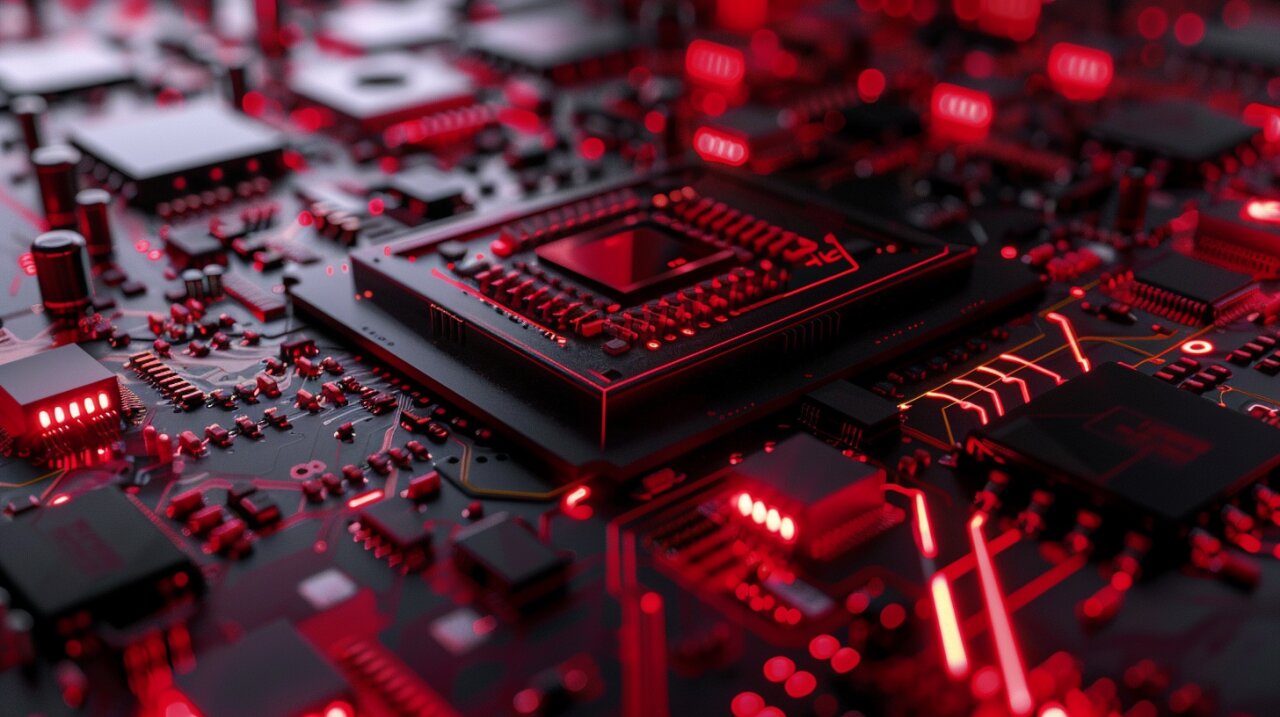
The global semiconductor industry is witnessing intensified competition as technology companies accelerate the development of next-generation AI chips designed to power the rapidly growing artificial intelligence ecosystem. With demand for advanced AI computing reaching unprecedented levels, chipmakers are investing billions of dollars in research, manufacturing, and innovation to secure leadership in one of the world's fastest-growing technology markets.
Artificial intelligence has become a major driver of semiconductor demand, fueling the need for specialized processors capable of handling complex machine learning workloads, generative AI applications, cloud computing services, and large language models. As organizations increasingly adopt AI technologies, the performance and efficiency of underlying hardware have become critical factors in determining competitive advantage.
Leading companies including Nvidia, AMD, Intel, Qualcomm, Google, Samsung, and several emerging AI chip startups are competing to develop processors that deliver faster training speeds, lower power consumption, and improved scalability. These advancements are essential for supporting increasingly sophisticated AI models that require enormous computational resources.
Nvidia continues to maintain a strong position in the AI chip market, with its GPUs widely used for training and deploying advanced AI models. However, competitors are aggressively expanding their AI hardware portfolios to challenge Nvidia's dominance and capture a share of the rapidly growing market.
Google is investing heavily in its custom Tensor Processing Units (TPUs), which are designed specifically for AI and machine learning workloads. These chips play a key role in supporting Google's AI services, cloud infrastructure, and generative AI applications. Other technology companies are pursuing similar strategies by developing proprietary AI accelerators tailored to their specific platforms and services.
The competition extends beyond established industry leaders. AI-focused semiconductor startups are attracting significant investor interest as they introduce innovative chip architectures optimized for next-generation AI workloads. These companies aim to deliver higher efficiency and performance while addressing growing concerns about energy consumption and infrastructure costs.
One of the major challenges facing the AI industry is the increasing computational demand of large-scale AI models. Training advanced generative AI systems requires vast amounts of processing power, driving demand for specialized hardware capable of handling intensive workloads efficiently. This trend has made AI chips one of the most strategically important technologies in the global tech sector.
Cloud service providers are also expanding investments in AI infrastructure. Data centers worldwide are being upgraded with advanced processors and accelerators to support the growing number of businesses deploying AI-powered applications. The need for scalable computing resources is creating new opportunities for semiconductor manufacturers and infrastructure providers.
Energy efficiency has emerged as another critical area of innovation. As AI workloads continue to expand, companies are seeking ways to reduce power consumption while maintaining high levels of performance. Next-generation AI chips are being designed with advanced architectures that improve efficiency and lower operational costs for data centers and enterprise deployments.
Geopolitical factors are further influencing semiconductor competition. Governments around the world are investing in domestic chip manufacturing and AI infrastructure to strengthen technological independence and national competitiveness. These initiatives are contributing to increased investment across the semiconductor ecosystem.
Industry analysts predict that spending on AI hardware will continue growing rapidly over the next decade. The expansion of generative AI, autonomous systems, robotics, edge computing, and intelligent applications is expected to drive sustained demand for advanced semiconductor technologies.
The race to develop next-generation AI chips is not only shaping the future of artificial intelligence but also redefining competition within the broader technology industry. Companies that succeed in delivering powerful, efficient, and scalable AI processors will be well-positioned to lead the next era of digital innovation.
As AI adoption accelerates across every sector of the economy, semiconductor manufacturers remain at the center of technological progress. The growing competition among chipmakers underscores the strategic importance of AI hardware in powering the future of intelligent computing and global digital transformation.





Comments