
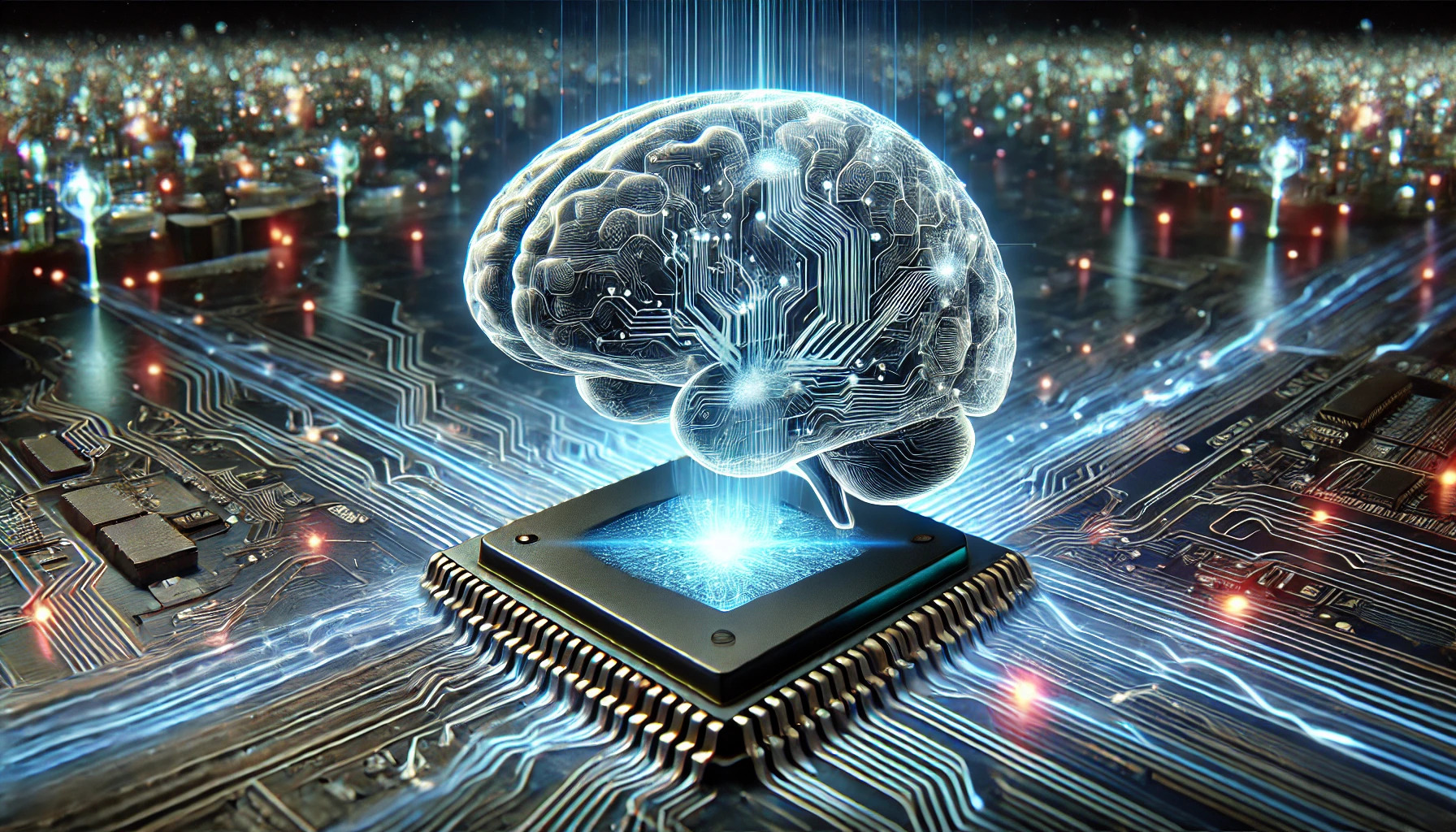
Researchers and technology companies are making significant progress in the development of brain-inspired AI chips, a breakthrough technology that could redefine the future of computing. Known as neuromorphic chips, these advanced processors are designed to mimic the structure and functioning of the human brain, enabling computers to process information more efficiently while consuming significantly less energy than traditional computing systems.
Unlike conventional processors that perform calculations in a sequential manner, brain-inspired chips use networks of artificial neurons and synapses that work simultaneously, similar to how the human brain processes information. This architecture allows AI systems to perform complex tasks such as learning, pattern recognition, decision-making, and real-time analysis with greater speed and efficiency.
The growing demand for artificial intelligence applications is driving interest in neuromorphic computing. Modern AI models require enormous computational resources and consume substantial amounts of power, especially during training and deployment. Brain-inspired chips aim to address these challenges by delivering high-performance AI processing while dramatically reducing energy consumption and hardware requirements.
One of the most promising applications of brain-inspired AI chips is edge computing. Devices such as smartphones, autonomous vehicles, robotics systems, wearable technology, and Internet of Things (IoT) devices could benefit from intelligent processing directly on the device without relying heavily on cloud infrastructure. This would improve response times, enhance privacy, and reduce network dependency.
Researchers believe these chips could play a critical role in advancing machine learning and artificial intelligence. Their ability to process information in a more human-like manner may enable future AI systems to learn continuously, adapt to changing environments, and perform complex reasoning tasks more efficiently than current architectures.
The healthcare industry could also benefit from neuromorphic computing. Brain-inspired AI systems may support advanced medical diagnostics, real-time patient monitoring, and intelligent healthcare devices capable of processing large amounts of data while maintaining low power consumption. Similar opportunities exist in scientific research, cybersecurity, industrial automation, and defense applications.
Major technology companies and research institutions are investing heavily in neuromorphic hardware development. Scientists are exploring new materials, chip architectures, and learning algorithms that bring computing systems closer to biological intelligence. These efforts are helping accelerate innovation in next-generation AI infrastructure and intelligent computing platforms.
Despite the promise of brain-inspired chips, several challenges remain. Researchers must improve scalability, software compatibility, manufacturing processes, and development tools before widespread adoption becomes possible. However, continued advancements suggest that neuromorphic computing could become a key component of future AI ecosystems.
Industry experts view brain-inspired AI chips as one of the most exciting frontiers in computing technology. By combining the efficiency of biological systems with the power of modern electronics, these innovations have the potential to transform how intelligent systems are built and deployed in the coming decades.
As artificial intelligence continues to evolve, brain-inspired computing could provide the foundation for faster, smarter, and more energy-efficient AI applications. The technology represents a major step toward creating computing systems that more closely resemble the remarkable capabilities of the human brain.





Comments