
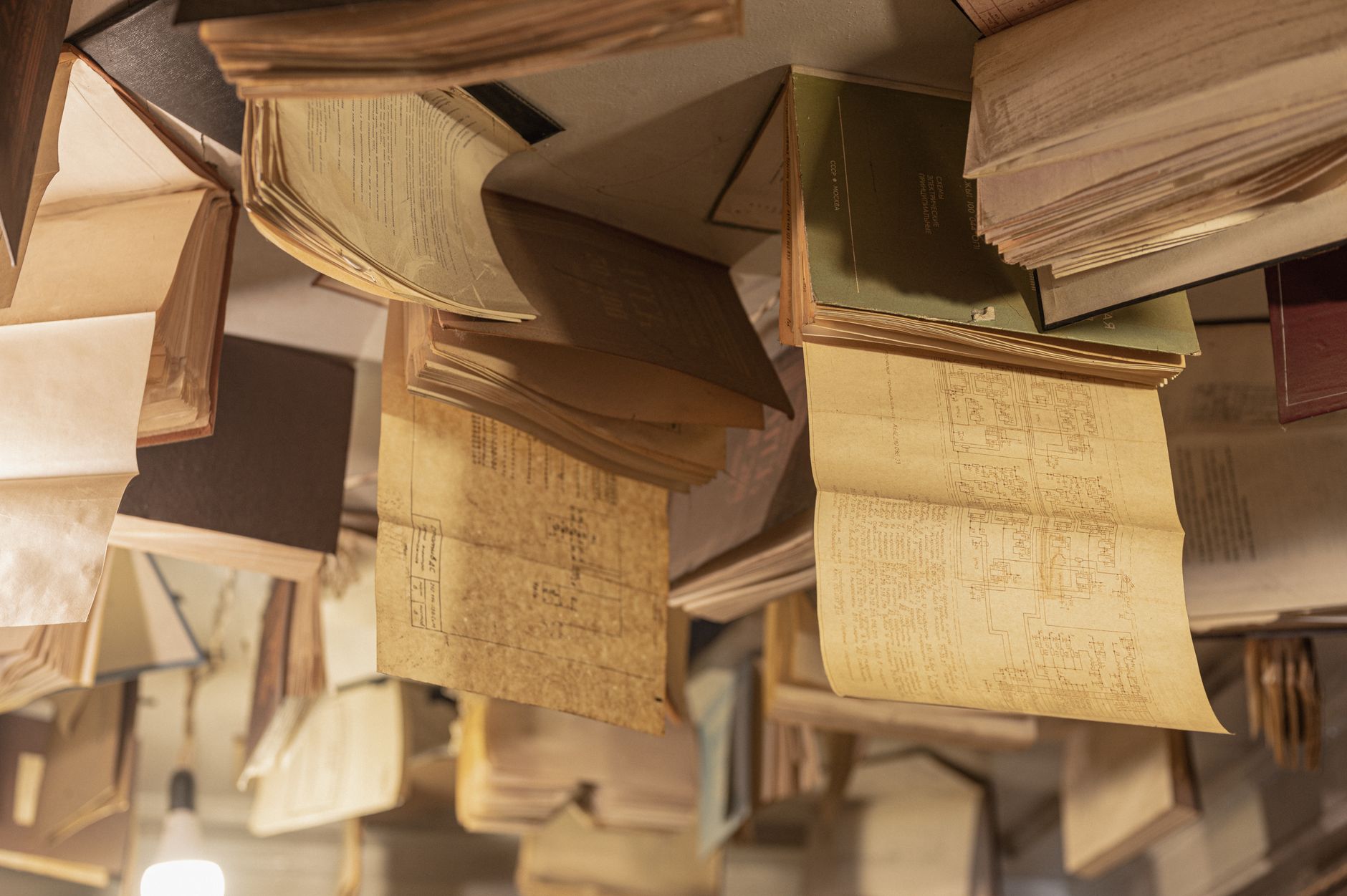
Generations of cryptographers, historians, and linguists have stared at the roughly 240 pages of the Voynich Manuscript without unlocking its elusive text. Now, a fresh study published in Digital Medievalist points to a much more fundamental physical problem with the codex itself. According to medievalist Lisa Fagin Davis and information scientist Colin Layfield, the mysterious book is likely misbound, meaning its pages are completely out of sequence.
Purchased, sold, and debated extensively since the 16th century and housed at Yale University, the manuscript has baffled experts since rare book dealer Wilfrid M. Voynich brought it to the public eye in 1912. The text utilizes a completely unknown lettering system, accompanied by bizarre illustrations of fantastical plants, astronomical charts, and zodiacal diagrams. Past investigations led by Davis established that at least five different scribes contributed to the manuscript. However, those scribes alternated pages in ways that violated standard medieval bookbinding logic, sparking suspicions that something was fundamentally flawed with the physical assembly of the volume.
To investigate further, the researchers deployed Latent Semantic Analysis, a natural language processing technique. This analysis uncovered unusual semantic similarities between inner-facing pages that were currently separated by intervening leaves. Testing the hypothesis that the manuscript was originally meant to be read as a series of stacked bifolia rather than sewn quires caused certain patterns to align. Notably, some illustrations trail off into the book's gutter and emerge on disconnected pages, which would fit a scenario of incorrect binding.
These findings indicate that any previous research relying on the current pagination needs to be completely reevaluated, as an out-of-order text naturally defies comprehension. Beyond altering cryptographic efforts, the discovery reframes the origin of the artifact itself. Rather than the product of a single madman or isolated genius, the manuscript appears to be the work of a community that shared the practice of writing in Voynichese.




Comments