
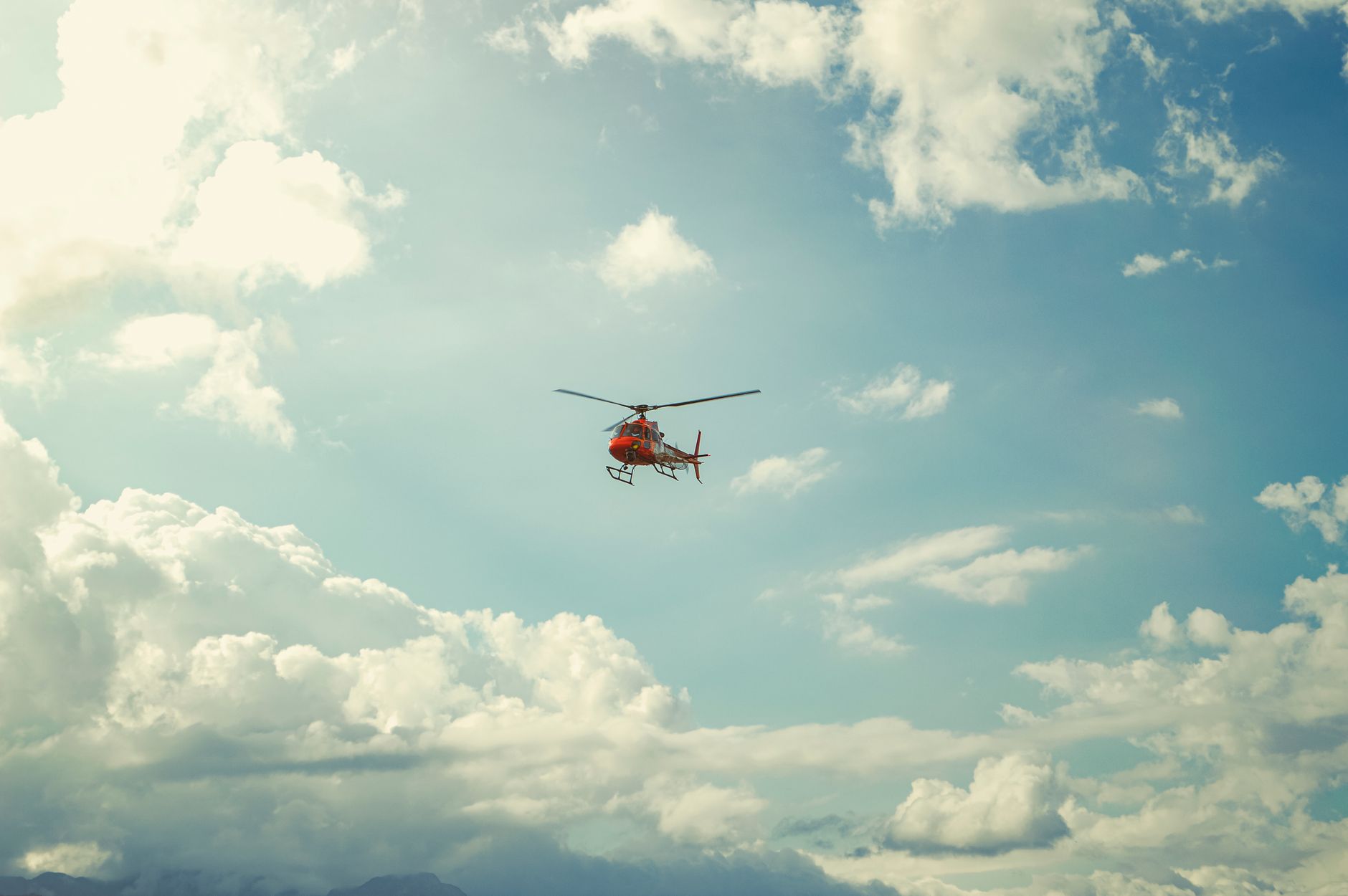
The US Army is actively evaluating self-flying cargo helicopters built by Airbus that can independently reroute around unexpected airspace restrictions. During recent test flights at Huntsville Executive Airport in Alabama, the modified MQ-72C Lakota Connector showcased its ability to handle complex navigation tasks without constant pilot intervention. While a safety pilot remained on board during the five demonstration flights, manual override was never required as the aircraft managed flight paths and environmental obstacles entirely on its own.
At the core of this autonomous capability is Shield AI's Hivemind software, which processes visual and spatial data gathered by onboard hardware. The helicopter relies on dual LiDAR sensors facing both forward and backward, paired with a nose-mounted electro-optical camera, to gather real-time environmental information. When sudden no-fly zones appeared mid-flight during the tests, the onboard autonomy systems calculated alternative routes instantly, allowing the aircraft to make independent decisions regarding its trajectory.
Beyond local autonomy, the platform incorporates advanced remote-command infrastructure driven by SpaceX’s Starlink satellite network. Ground operators successfully issued commands to the cargo helicopter from distances reaching 70 miles away, relying on communications layers capable of supporting operations far beyond conventional line-of-sight limits. Airbus has also integrated tablet-based control options, giving operators multiple ways to interface with the aircraft during missions.
Despite the successful flight demonstrations, substantial hardware changes remain ahead before the platform achieves full operational status for military logistics. Airbus plans to modify the UH-72B Lakota-derived airframe by installing front-mounted clamshell doors to streamline cargo loading and unloading through the cabin. While preliminary designs are finished, wind tunnel testing and further structural modifications are expected to stretch toward the end of the decade.


Comments